Why a Breaker Keeps Tripping — and When to Stop Resetting It
A breaker that keeps tripping may be responding to an overload, a fault, or a damaged component. Stop resetting it if it trips again or shows danger signs, and call Chris Miller Electric for emergency electrical repair.
Request an EstimateIs a tripping breaker an emergency?
Yes, a tripping breaker is an emergency when you notice smoke, sparks, or a burning smell. Leave the area and avoid the electrical panel. Call emergency services if there's a fire or immediate danger.
Don't touch the panel or try to reset the breaker when you see danger signs. Once the area is safe, we can assess the electrical problem.
What signs can accompany a tripping breaker?
A tripping breaker can cause repeated power loss or show signs of an electrical fault. Smoke, scorch marks, and a burning smell call for urgent action.
Tell us what you noticed and when the trip happened. That information helps us trace the problem without relying on the pattern alone.
When should you stop resetting a breaker?
Stop resetting a breaker if it trips again or won't stay on. Leave it off and call us for help.
If you notice danger signs, stay away from the panel. Don't approach it to move the breaker switch; leave the area and call emergency services for immediate danger.
Why does a breaker keep tripping?
A breaker can trip because of an overload, a wiring fault, or damaged equipment. The trip pattern alone can't confirm the cause, so we check the circuit before choosing a repair.
A circuit breaker is an electrical safety device that shuts off power when it detects certain unsafe conditions. We check the cause because replacing a breaker won't fix a fault elsewhere in the circuit.
Why does a breaker trip as soon as it's reset?
A breaker that trips as soon as it's reset may be responding to a fault that remains on the circuit. The problem could involve a connected appliance, circuit wiring, or the breaker itself.
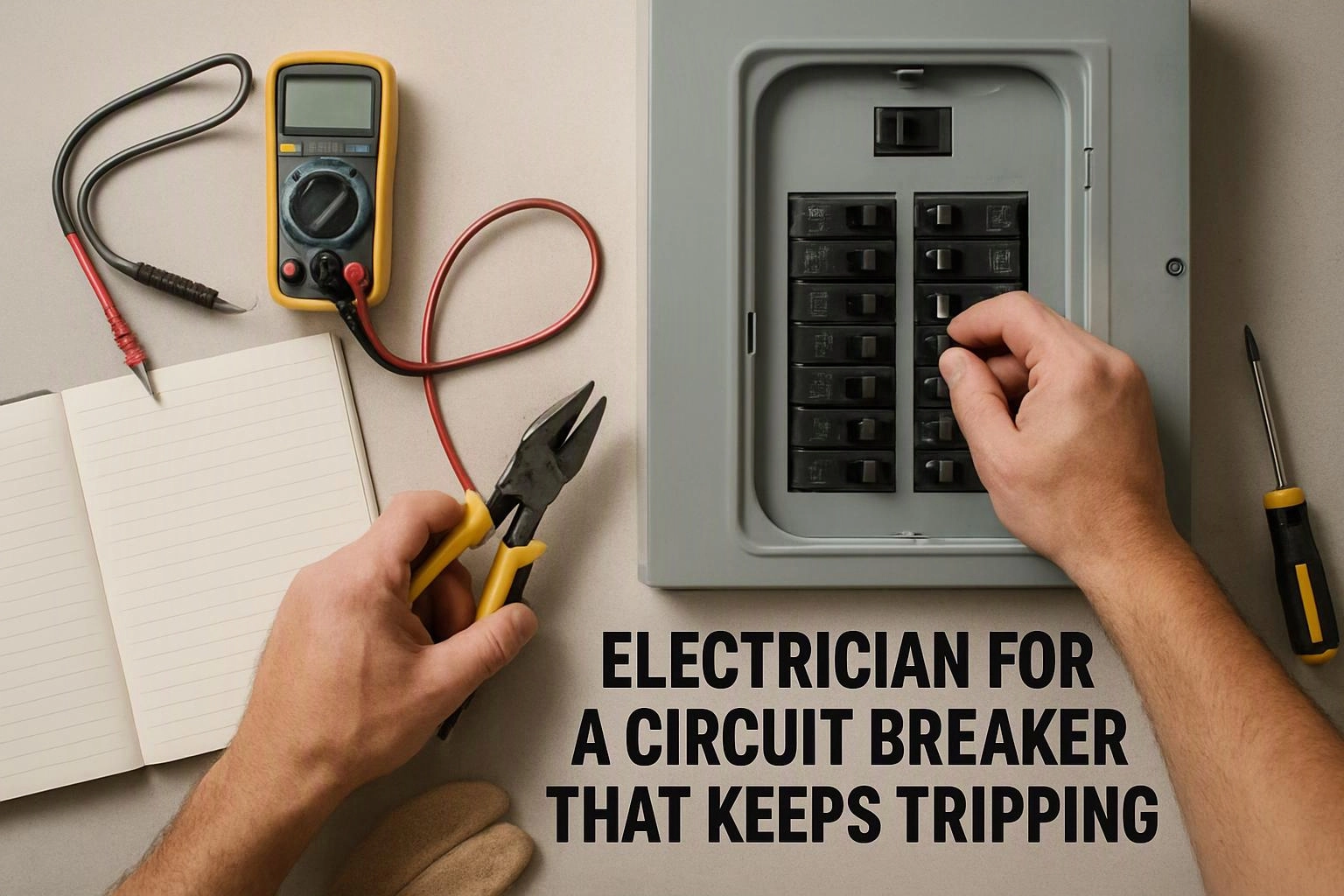
Don't keep resetting it. We can test the breaker and trace the circuit to find the cause.
How do we diagnose and repair a tripping breaker?
We trace the tripping breaker to its cause and check the circuit and panel for damage. Our electrical troubleshooting considers the circuit load, wiring, and breaker condition.
We also check the electrical panel for signs of damage. We choose circuit breaker repair, breaker replacement, or another repair based on what we find. We consider applicable code and inspection requirements when planning the work.
For a recurring trip or other urgent concern, contact us for Emergency Electrical Repair. We can explain the needed work after we assess the problem.
How can you help prevent breaker trips?
You can reduce overloads by spreading appliance use across circuits. Stop using damaged equipment or anything that repeatedly causes a trip.
A recurring trip needs more than repeated resetting. Contact Chris Miller Electric so we can find the cause and discuss the repair.
Request a QuoteWhat Are the Key Specifications to Know?
- Topic Focus
- Why a Breaker Keeps Tripping — and When to Stop Resetting It
- Related Core Service
- Emergency Electrical Repair
- Evaluation Method
- On-Site Inspection & Written Scope
- Compliance Standard
- Local Building Code & Manufacturer Specs
How Does the Evaluation & Execution Process Compare?
| Evaluation Stage | Technical & Quality Criteria | Timeline Checkpoint |
|---|---|---|
| Initial Diagnostic & Assessment | Identify root cause, site constraints & code requirements | Before any work begins |
| Written Scope & Option Comparison | Compare repair vs. replacement tiers & material grades | Prior to project approval |
| Code-Compliant Execution | Follow manufacturer specs & local permitting standards | During active service |
| Final Verification & Walkthrough | Verify installation alignment, performance & clean site handoff | Upon project completion |