How to Troubleshoot an Electrical Outlet That Stopped Working
An electrician checks nearby outlets, the breaker, GFCI protection, wiring, and the outlet itself. You can reset a tripped breaker or GFCI once. Stop if the outlet feels warm, looks burned, sparks, feels loose, or loses power again. A qualified electrician can test the circuit and replace a bad outlet or breaker. They can also fix unsafe wiring and code issues. Don’t remove the outlet cover or touch wires unless you’re trained to test for live power.
Get a Free EstimateWhat to Check When One Outlet Stops Working?
A dead outlet often has a tripped breaker, tripped GFCI receptacle, loose wire, bad receptacle, or circuit fault. Check nearby outlets first. Reset an accessible breaker or GFCI once. If power stays off, call an electrician.
First, see if one outlet or several outlets lost power. A nearby outlet may depend on power from another outlet. Bathrooms, kitchens, garages, laundry areas, and outside walls often have GFCI protection. One GFCI can control other outlets.
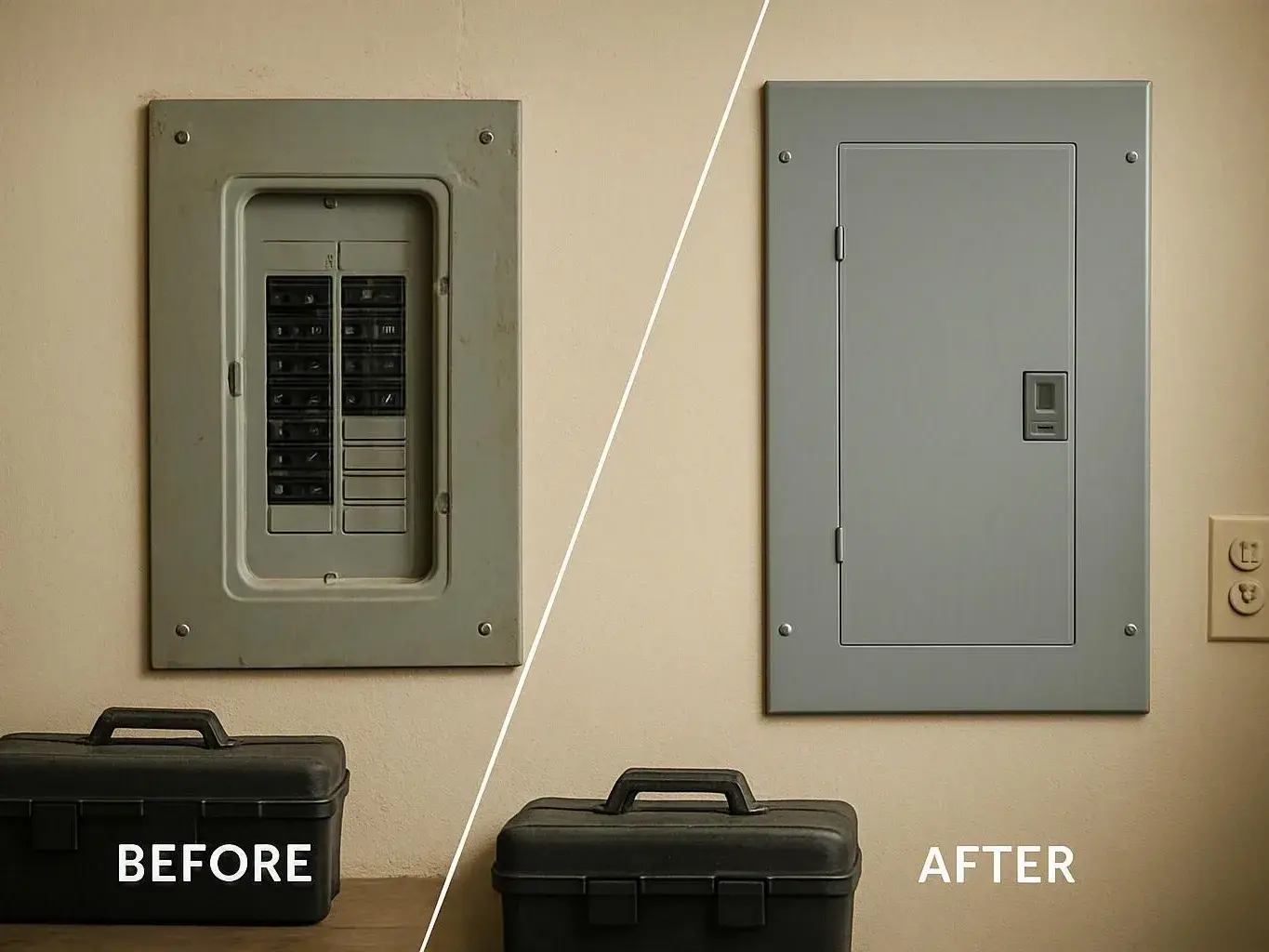
Unplug devices from the dead outlet. Look at the breaker panel without removing its cover. A breaker may look almost on while it’s tripped. Reset it once if the outlet is dry, cool, and undamaged. Don’t reset it again if it trips.
Older homes may have worn outlets or aging wires. Connections can also loosen over time. Remodeled rooms may have a GFCI in an unexpected place. An electrician can trace the problem without exposing you to live parts.
Signs You Need an Electrician for the Outlet
A damaged electrical outlet needs expert help if it feels warm, smells burnt, sparks, looks dark, crackles, or feels loose. Repeated power loss also needs attention. These signs may point to heat damage, bad wiring, or a failing breaker. Turn off the circuit if it’s safe. Don’t use the outlet until it’s checked.
If you see smoke or fire, move away and call emergency services. Otherwise, use the breaker only if you can identify it safely. Keep people away from the area. Then arrange an electrician visit. A 24 Hour Electrician may be needed for heat, smoke, or sparking.
Common Reasons an Electrical Outlet Stops Working
A dead outlet may have a tripped breaker, tripped GFCI receptacle, loose wire, failed receptacle, or circuit damage. One safety device can control many outlets. The real problem may sit several feet away.
Heaters, microwaves, dryers, and air conditioners use lots of power. They can overload a circuit. Moisture can also trip GFCI protection. Older homes may need a wiring and grounding check before repairs.
A remodel may move outlets or add new devices. The circuit may not have enough capacity. That’s why the dead outlet isn’t always the source.
How an Electrician Diagnoses a Dead Outlet?
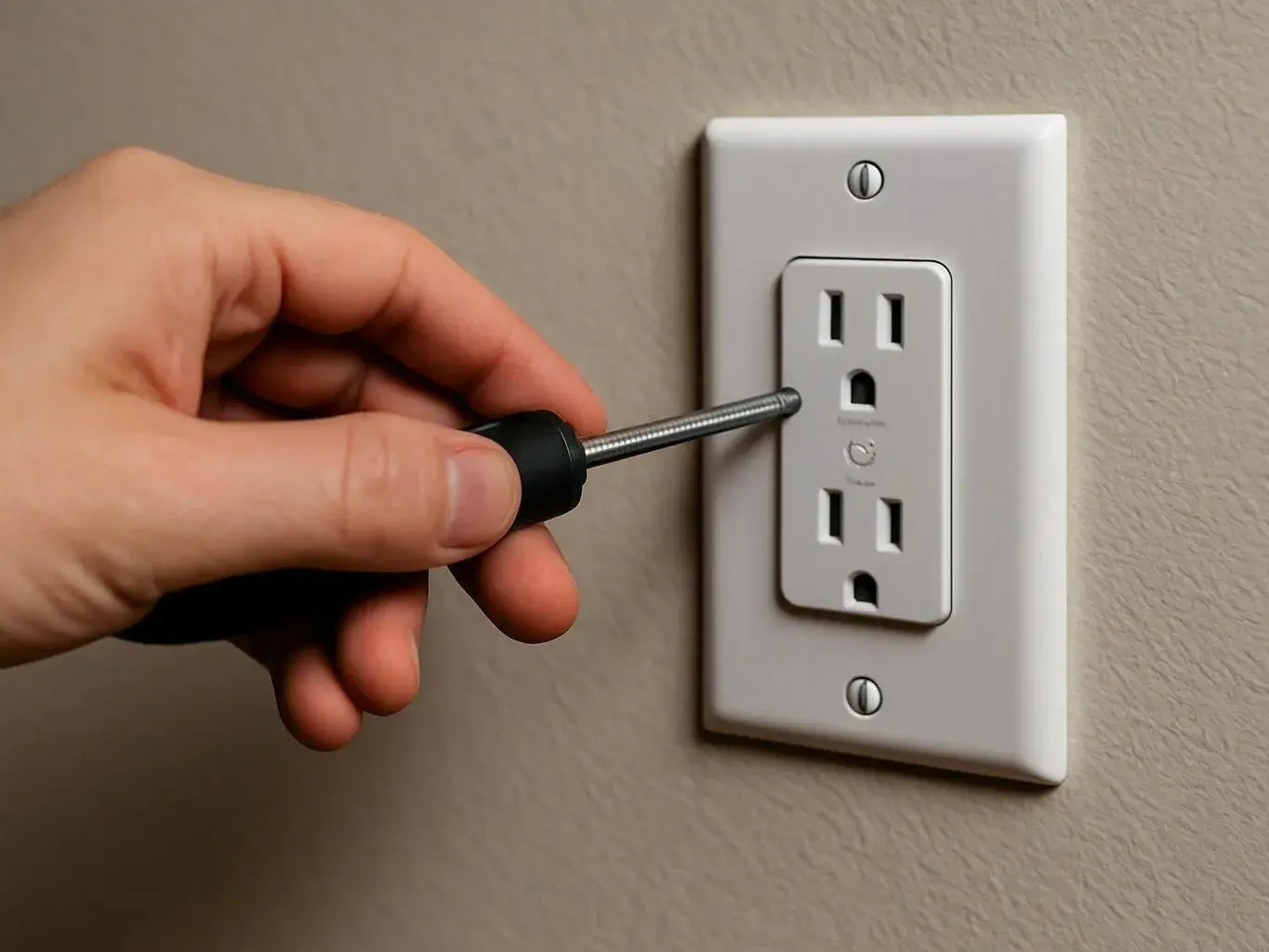
An electrician finds a dead outlet by tracing power through the circuit. They test the outlet, breaker, GFCI devices, and wire connections. They may use a circuit tester or multimeter (a tool that measures electricity). They also check grounding and polarity before suggesting repairs.
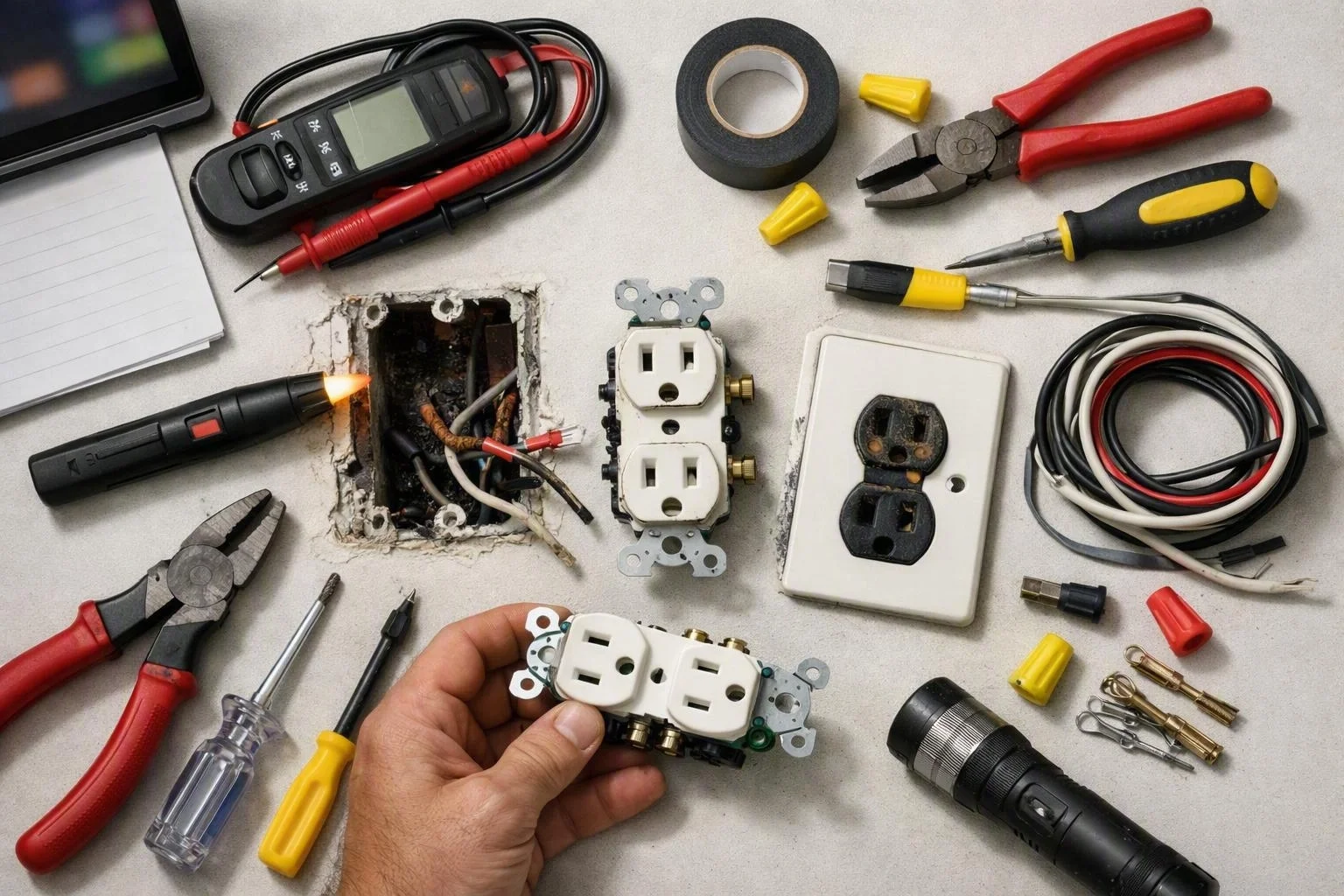
| Diagnostic point | What is checked | Why it matters |
|---|---|---|
| Voltage tester | Whether voltage reaches the receptacle | Helps locate an interruption without guessing |
| Multimeter | Voltage, continuity, polarity, and grounding readings | Provides more detailed circuit information |
| Circuit breaker | Trip condition and proper operation | Separates a breaker fault from a wiring fault |
| GFCI protection | Upstream devices, reset function, and load connections | One GFCI can protect several outlets |
| Branch circuit | Connected outlets, boxes, splices, and wiring path | Finds faults that are not visible at the dead outlet |
| Electrical code | Grounding, box fill, device placement, and protection | Supports a safe, compliant repair |
Testing needs proper training and tools. One circuit may have more than one power source. Turning off one breaker may not make every wire safe. Most simple visits take about 30 minutes to 2 hours. The time depends on access, the number of dead outlets, and hidden damage.
Safe Steps You Can Take Before Calling for Repair
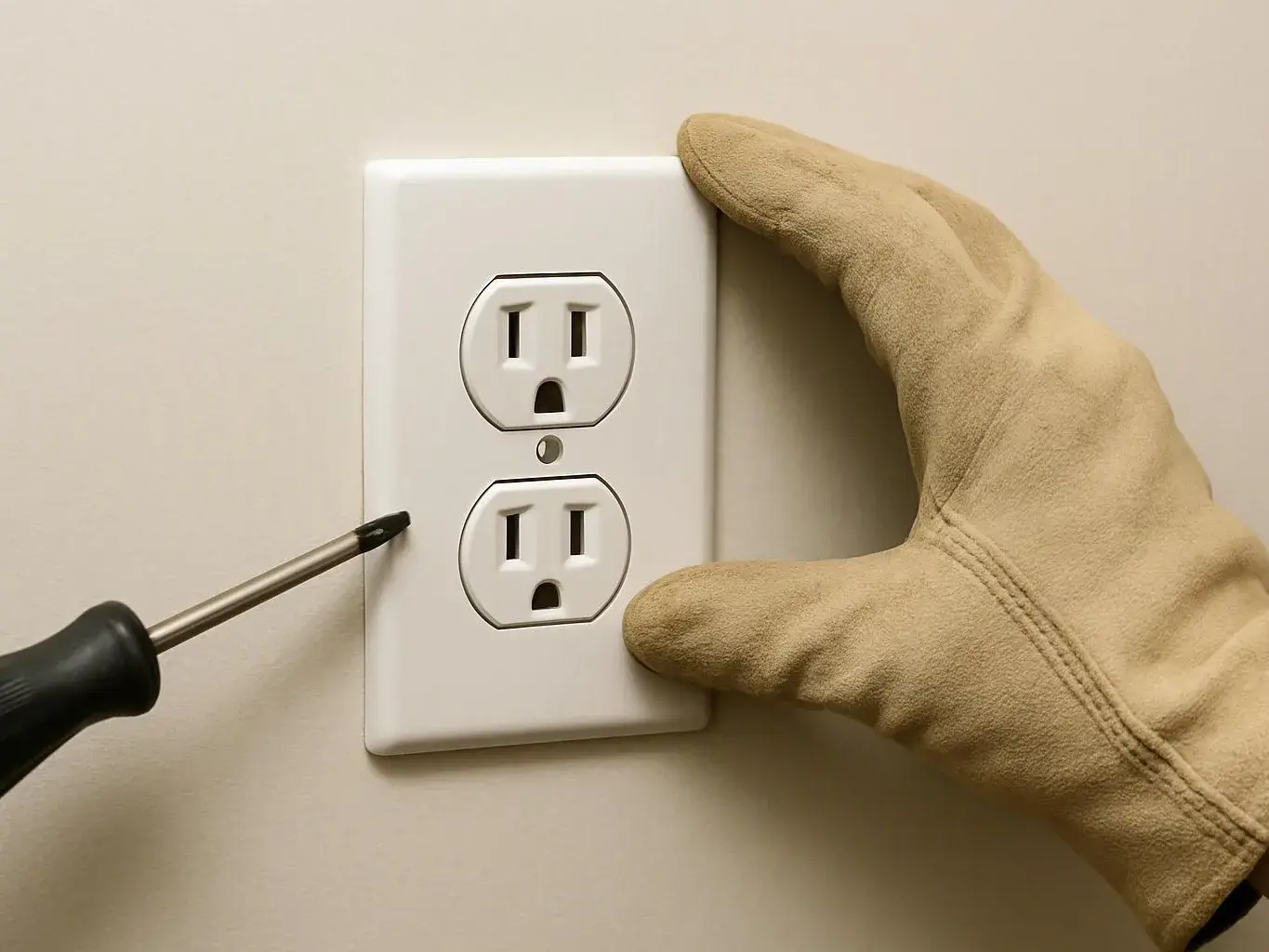
You can unplug devices and check nearby outlets. You can reset a clearly marked breaker once. You can also press reset on an accessible GFCI receptacle. Don’t remove the cover plate or touch wires. Stop if you see heat, smoke, an odor, or damage.
These steps use controls made for homeowners. Don’t touch outlet terminals, exposed wires, or conductors. If you don’t know which breaker controls the area, leave it alone. Ask a professional for help.
Outlet Repair, Replacement, and Circuit Corrections
Outlet replacement can fix a worn, cracked, loose, or burned receptacle. The circuit must still be sound. Breaker replacement can fix a bad breaker after testing confirms the cause. Code corrections may include better grounding, wiring, boxes, polarity, or GFCI protection.
An electrician may replace an outlet with a damaged face or weak contacts. They also check for heat damage. Before installing a new device, they check the box, wires, ground, and polarity.
Breaker replacement is different. A bad breaker may trip without an overload. It may fail to reset or show heat damage. The team should test the circuit first. A new breaker won’t fix a short, loose wire, overload, or damaged cable.
Code work may be needed when the system lacks grounding or has reversed polarity. It may also need safer boxes, better wire splices, or GFCI protection. Older homes and remodeled rooms need extra care.
Choose Outlet Replacement when only the device is bad. Choose Circuit Breaker Replacement after a breaker fault is confirmed. A wider repair is safer when wires are worn, breakers keep tripping, or several outlets are affected. Homeowners seeking Outlet Replacement in Fort Wayne can ask for a full circuit check.
Preventing Future Outlet Failures
You can help prevent outlet problems by avoiding overloads and replacing damaged cords. Keep water away from electrical devices. Test GFCI protection as directed. Ask for an inspection when outlets feel loose or warm. Regular care can find bad wires and poor connections early.
A circuit may work today and still have a weak connection. Older homes need special care, so do kitchens, garages, remodeled areas, and damp spaces. Stop using any device that causes heat, odor, or sparks.
Questions About 24 Hour Electrician
Why Did One Electrical Outlet Stop Working but Others Still Work?
One outlet can lose power because of a tripped breaker, upstream GFCI, loose connection, or failed receptacle. The problem may be elsewhere on the circuit.
How Do I Reset an Outlet That Has No Power?
Unplug devices first. If the outlet is cool, dry, intact, and odor-free, reset the marked breaker once. You can also press reset on an accessible GFCI. Stop if it trips again.
Can a Tripped GFCI Cause Another Outlet to Stop Working?
Yes. A GFCI receptacle can protect other outlets on the same circuit. A trip in a bathroom, kitchen, garage, outside area, or laundry room may stop power elsewhere.
How Much Does It Cost to Have an Electrician Fix a Dead Outlet?
The cost depends on the cause, access, testing time, and repair needed. A receptacle, breaker, wire, or code repair may each need different labor. Ask for a clear assessment before work starts.
Is a Dead Outlet Dangerous if the Circuit Breaker Is Not Tripped?
It can be. A dead outlet may have a loose wire, damaged receptacle, failed GFCI, or wiring fault. Heat, odor, discoloration, sparks, buzzing, or repeat power loss means you should stop using it and call an electrician.
Chris Miller Electric can help assess a dead receptacle and trace the circuit. Our team can explain if you need a reset, outlet repair, breaker work, or code correction. Professional testing is safer when an outlet feels warm, sparks, looks burned, or trips often.
Contact our teamRelated Resources
Electrical Panel Warning Signs in Fort Wayne, IN
signs you need an electrical panel upgrade
When You Need ItCircuit Breaker Replacement Warning Signs: When to Call an Electrician in Fort Wayne, IN
signs you need a circuit breaker replacement fort wayne
When You Need ItOutlet Replacement Warning Signs: When an Outlet Is Unsafe in Fort Wayne, IN
when should you replace an electrical outlet fort wayne
When You Need ItElectrical Burning Smell? When to Call a 24-Hour Electrician in Fort Wayne, IN
when to call an emergency electrician for a burning smell