Electrical Problems Caused by an Old Fuse Box
An electrician for old fuse box problems should inspect the box for signs of danger. These signs include heat, blown fuses, buzzing, burning smells, exposed wires, or low capacity. The electrician can find unsafe connections, overloaded circuits, old parts, and code concerns. They can then suggest fuse replacement, electrical repairs, or a service upgrade. Don't replace a blown fuse with a larger fuse. Never bypass the fuse box. Turn off power if it's safe. Stay away from damaged equipment. Arrange professional service if problems continue. A qualified electrician can decide if repair, code work, or full fuse box replacement is safest.
Get a Free EstimateWhat Electrical Problems Can an Old Fuse Box Cause?
An old fuse box can cause heat, blown fuses, flickering lights, and power loss. It can also create unsafe wiring and low electrical capacity. These issues may come from worn parts, overloaded circuits, or poor connections. An electrician should check the system before a small fuse issue causes damage, shock, or fire.
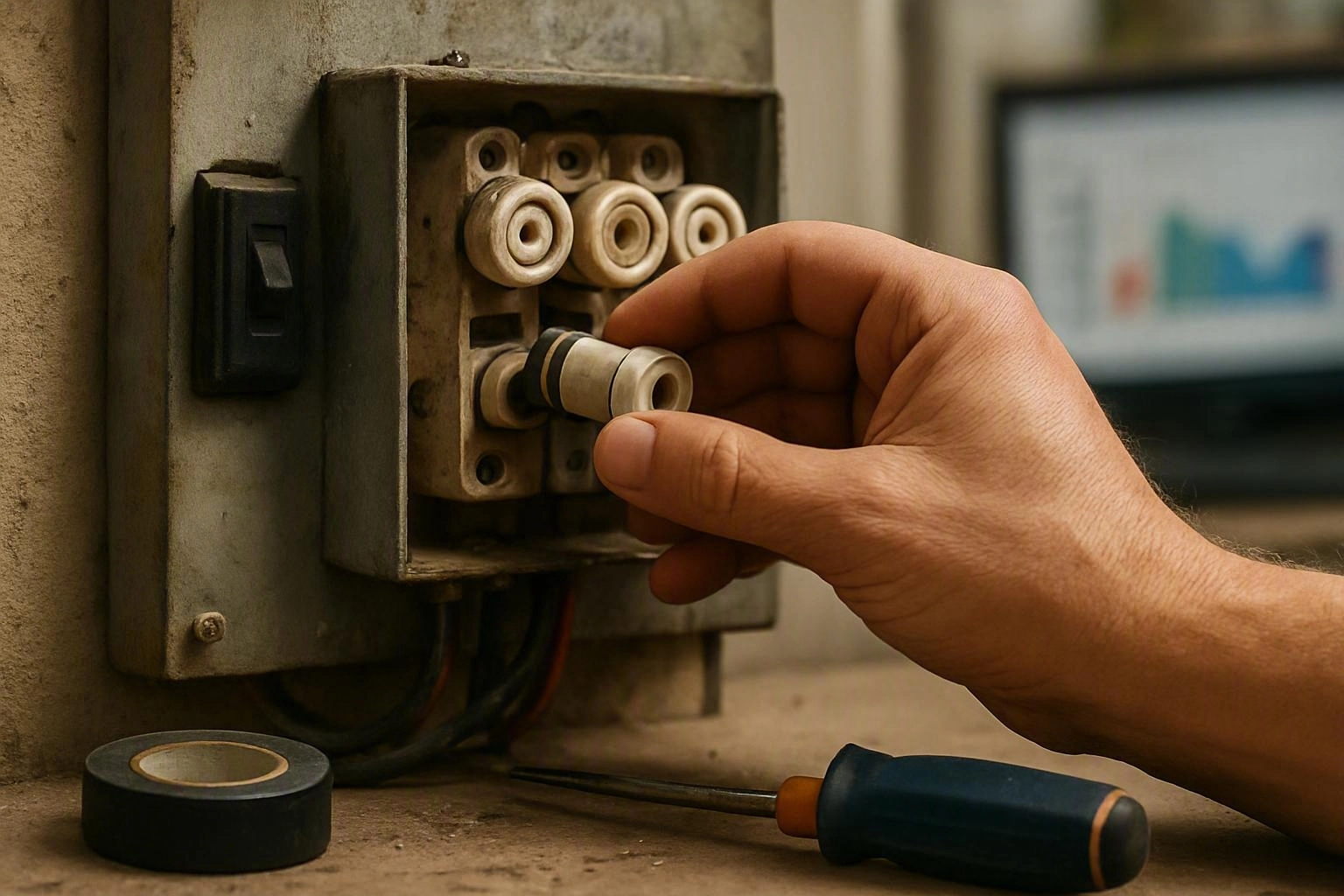
Older homes may have ceramic screw-in fuses or plug fuse panels. These systems worked well when homes used less power. New heaters, air conditioners, kitchen tools, washers, and devices add more demand. An overloaded circuit may shut off when several appliances run together.
Some faults involve one blown fuse, fuse holder, or loose connection. Other faults involve damaged wires or a small service entrance. The electrical system may no longer fit the home. Our team can inspect the residential electrical system. We can complete a load calculation (a check of power use). We can explain if you need repair or a larger upgrade.
Most diagnostic visits take about one to two hours. Time depends on access and the number of circuits checked. This range helps with planning, but it's not a promise. Chris Miller Electric can explain the findings before work starts.
Signs Your Fuse Box Needs Immediate Electrical Attention
Warning signs include burning smells, heat, buzzing, scorch marks, and blown fuses. Flickering lights and damaged wires also need attention. Stop replacing or resetting fuses when these signs appear. An electrician can find the danger and suggest repair or replacement.
Keep people away if the box is hot, wet, damaged, or hard to reach. Don't touch it. Turn off the main power only if it's safe. Otherwise, arrange emergency electrical service.
Why Old Fuse Boxes Develop Electrical Problems?
Old fuse box problems often come from aging wires, overloaded circuits, or loose connections. Corrosion (damage from moisture) can also cause trouble. Home updates and new appliances may exceed the service's capacity. A blown fuse may only show a deeper wiring or power problem.
DIY changes can hide the real fault. Never install a larger fuse to stop repeated failures. Don't wrap a fuse or bypass the safety device. Our team checks the cause, not just the visible problem.
Old Fuse Box vs. Modern Circuit Breaker Panel
A fuse box and a circuit breaker panel protect circuits from too much current. They work in different ways. A fuse must be replaced after it opens. A breaker can usually be reset after the cause is fixed. The right choice depends on the box, wiring, power needs, and safety rules.
| Factor | Old fuse box | Modern breaker panel |
|---|---|---|
| Overcurrent protection | Uses a fuse that melts when current exceeds its rating | Uses a resettable circuit breaker that trips |
| Recurring overload | Requires a replacement fuse and diagnosis | Requires correction of the overload before resetting |
| Capacity | May not support modern household loads | Can provide more circuits when properly designed |
| Maintenance concern | May have obsolete parts, damaged sockets, or unsafe modifications | Can still require inspection for heat, corrosion, and faulty connections |
A newer breaker panel isn't always safe. It still needs the right size and sound wiring. It also needs proper grounding and bonding. An electrician compares the equipment, service wires, and home power use before suggesting a change.
When Repair Is Enough and When Replacement Makes Sense?
One fuse replacement may be enough when the fuse has the right rating. The holder must also be sound. Testing must find no wiring or load problem. A damaged holder, loose terminal, or wrong label may need a focused code fix. A full panel change may not be needed.
Full Fuse Box Replacement makes sense when the box is old, damaged, hot, or too small. Replacement may also help when the box is hard to maintain. A service upgrade may be needed for new appliances or a home remodel. Older homes need a power check before new equipment is added.
The choice depends on grounding, bonding, service wires, and branch circuits. It also depends on space and fit with a modern breaker panel. A 24 Hour Electrician can help when a serious warning appears after hours.
How an Electrician Diagnoses Old Fuse Box Problems?
An electrician checks the box, tests voltage and connections, and looks for overloaded circuits. The electrician also checks grounding, bonding, and the home's power use. Then, the electrician explains the safest repair or upgrade.
Testing needs safe steps and proper tools. A visual check may miss a bad connection or weak ground. It may also miss an overloaded circuit inside the box.
How to Prevent Fuse Box Problems and Stay Safe?
Use the correct fuse rating and avoid overloaded outlets. Limit extension cord use. Keep flammable items away from electrical equipment. Watch for warning signs and book regular checks. Never bypass a fuse or use a larger one. That can make wires overheat.
Routine electrical care can find loose connections and damaged insulation early. It can also find poor labels before a failure. Don't open the equipment or change wiring without proper training.
When to Call an Electrician for an Old Fuse Box?
Call an electrician for old fuse box problems when fuses blow often. Call when the box gets hot or wires smell or sound strange. Call when circuits can't support needed appliances or the system shows damage. Professional service can find the cause and provide safe repairs.
Our team can tell if you need one fuse or a larger repair. We check the box, circuit capacity, grounding, bonding, service wires, and home power use. A service upgrade may help with new heating, cooling, an electric vehicle, or other high-power equipment.
Fuse Box Replacement in Fort Wayne may be part of a full electrical inspection. This can help when an older home needs safer equipment. We also handle Electrical Service Upgrades when the current service can't support planned changes. Use our contact page to arrange an evaluation.
Leave the equipment alone if you see smoke or sparks. Get emergency electrical service for a strong burning smell or fire damage. Get a Free Estimate
Questions About 24 Hour Electrician
What Are the Signs That an Old Fuse Box Needs to Be Replaced?
Heat, burning smells, buzzing, scorch marks, and damaged fuse holders may show replacement is needed. Exposed wires, blown fuses, and low circuit capacity also matter. An electrician should inspect the equipment first.
Can an Old Fuse Box Cause Electrical Fires?
An old fuse box can raise fire risk when wires overload or connections loosen. Damaged parts and wrong fuses can also cause fires. Don't bypass protection or ignore heat and burning smells.
Should I Replace My Fuse Box with a Circuit Breaker Panel?
A circuit breaker panel may help when the old box is unsafe or too limited. It may also help when the box is hard to service. An electrician must inspect the system and check power needs, grounding, and wiring.
Why Does My Fuse Keep Blowing in My Old Fuse Box?
A fuse may blow because of an overloaded circuit, short circuit, or bad appliance. Loose connections, damaged wires, and wrong fuses can also cause it. Replacing it again won't fix the hidden fault.
How Much Does It Cost to Replace an Old Fuse Box?
Cost depends on the equipment, service size, wiring, grounding work, access, and permits. A larger service upgrade may also be needed. An electrician can give an estimate after checking the system.
Related Resources
Electrical Panel Warning Signs in Fort Wayne, IN
signs you need an electrical panel upgrade
When You Need ItCircuit Breaker Replacement Warning Signs: When to Call an Electrician in Fort Wayne, IN
signs you need a circuit breaker replacement fort wayne
When You Need ItWhen to Replace a Fuse Box in Fort Wayne, IN
signs you need to replace your fuse box
When You Need ItOutlet Replacement Warning Signs: When an Outlet Is Unsafe in Fort Wayne, IN
when should you replace an electrical outlet fort wayne