When to Call an Electrician for Flickering or Dimming Lights
Electrician for flickering lights finds the cause and checks the fixture, circuit, wiring, and panel. The electrician then suggests a safe repair. A loose bulb, wrong dimmer, or bad LED driver may cause a brief flicker. Repeated or widespread dimming can signal loose wires, an overloaded circuit, voltage changes, or panel trouble. Turn off any hot, buzzing, smoking, or sparking fixture. Then seek urgent electrical service. Your home may need an electrical service upgrade, electrical panel upgrade, or electrical code corrections. These changes may help support your home’s lights and appliances safely.
Get a Free Estimate
Chris Miller Electric helps homeowners find the cause of unstable lights. Early repairs can stop a small fault from growing. Our team checks the light, the system’s age, and each circuit’s load.
Why Are My Lights Flickering or Dimming?
Flickering or dimming lights often come from loose bulbs, bad fixtures, wrong dimmers, loose wires, or overloaded circuits. Unsteady voltage can cause the same issue. One light often points to a local fault. Several lights changing together may show a circuit, service, or panel problem.
A brief change may happen when a motor starts. Repeated changes need a closer look. LEDs may show voltage changes more clearly than older bulbs. If a light changes when you move the switch, the switch may be loose. Don’t open the switch box yourself.
The pattern can help show the cause. One flickering light often has a fixture problem. Dimming across the home may point to the service, neutral wire, or panel. Older wiring may have worn parts or low capacity. Added lights in a remodeled room may also overload an old circuit.
New appliances can reveal a weak circuit. Electric ranges, heat pumps, and charging equipment use much power. Our team checks if the fault affects one light or the whole system.
Signs Your Lighting Problem Needs an Electrician
An electrician should check lights that flicker often or affect many fixtures. Buzzing, heat, burning smells, sparks, breaker trips, or damage need prompt care. These signs may point to unsafe wires, high load, arcing, or a bad connection.
Stop using equipment with heat, smoke, sparks, or damage. The cause may be the fixture, circuit, wiring, or panel.
Common Symptoms to Check Before Service
Write down what changes and when it happens. Note which switches or appliances are on. This helps our team test the system safely.
- Intermittent flicker: Does it happen at random or when an appliance starts?
- Light brightness changes: Does the light pulse, fade, or grow brighter?
- Does an LED light flicker only when dimmed?
- Does the switch feel loose, warm, or noisy?
- Does a nearby receptacle show heat, movement, or dark marks?
What Causes Flickering Lights in a Home?
Common causes include loose bulbs, bad fixtures, wrong LED and dimmer pairings, loose wires, overloaded circuits, and panel limits. An electrician tests the fixture, wires, voltage, circuit load, breaker, and panel. These tests show whether the fault affects one light or the whole circuit.
More than one cause may exist. An older home may have loose wires and weak grounding. Its panel may also predate a remodel or large appliance. Our crews trace the full path from the light to the panel. We don’t just keep replacing bulbs.
How an Electrician Diagnoses the Problem?
An electrician finds when and where the flicker occurs. The electrician tests voltage, the fixture, the switch, the wires, and the panel. The electrician also checks the circuit load. These steps show if the repair needs a light, wire, breaker, circuit, or service change.
Most visits take about 30 to 90 minutes. Access and the number of lights can change that time. Panel problems may take longer. Testing can find the cause, even when the bulb is new.
When an Upgrade or Code Correction May Be Needed?
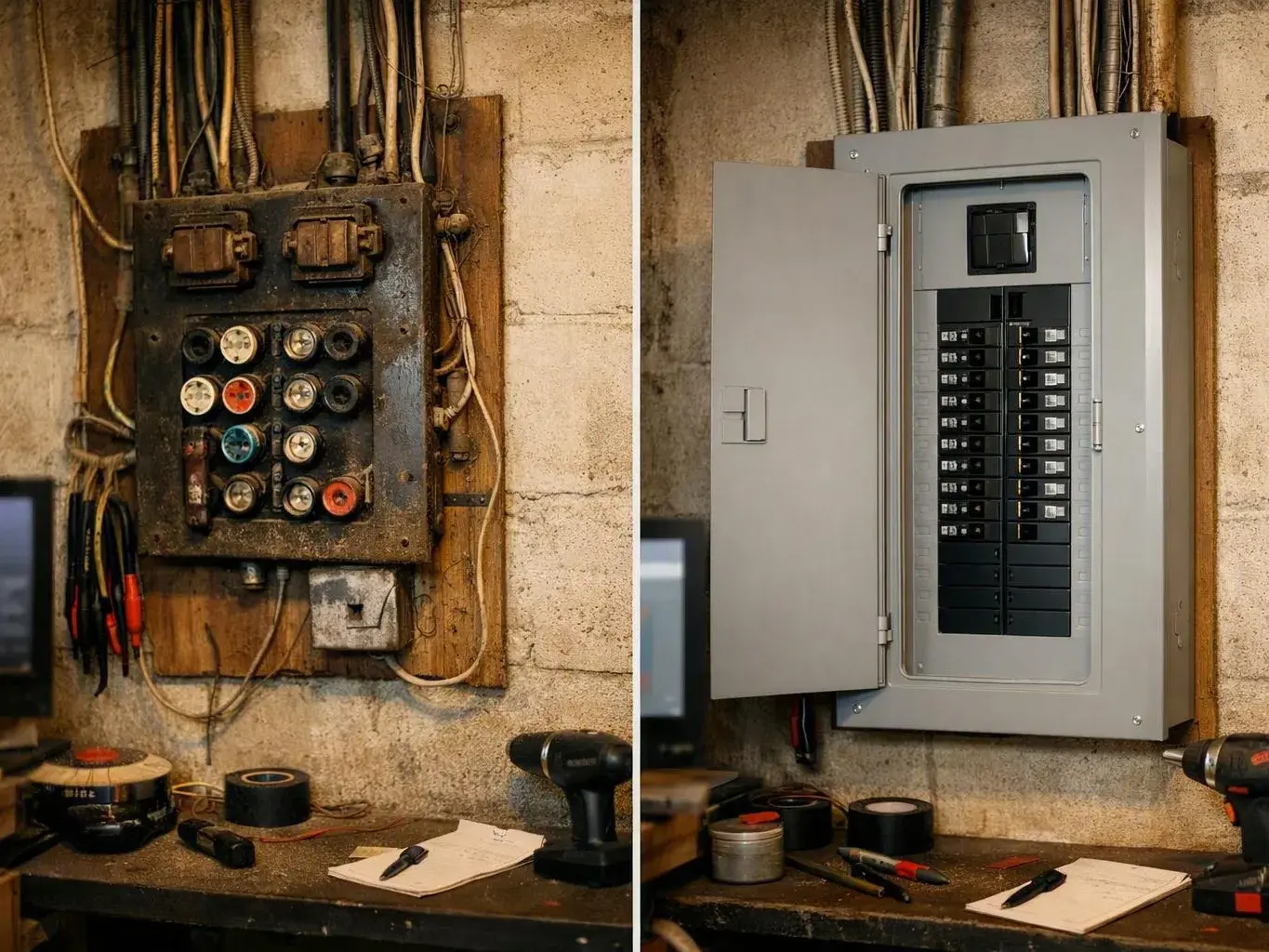
An electrical service upgrade may help when the home lacks enough total power. An electrical panel upgrade is more limited. It may help when the service works, but the panel is old, damaged, crowded, or short on breaker space.
Electrical code corrections may fix bad connections, missing covers, poor spacing, weak grounding, or wrong breakers. The right fix depends on tests, home age, past work, and future appliances. A new panel won’t repair damaged wires farther away.
Our team explains the best next step. That may be a fixture repair, circuit test, panel upgrade, or broader Electrical Service Upgrades. Electrical Service Upgrades in Fort Wayne may help when a home adds several large loads. One remodeled room may need only a new branch circuit.
How to Prevent Flickering and Dimming Lights?
Use bulbs and dimmers that work together. Avoid overloaded circuits. Replace damaged fixtures. Arrange a professional check when symptoms return. New lights should match the circuit’s capacity.
Prevention matters in older homes and remodeled rooms. If flickering returns after a bulb change, don’t blame the new bulb. The circuit, connection, or panel may need testing. Homeowners getting started with 24 Hour Electrician should report heat, smoke, sparks, or power loss.
What to Do Until an Electrician Arrives?
Stop using a fixture that is hot, smoking, sparking, or burning. Keep people away from damaged parts. If you can identify the right breaker, turn it off. Don’t remove covers or repair wires. Write down when the flicker occurs.
Don’t reset a tripping breaker again and again. Don’t touch exposed wires or use water near electrical gear. Leave damaged switches, receptacles, and fixtures off. If you see fire, smoke, or strong arcing, leave the home. Call emergency services first.
Note the rooms affected and appliances that were running. Record any recent work. Also note blinking lights, pulsing lights, or whole-house dimming. Our team can then choose the right next step.
Questions About 24 Hour Electrician
Why Are My Lights Flickering Throughout the House?
Whole-house flickering can signal a service connection, voltage change, neutral problem, overloaded circuit, or panel fault. Turn off equipment with heat or smoke. Arrange an electrical inspection instead of changing bulbs in each room.
Is Flickering Caused by a Loose Wire Dangerous?
Yes. A loose wire can create heat, arcing, or an arc fault. Stop using the fixture or circuit. Don’t open the box or tighten wires yourself.
Can a Bad Light Switch Cause Lights to Flicker?
A worn or loose switch can cause flickering, buzzing, heat, or power loss. Stop using it if it feels warm or smells burnt. Have an electrician test the connection.
Why Do My LED Lights Flicker When Dimmed?
LED lights may flicker when the bulb and dimmer don’t match. A dimmer’s minimum load or a bad LED driver may also cause flicker. Use products rated to work together. Stop using the light if it buzzes or gets hot.
Should I Call an Electrician if My Lights Keep Dimming?
Yes. Repeated dimming may show an overloaded circuit, loose connection, voltage problem, or panel limit. An electrician can test the system. The repair may need Electrical Panel Upgrades or a wider service fix.
If flickering, buzzing, heat, or dimming continues, our team can inspect your lights. We’ll explain the safest repair path. Contact Chris Miller Electric through our service request page to arrange an evaluation.
Related Resources
Electrical Panel Warning Signs in Fort Wayne, IN
signs you need an electrical panel upgrade
When You Need ItCircuit Breaker Replacement Warning Signs: When to Call an Electrician in Fort Wayne, IN
signs you need a circuit breaker replacement fort wayne
When You Need ItWhen to Replace a Fuse Box in Fort Wayne, IN
signs you need to replace your fuse box
When You Need ItOutlet Replacement Warning Signs: When an Outlet Is Unsafe in Fort Wayne, IN
when should you replace an electrical outlet fort wayne