
What is Arc-Fault Circuit Interrupter?
Arc-Fault Circuit Interrupter is a protective device that detects dangerous electrical arcing and disconnects power before an arc can start a fire. An AFCI monitors the circuit for unusual current patterns caused by damaged wires, loose connections, or crushed insulation. AFCI protection commonly applies to branch circuits serving receptacles and other equipment in living areas.
Quick Facts About Arc-Fault Circuit Interrupter
Category
Electrical safety device
Used for
Detecting hazardous electrical arcs
Common confusion
AFCI is not the same as GFCI protection
Relevant standard
National Electrical Code requirements
Also called
AFCI, Arc-Fault Breaker
Often discussed with
Circuit Breaker Replacement, Electrical Code Corrections
Key Takeaways About Arc-Fault Circuit Interrupter
- An AFCI detects electrical arcing patterns that ordinary circuit breakers may not recognize.
- AFCI protection helps reduce fire risk from damaged wires, loose connections, and failed insulation.
- AFCI breakers protect an entire branch circuit, while AFCI receptacles protect downstream devices.
- A tripped AFCI needs investigation if it trips repeatedly after reset.
- AFCI protection differs from GFCI protection, which responds mainly to current leaking to ground.
Understanding Arc-Fault Circuit Interrupter
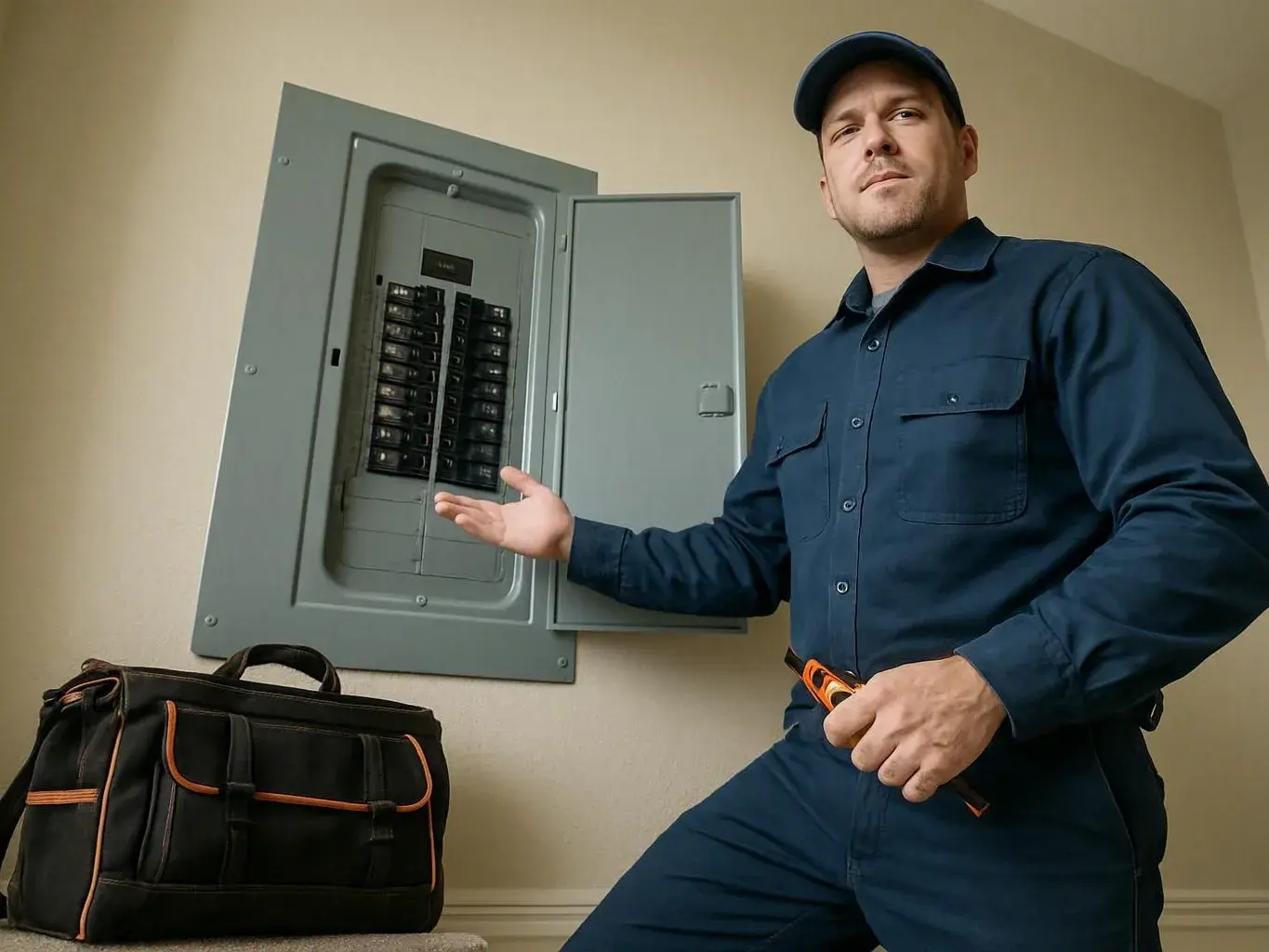
Arc-Fault Circuit Interrupter, often called an AFCI, is a circuit protection device. It watches electrical current for patterns linked to arcing. An electrical arc can occur when current jumps across damaged connections or gaps. The arc creates heat that may ignite wood, insulation, dust, or nearby material.
Related glossary terms: Circuit Breaker, Ground-Fault Circuit Interrupter, National Electrical Code.
An AFCI differs from a standard circuit breaker. A breaker mainly responds to overloads and short circuits. A standard breaker may not trip when a damaged cord produces small, repeated arcs. AFCI protection adds electronic sensing. It can identify this pattern and open the circuit before heat causes a fire.
How Arc-Fault Circuit Interrupter Works, Is Measured, or Is Used?
An AFCI monitors the current and voltage waveform flowing through a branch circuit. Its sensing electronics look for rapid changes and irregular pulses. They also look for other signs linked to series or parallel arcing. When the device identifies a dangerous pattern, an internal switch disconnects power. This usually happens within a fraction of a second.
AFCI protection may be installed as an AFCI circuit breaker in the electrical panel. It may also be installed as an AFCI receptacle at the first outlet. A breaker can protect wiring and connected devices throughout the branch circuit. This protection works when installed and wired correctly. A receptacle has a defined line side and load side. Incorrect connections can leave downstream outlets unprotected.
Testing should follow the device maker's instructions. Pressing the test button should trip the device. Pressing reset should restore power when the circuit has no active fault. An electrician may also check circuit wiring and neutral connections. They may check grounding, device compatibility, and the panel's available space. These checks can help diagnose an AFCI installation.
Why Arc-Fault Circuit Interrupter Matters?
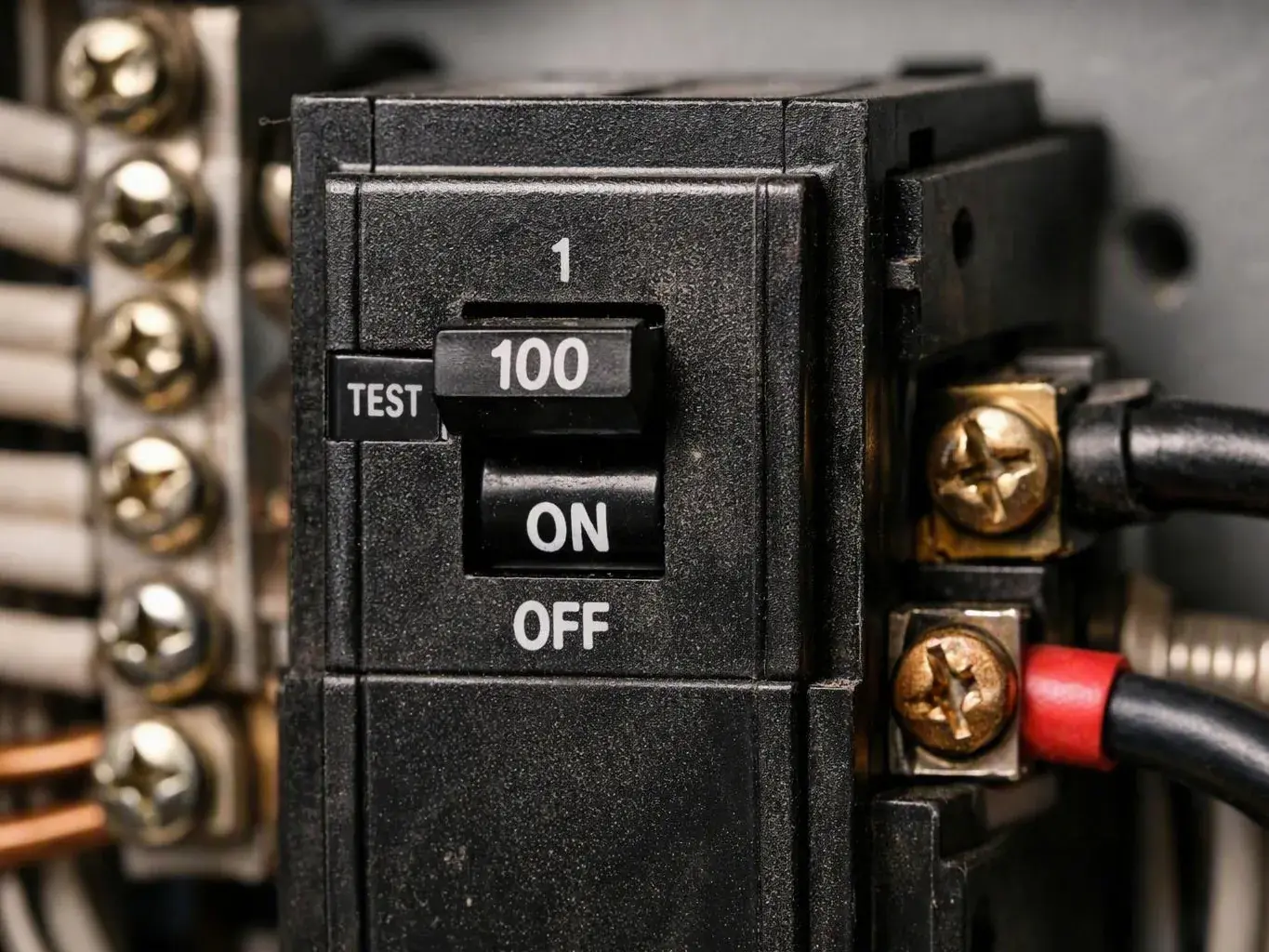
Arcing often develops in places that are difficult to see. These places include behind walls, inside boxes, and under terminal screws. Arcing can also develop within aging cords. Loose wire connections, damaged insulation, and worn receptacles can create heat. They may not draw enough current to trip a conventional breaker. AFCI protection adds a layer of fire prevention for these conditions.
The device also helps with code-based design decisions. These decisions arise during new construction, remodeling, and panel work. Required coverage depends on the adopted electrical code and circuit location. It also depends on the work being performed. A correct installation must match the panel and wiring method. It must also match the circuit type and manufacturer's listing. Don't rely only on the presence of an AFCI label.
When Arc-Fault Circuit Interrupter Matters Most?
AFCI protection becomes especially relevant during bedroom additions and finished basements. It also matters during kitchen remodels and other projects. These projects add or alter branch circuits. AFCI protection also matters in older homes. Backstab wiring, loose terminations, damaged cable, or aging receptacles may increase arc risk. Local inspection rules can affect existing circuit protection during an alteration.
Repeated tripping is a warning sign, not a nuisance to bypass. Unplug connected equipment and reset the device once. Do this only if the manufacturer's instructions allow it. If the AFCI trips again, the cause may be a faulty appliance or damaged cord. It may also be a wiring problem, shared neutral issue, or incompatible device. Keep the circuit off until someone finds and corrects the fault.
How to Evaluate Arc-Fault Circuit Interrupter?
- Does the AFCI trip when its test button is pressed and reset correctly afterward?
- Does the breaker or receptacle match the panel, circuit voltage, wire size, and manufacturer's listing?
- Are line and load conductors connected to the correct terminals on an AFCI receptacle?
- Does repeated tripping continue after appliances and extension cords are disconnected?
- Does the installation meet the locally adopted National Electrical Code requirements?
Related Concepts Compared
Arc-Fault Circuit Interrupter vs. Ground-Fault Circuit Interrupter
A GFCI responds to current leaving the intended circuit path, which can cause electric shock. An AFCI responds to electrical arcing patterns that can create fire risk.
Arc-Fault Circuit Interrupter vs. Circuit Breaker
A standard circuit breaker normally protects against excessive current from overloads and short circuits. An AFCI includes added electronic detection for hazardous arcing.
Arc-Fault Circuit Interrupter vs. AFCI Receptacle
An AFCI receptacle is one type of AFCI device installed at an outlet. An AFCI breaker installs in the panel and can protect the branch circuit when properly connected.
Expert Note
A nuisance trip does not prove that the AFCI is defective. Modern electronics, shared neutrals, neutral-to-ground contact, and loose terminations can all trigger protection. Diagnosis should identify the trip pattern and test the circuit before anyone replaces the device.
Common Mistakes or Myths About Arc-Fault Circuit Interrupter
- Treating an AFCI trip as a simple reset problem without finding the cause.
- Confusing AFCI protection with GFCI protection.
- Installing an AFCI breaker that does not match the panel manufacturer or circuit wiring.
- Connecting an AFCI receptacle's line and load conductors incorrectly.
- Bypassing or removing AFCI protection to stop repeated trips.
Arc-Fault Circuit Interrupter in Practice: A Real-World Example
A bedroom circuit has a loose terminal connection behind an aging receptacle. The connection produces a small arc when a lamp is plugged in, but the current remains below the standard breaker's overload threshold. An AFCI detects the irregular arc pattern and disconnects power before the connection overheats.
Sources & Further Reading on Arc-Fault Circuit Interrupter
- Arc-Fault Circuit Interrupters, U.S. Consumer Product Safety Commission
- Arc-Fault Circuit Interrupters, Electrical Safety Foundation International
- Arc-Fault Circuit Interrupters, UL Solutions
Related Terms
Circuit Breaker
Circuit Breaker is an automatic electrical safety device that opens a circuit when current exceeds a…
Ground-Fault Circuit Interrupter
Ground-Fault Circuit Interrupter is a safety device that monitors electrical current flowing through a circuit and…
National Electrical Code
National Electrical Code is a widely adopted safety standard for designing, installing, and inspecting electrical systems…
Backstab Wiring
Backstab Wiring is a method of connecting a solid copper wire to a receptacle or switch…
Chris Miller Electric
Have Questions About Arc-Fault Circuit Interrupter?
Contact Chris Miller Electric for practical guidance on Arc-Fault Circuit Interrupter and related 24 hour electrician work in Fort Wayne.