
What is Short Circuit?
Short Circuit is an unintended low-resistance path that lets electrical current bypass part of a circuit. The sudden current rise can overheat conductors, damage equipment, create arcing, or trip a protective device. Common causes include damaged insulation, loose connections, moisture, and contact between energized wires or between an energized wire and ground.
Quick Facts About Short Circuit
Category
Electrical fault
Measured by
Fault current in amperes
Used for
Describing an unintended current path
Main risk
Overheating, arcing, fire, or equipment damage
Common confusion
A short circuit is not the same as an overloaded circuit
Also called
Electrical short, Short circuit fault
Key Takeaways About Short Circuit
- A short circuit creates a low-resistance path that sharply increases current.
- Circuit breakers and fuses should interrupt dangerous current before conductors overheat.
- Burning odors, buzzing, sparks, and repeated breaker trips can signal a short circuit.
- Never reset a tripped breaker repeatedly without finding the cause.
- Damage, moisture, loose terminals, and faulty equipment commonly create short circuits.
Understanding Short Circuit
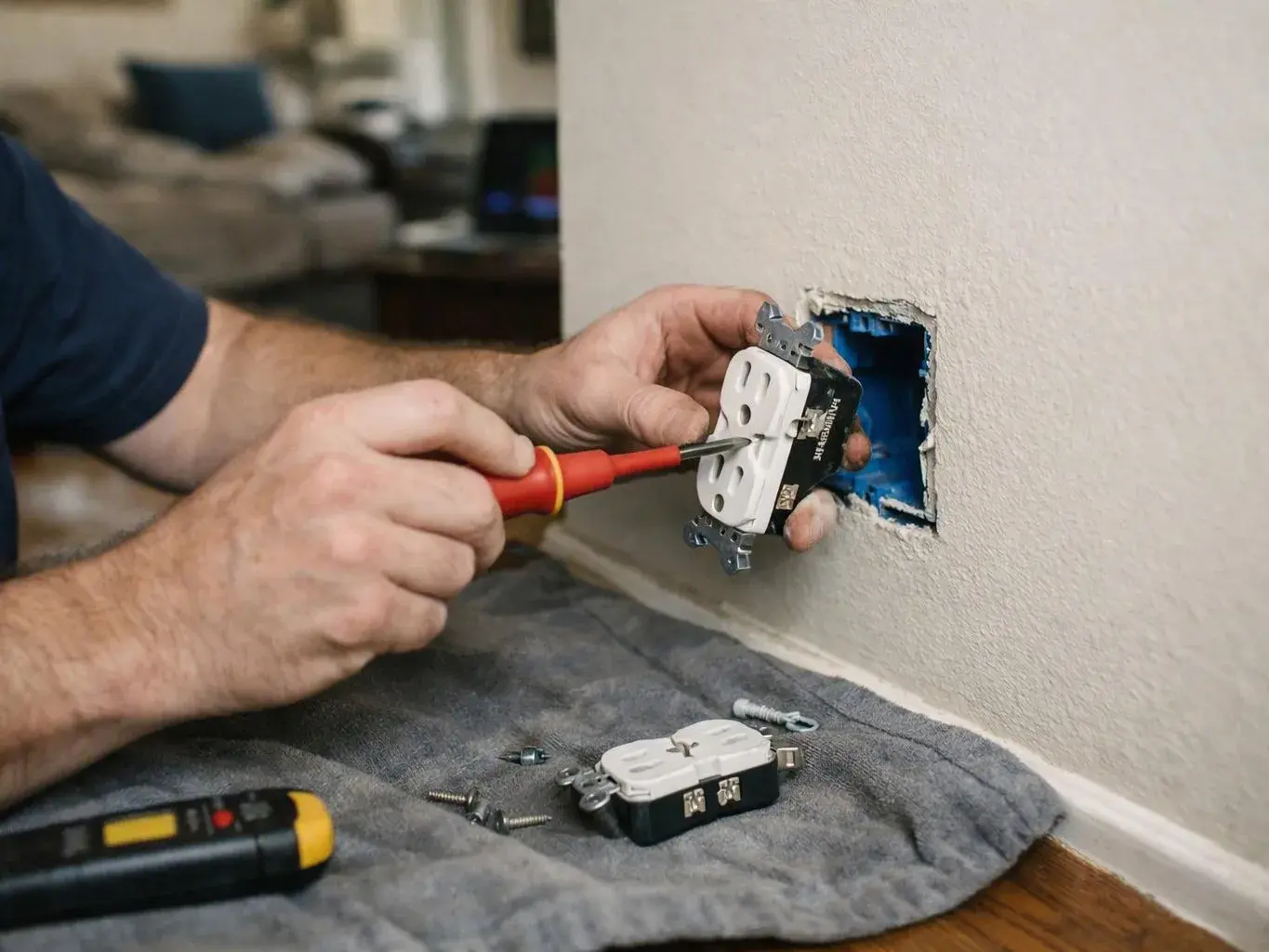
Short Circuit describes an unintended connection between points with different electrical potential. The connection has less resistance than the normal load path. So, current rises sharply. A hot wire touching a neutral wire is a common example. A hot wire touching grounded metal can also create a fault.
Related glossary terms: Circuit Breaker, Fuse, Ground-Fault Circuit Interrupter.
Normal circuit wiring sends current through a planned load, such as a lamp, motor, or heater. The load limits current and changes electrical energy into light, motion, or heat. A fault bypasses much of that load. This can heat conductors and connection points faster than wiring safely allows.circuit breaker or fuse should open the circuit when current reaches a dangerous level.
How Short Circuit Works, Is Measured, or Is Used?
Electrical current follows the path with the least opposition. Under Ohm's law, current equals voltage divided by resistance, written as I = V/R. If voltage stays the same, resistance can drop close to zero. The possible current then becomes very high. The actual fault current depends on the source, conductor size, wire length, transformer capacity, and connection resistance.
Electricians locate a suspected fault by isolating the circuit, inspecting wiring and devices, and testing for unwanted continuity or resistance.multimeter can help test a de-energized circuit. An insulation resistance tester can reveal damaged insulation under controlled conditions. Professionals also consider the protective device's interrupting rating. This rating must safely stop the available fault current.
Why Short Circuit Matters?
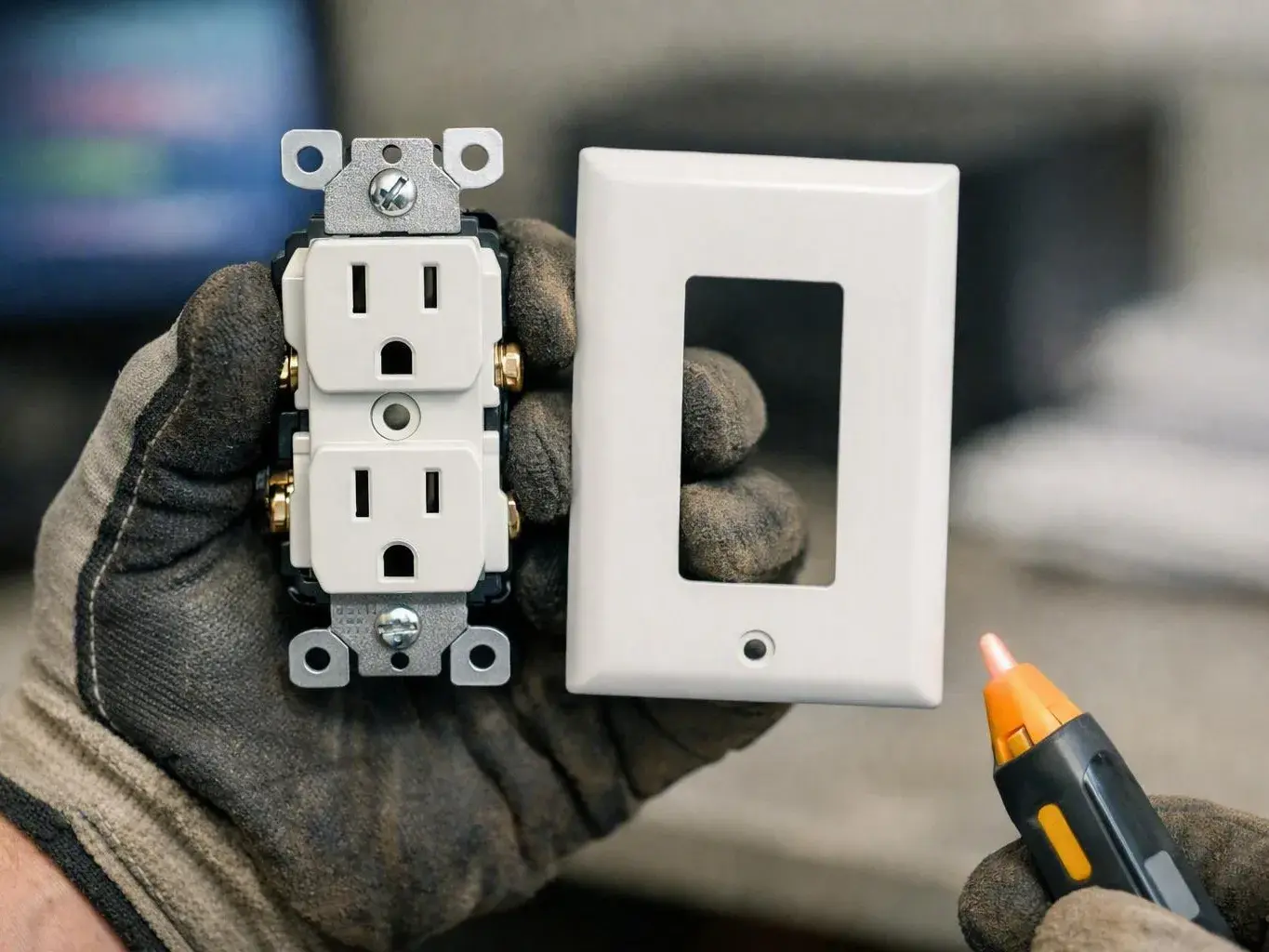
A short circuit can damage insulation, melt terminals, and produce an arc flash or fire. The protective device may trip right away. A weak connection may heat without opening the circuit at once. Repeated trips show that the underlying problem remains. The circuit may still work after resetting the breaker.
Finding the fault protects people, wiring, and connected equipment. A correct repair may involve replacing a damaged receptacle, tightening an approved terminal, repairing cable insulation, or removing a failed appliance. The repair must also address the cause. Causes include water entry or an improperly installed connection. Don't only replace the tripped breaker.
When Short Circuit Matters Most?
Short circuit concerns become urgent after sparks, smoke, a burning odor, unusual buzzing, or a warm receptacle. They also matter when a breaker trips as soon as a device is connected. They matter when lights flicker near damaged wiring. Turn off the circuit if it's safe to do so. Keep clear of visible damage, and don't touch wet electrical equipment.
Older wiring, outdoor receptacles, unfinished areas, kitchens, bathrooms, and spaces exposed to rodents deserve close attention. A ground-fault circuit interrupter can reduce shock risk in wet areas, but it doesn't repair damaged wiring or eliminate every short circuit. Evaluation should include the device, branch wiring, panel connections, and surrounding conditions.
How to Evaluate Short Circuit?
- Check whether the breaker trips immediately, only under load, or after the circuit warms.
- Inspect for melted insulation, scorch marks, loose terminals, moisture, buzzing, or a burning odor.
- Compare the circuit breaker rating with the conductor size and the equipment load.
- Test de-energized wiring for unwanted continuity between hot, neutral, and ground conductors.
- Confirm the protective device has an interrupting rating suitable for available fault current.
Related Concepts Compared
Short Circuit vs. Overloaded Circuit
An overload occurs when normal loads draw more current than the circuit is designed to carry. A short circuit creates an unintended low-resistance path and usually causes a faster, larger current rise.
Short Circuit vs. Ground Fault
A ground fault is current flowing from an energized conductor to ground or grounded equipment. It is one type of short circuit, but the terms are not interchangeable in every technical context.
Short Circuit vs. Arc Fault
An arc fault involves electricity jumping across a gap or damaged connection. A short circuit can create arcing, but a loose connection may arc without forming a direct low-resistance short.
Short Circuit vs. Circuit Breaker Trip
A breaker trip is the protective response that opens a circuit. A short circuit is the electrical problem that may cause the trip.
Expert Note
A breaker that trips repeatedly is a symptom, not a diagnosis. Faults can occur inside a receptacle, appliance, cable, panel connection, or junction box. Testing must be performed with the circuit de-energized when required, and the protective device should never be replaced with a larger rating as a shortcut.
Common Mistakes or Myths About Short Circuit
- Assuming every breaker trip means the breaker itself is defective.
- Resetting a tripped breaker repeatedly without locating the fault.
- Replacing a breaker with a higher rating to stop nuisance trips.
- Testing energized wiring with a tool not rated for the circuit.
- Ignoring heat, odor, buzzing, or scorch marks around electrical devices.
Short Circuit in Practice: A Real-World Example
A bedroom receptacle develops a loose terminal after years of use. The hot conductor shifts until it touches the metal device box, causing a short circuit and tripping the breaker. Inspection finds heat damage at the receptacle and a damaged terminal, so both the device and affected connection require repair.
Sources & Further Reading on Short Circuit
Related Terms
Circuit Breaker
Circuit Breaker is an automatic electrical safety device that opens a circuit when current exceeds a…
Fuse
Fuse is an overcurrent protection device that contains a metal element designed to melt when electrical…
Ground-Fault Circuit Interrupter
Ground-Fault Circuit Interrupter is a safety device that monitors electrical current flowing through a circuit and…
Interrupting Rating
Interrupting Rating is the highest fault current that a circuit breaker, fuse, or similar protective device…
Chris Miller Electric
Have Questions About Short Circuit?
Contact Chris Miller Electric for practical guidance on Short Circuit and related 24 hour electrician work in Fort Wayne.