
What is Neutral Wire?
Neutral Wire is a current-carrying conductor that normally returns electricity from a 120-volt load to the service panel. It connects to the grounded neutral point at the electrical service and usually carries near-zero voltage to ground. Neutral conductors are commonly identified by white or gray insulation. But color alone doesn't prove safe identification.
Quick Facts About Neutral Wire
Category
Circuit conductor
Used for
Returning current from loads
Common confusion
Neutral is not the same as ground
Typical identification
White or gray insulation
Also called
Grounded conductor, Neutral conductor
Often discussed with
Electrical Panel Upgrades, Electrical Code Corrections
Key Takeaways About Neutral Wire
- A neutral wire normally carries current back to the electrical service after power passes through a load.
- White or gray insulation usually identifies a neutral conductor. But testing and circuit tracing confirm its function.
- Neutral and ground wires serve different purposes and must connect at approved locations.
- A loose neutral can cause unstable voltage, flickering lights, equipment damage, or shock hazards.
- Never assume a neutral wire is safe to touch because its voltage may change under load.
Understanding Neutral Wire

Neutral Wire is the grounded conductor in many building branch circuits. It completes the circuit. In a typical 120-volt circuit, the hot conductor carries power from the panel. It carries power to a light, receptacle, or appliance. The neutral conductor carries current back to the service panel. The load uses the electrical energy first.
Related glossary terms: Hot Wire, Electrical Ground, Bonding.
The neutral connects to the grounded neutral point at the electrical service. This connection keeps the neutral near earth potential. But it doesn't make the conductor harmless. A neutral can carry full circuit current during operation. Modern wiring usually marks neutral conductors with white or gray insulation. An electrician must verify the conductor by testing and tracing. Color alone isn't enough.
How Neutral Wire Works, Is Measured, or Is Used?
Most household circuits use voltage differences between hot and neutral conductors. A 120-volt lamp receives power through the hot wire. It sends its operating current through the neutral. Neutral current depends on the load. A 600-watt load on a 120-volt circuit draws about 5 amperes. This follows the rule that current equals power divided by voltage.
Neutral conductors are sized and installed with the circuit conductors. They must follow applicable electrical rules. In a multiwire branch circuit, two hot conductors may share one neutral. The circuit must be arranged correctly. This keeps the neutral from carrying unsafe excess current. Electricians check conductor size, terminal tightness, polarity, and continuity. They check these items before energizing a circuit. A clamp meter measures current on an accessible conductor. A voltage tester compares hot-to-neutral and hot-to-ground readings.
Why Neutral Wire Matters?
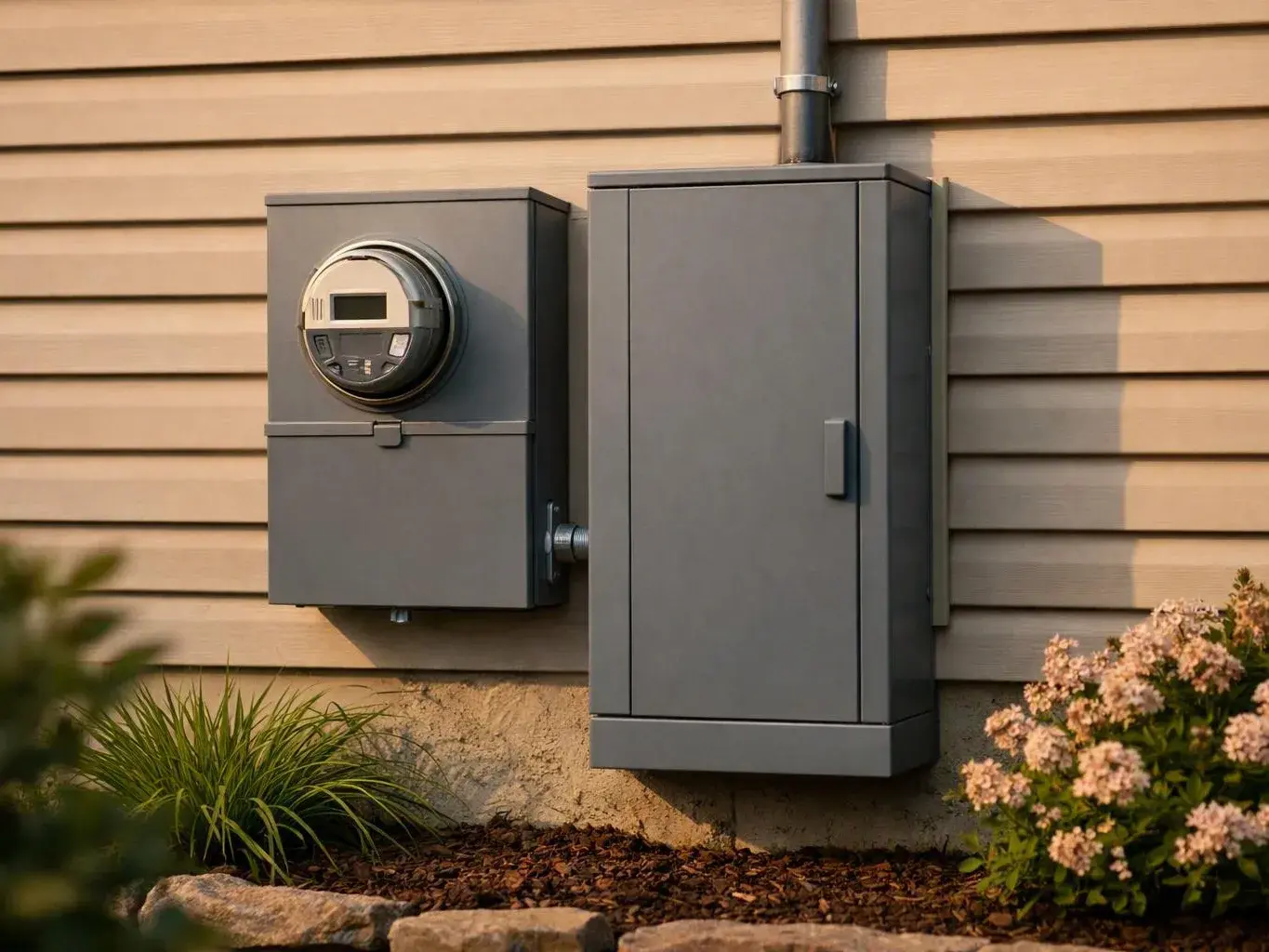
Neutral connections affect voltage stability throughout a building. A loose, broken, or overloaded neutral can cause unusual voltage. This voltage can affect connected loads. It may cause flickering lamps, buzzing equipment, and early electronics failure. It may also cause overheating. The danger can extend beyond one receptacle. Several circuits may share a service neutral.
Grounding and bonding add another layer of protection, but they don't replace a neutral conductor. The equipment grounding conductor normally carries fault current only. The neutral carries normal operating current. Connecting these conductors together downstream without approval can cause problems. Normal current may flow on metal parts, raceways, or equipment grounding paths.
When Neutral Wire Matters Most?
Neutral wiring needs close attention during panel changes and kitchen remodels. It also matters during generator installations and smart switch replacements. Some older switch boxes contain only hot conductors. They lack a neutral. This affects the choice of controls and equipment. New devices must match the wiring method and circuit design. They must also follow the manufacturer's instructions.
Warning signs include lights that brighten or dim without a clear cause. Appliances may behave unpredictably. Terminals may feel warm. Burning odors and repeated lamp failures also warn of trouble. Work becomes more sensitive with panel corrosion or crowded terminals. Aluminum branch wiring can also increase the risk. Amateur alterations can create more problems. Stop using affected equipment if heat or burning odor appears. Treat every conductor as energized. A qualified person must prove otherwise.
How to Evaluate Neutral Wire?
- Check whether the conductor is identified as white or gray and confirm its function with a proper meter test.
- Compare hot-to-neutral and hot-to-ground voltage readings under normal load.
- Inspect the neutral termination for looseness, discoloration, corrosion, heat damage, or multiple conductors under an unapproved terminal.
- Verify that neutral and equipment grounding conductors connect only at locations permitted by the electrical installation.
- Look for flickering lights, changing brightness, damaged electronics, or unexplained appliance behavior.
Related Concepts Compared
Neutral Wire vs. Electrical Ground
An electrical ground provides a low-resistance path for fault current and normally carries no operating current. A neutral wire normally carries current during ordinary circuit operation.
Neutral Wire vs. Hot Wire
A hot wire carries electrical energy from the panel toward a load. A neutral wire normally carries current back from the load to the service.
Neutral Wire vs. Grounded Conductor
Grounded conductor is the formal electrical term commonly used for the neutral. The term describes its connection to the grounded point of the electrical system.
Neutral Wire vs. Equipment Grounding Conductor
An equipment grounding conductor connects metal equipment and enclosures to a fault-clearing path. It is not a substitute for the neutral conductor in a normal load circuit.
Expert Note
A neutral may show voltage when a load is operating, especially if a connection is loose or the circuit carries shared current. Professional testing checks voltage under load, terminal condition, conductor routing, and panel bonding rather than relying on insulation color alone.
Common Mistakes or Myths About Neutral Wire
- Treating a neutral wire as harmless because its insulation is white.
- Using the neutral as a replacement for an equipment grounding conductor.
- Connecting neutral and ground together in a downstream panel or receptacle box.
- Assuming a missing neutral can be added without checking the circuit design and wiring method.
- Ignoring flickering lights or changing appliance behavior after a panel or service alteration.
Neutral Wire in Practice: A Real-World Example
A kitchen receptacle circuit has power, but its lights flicker when a toaster runs. Testing finds a loose neutral termination in the panel. Tightening or repairing the approved connection restores stable voltage after the circuit is de-energized and verified safe.
Related Terms
Hot Wire
Hot Wire is an energized conductor that carries electrical voltage from a power source to a…
Electrical Ground
Electrical Ground is a conductive connection that provides a safe path for unwanted electrical current to…
Bonding
Bonding is the electrical connection of conductive metal parts so they remain at nearly the same…
Panelboard
Panelboard is an enclosed electrical distribution assembly that receives power and sends it through branch circuits…
Chris Miller Electric
Have Questions About Neutral Wire?
Contact Chris Miller Electric for practical guidance on Neutral Wire and related 24 hour electrician work in Fort Wayne.