Smart Home Installation With 24-Hour Electrical Support
A 24-hour electrician installs and repairs smart home devices. They check circuit capacity and replace outlets that don't fit. They can also correct code issues and explain surge protection. Professional service helps connect smart switches, lights, security systems, thermostats, and hubs safely. It also helps prevent circuit overloads and unsafe connections. Before work starts, the electrician checks wiring, grounding, neutral wires, and device needs. Emergency service helps when an installation causes power loss, a failed outlet, a tripped breaker, or another safety concern.
Get a Free EstimateWhy Smart Home Owners Need a 24-Hour Electrician?
Smart home owners need a 24-hour electrician when connected devices rely on safe, steady power. An emergency electrician can fix failed outlets, tripped breakers, exposed wires, and installation faults. They can also address sudden power loss that affects lights, security gear, thermostats, appliances, or home hubs.
Chris Miller Electric treats smart devices as part of your home's electrical system. Our team can respond when a device failure affects lighting, security, entry, or climate control after normal hours.
We first separate a network problem from an electrical hazard. A lost wireless network may need router or app help. Heat, arcing, smoke, or a dead circuit needs electrical testing.
What a Smart Home Electrician Can Install and Repair?
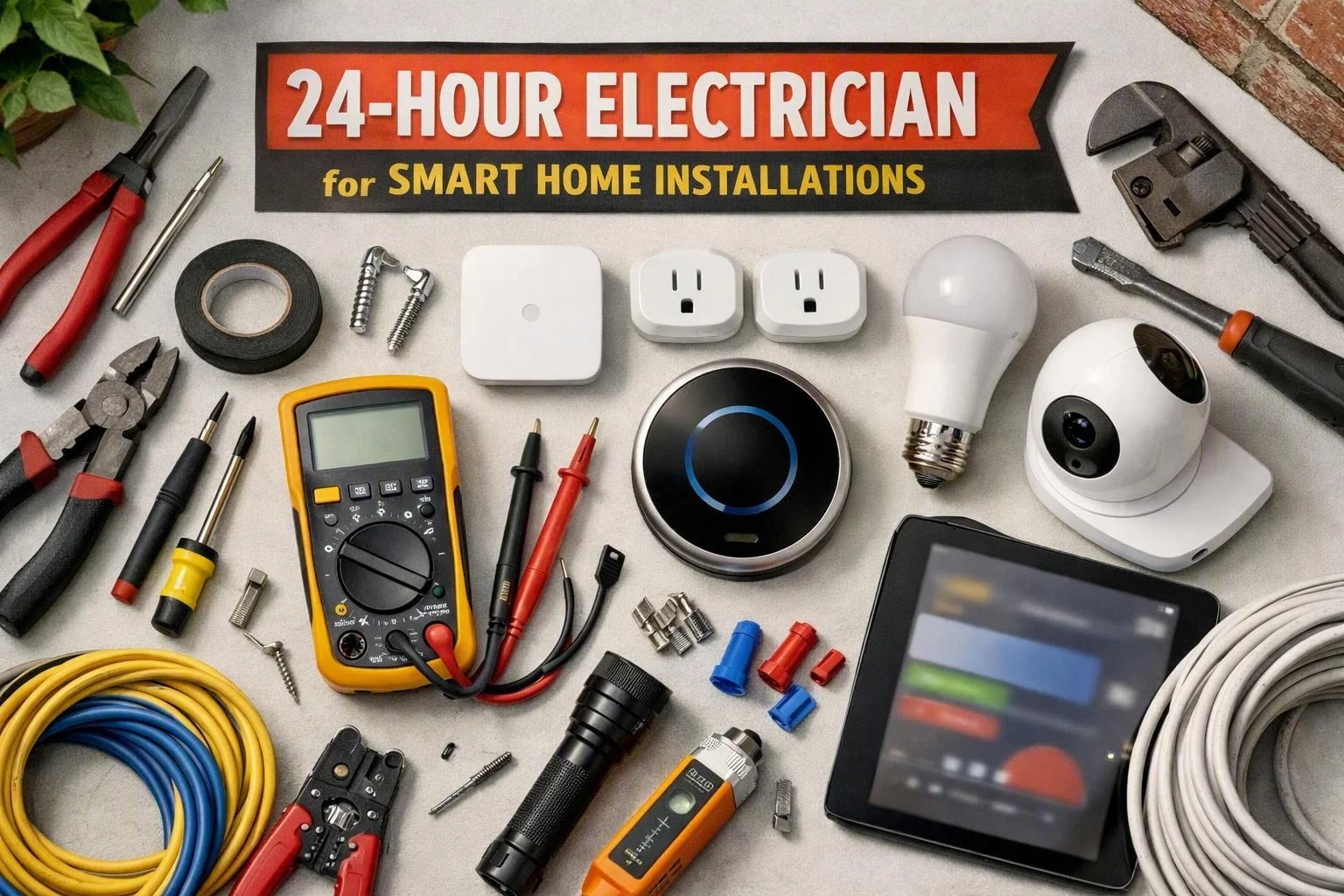
A smart home electrician can install and repair smart switches, outlets, lights, thermostats, doorbells, cameras, hubs, and dedicated circuits. The electrician checks fit, wiring, grounding, neutral wires, circuit load, and device instructions. These checks help your equipment work safely through its app or control system.
Our team can install smart switches for single-pole, three-way, and multi-location controls. The current wiring must support the chosen product. We also handle smart outlets, connected lighting, thermostat wiring, cameras, and doorbells. A home hub may need a steady outlet, a good location, and a strong wireless connection.
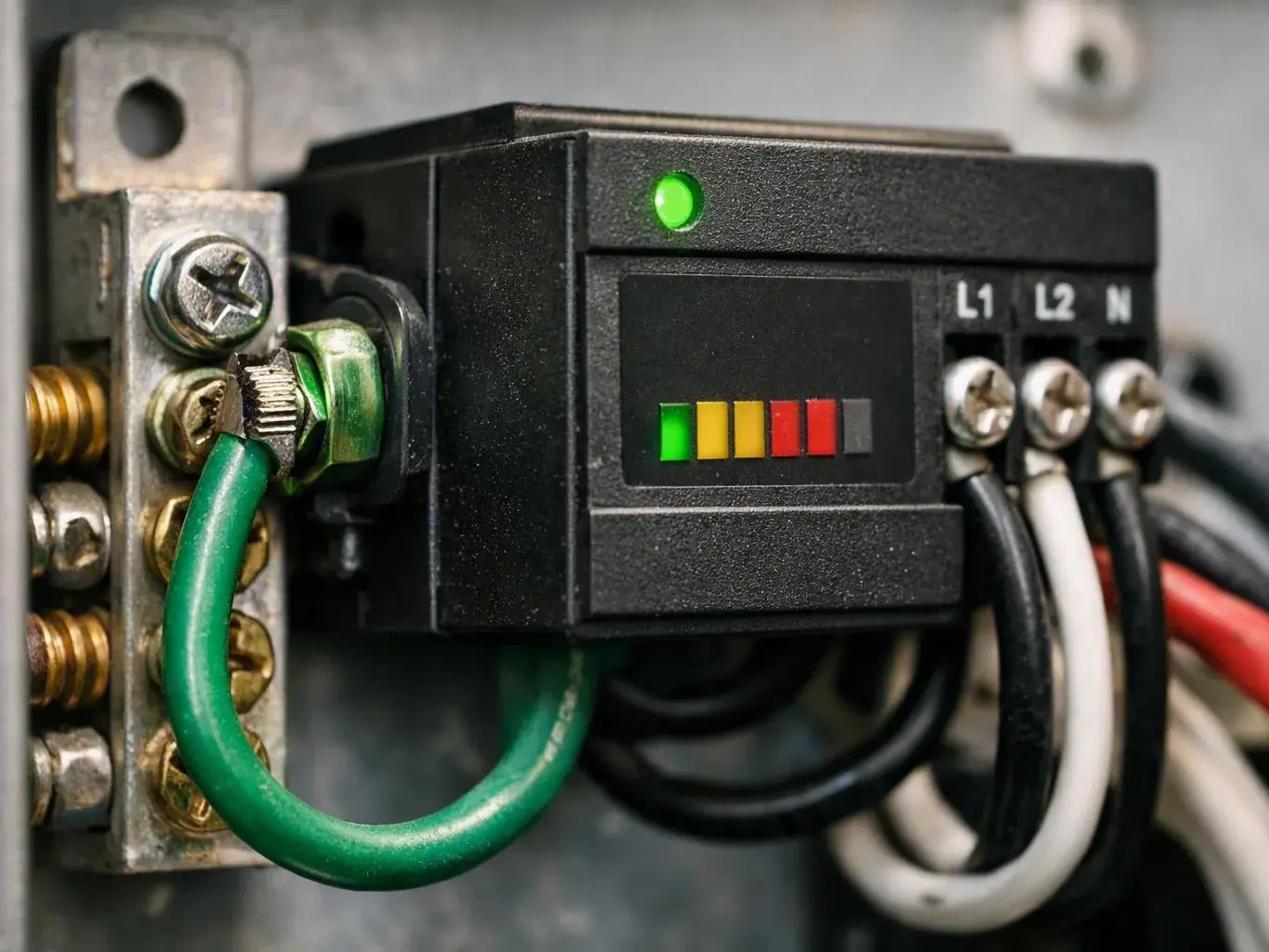
During planning, we compare the device voltage, amperage, wireless needs, and maker's instructions. We also check the home's panel and wiring. Older homes may lack a neutral wire or enough circuit space. Some boxes may be too small for newer controls. We'll explain safe choices instead of forcing a bad connection.
Simple device jobs often take one to three hours. Work across several rooms may take longer. New wiring or panel changes can add more time. The schedule depends on access, device count, circuit condition, and testing needs.
| Project factor | What we check |
|---|---|
| Smart control | Switch type, neutral wire, box space, and device fit |
| Connected equipment | Power needs, grounding, placement, and wireless access |
| Larger system | Circuit load, panel condition, and dedicated power needs |
Features and Challenges That Matter in a Connected Home
Smart home systems should be easy to use and safe to power. Homeowners often want remote control, schedules, voice help, energy tracking, and device links. Common problems include missing neutral wires, overloaded circuits, weak wireless signals, poor grounding, and devices that lose connection after a power outage.
Around-the-clock smart home electrician support helps when a connected system fails during an urgent event. We check the circuit, device, breaker panel, wireless network, and maker's setup. Then we suggest the right repair.
Features homeowners often want:
Common challenges include:
When Outlet Replacement Improves Smart Home Performance?
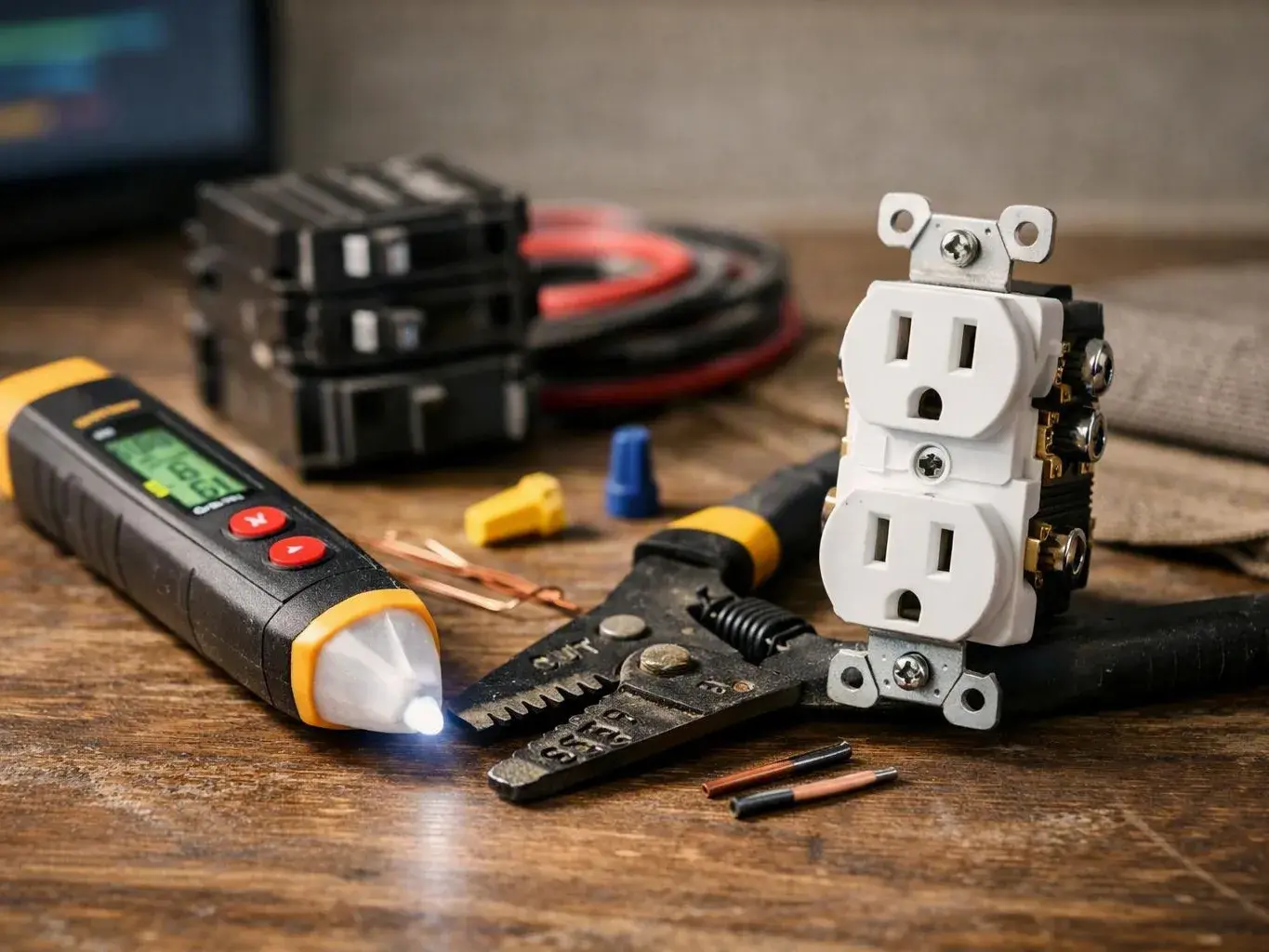
Outlet replacement improves smart home performance when an outlet is damaged, loose, old, ungrounded, or not right for the device. An electrician checks the box, wiring, grounding, polarity, and safety needs. Then they install a suitable outlet for smart plugs, appliances, chargers, or other home devices.
Our crews may suggest a GFCI receptacle where ground-fault protection is needed. These areas often include places near water. A tamper-resistant receptacle can add safety in homes with children. The right choice depends on the circuit, location, equipment, and local electrical code.
We check the ground wire and confirm the outlet has correct polarity. A loose connection can cause heat and uneven power. An ungrounded outlet may not suit some electronics. A smart plug shouldn't hide a damaged outlet or unsafe circuit.
For homeowners searching for Outlet Replacement in Fort Wayne, our team can review the problem. We can tell if the outlet is the only concern. We replace it after checking the electrical system around it.
Electrical Code Corrections for Safer Smart Installations
Electrical code corrections make smart home installations safer by fixing bad connections, missing grounds, exposed wires, poor boxes, overloaded circuits, and weak protection. A qualified electrician checks the current setup. They suggest repairs based on code rules, device instructions, and safety needs. They won't connect new technology to unsafe wiring.
Common repairs include securing wires in an approved junction box. They may also replace damaged cable, fix polarity, improve grounding, or match the breaker to the circuit. The electrical panel may need a review when new devices add more load. Repeated breaker trips also call for a panel check.
Arc-fault protection may apply in some homes. The right fix depends on the area, wiring, equipment, and local code. Permit rules can also vary by job and local office. We'll explain when approval or inspection may be needed.
Our team won't bypass a safety rule for a smart device. We test the circuit and review the maker's instructions. We fix unsafe conditions before finishing the installation.
A Practical Emergency Installation and Troubleshooting Checklist
Use this checklist to help an emergency electrician find the problem safely. Don't open live equipment or reset a breaker again and again. Stop if you see smoke, heat, arcing, or a burning smell.
- Describe the failure. Include which lights, locks, cameras, thermostats, or outlets stopped working.
- Note recent changes, such as a new switch, outlet, hub, appliance, or software update.
- Request an electrical inspection of the device, outlet, wiring, and affected circuit.
- Ask for a load check to confirm circuit capacity and find possible overloads.
- Have the electrician check the panel, breaker, grounding, neutral wires, and safety devices.
- Set up the device only after the electrical system is safe and steady.
- Record the test results and maker details for future service.
If the issue is only a wireless network or app problem, the electrician can identify it. Problems with power, wiring, heat, or a breaker need electrical service first.
Protect Connected Devices with Whole-House Surge Protection
Whole-house surge protection helps reduce the impact of sudden voltage changes on smart electronics throughout the home. They check that it fits the system. Surge protection works with safe grounding and circuit protection. It doesn't replace them.
Hubs, televisions, security systems, thermostats, appliances, and network gear can suffer from voltage changes. A protector near the main panel can help control surges from the electrical system. No device can stop every possible failure.
We check the service panel, grounding path, open space, and system needs before suggesting whole-house surge protection. Plug-in protectors may still help sensitive equipment. They can matter more when phone, cable, or network lines connect to that equipment.
This upgrade may help homes with many smart devices or a history of power events. It's also worth discussing during a larger electrical project.
Questions About 24 Hour Electrician
Can an Electrician Install Smart Home Devices?
Yes. An electrician can install smart switches, outlets, thermostats, lighting controls, cameras, doorbells, hubs, and support circuits. We check wiring, the neutral wire, grounding, circuit capacity, breaker fit, and maker's instructions. Then we test the device.
Do Smart Switches Need a Neutral Wire?
Many smart switches need a neutral wire, but some models don't. We check the current wiring and choose a matching product. We don't assume every switch fits every electrical box.
What Should I Do if a Smart Home Installation Trips the Breaker?
Turn off or unplug the new device. Don't keep resetting the breaker. If you see heat, smoke, a burning smell, arcing, or damage, leave the circuit off. Request emergency electrical service. We can check for overloads, wiring faults, device problems, and breaker fit.
Can a 24-Hour Electrician Replace an Unsafe Outlet at Night?
Yes, an available 24 Hour Electrician can assess and replace an unsafe outlet after normal hours. We first make the circuit safe. Then we check the box, wiring, polarity, grounding, and protection needs. We install a suitable receptacle after those checks.
Is Whole-House Surge Protection Worth It for a Smart Home?
It can help homes with many smart electronics or past voltage events. A surge device works with good wiring, grounding, and circuit protection. It doesn't replace them. Plug-in protection may also help where needed.
We can help plan connected home electrical installation and fix urgent failures. We can also review outlet work, code corrections, panel changes, and surge protection. For service questions, contact our team through our contact page.
Related Resources
Electrical Panel Warning Signs in Fort Wayne, IN
signs you need an electrical panel upgrade
When You Need ItCircuit Breaker Replacement Warning Signs: When to Call an Electrician in Fort Wayne, IN
signs you need a circuit breaker replacement fort wayne
When You Need ItOutlet Replacement Warning Signs: When an Outlet Is Unsafe in Fort Wayne, IN
when should you replace an electrical outlet fort wayne
When You Need ItElectrical Burning Smell? When to Call a 24-Hour Electrician in Fort Wayne, IN
when to call an emergency electrician for a burning smell