Warning Signs Your Home Needs Whole-House Surge Protection
Whole-house surge protection helps guard your home from power surges. Risk can rise with storms, old wiring, or panel changes. You may need it if lights flicker, appliances reset, or electronics fail. Your home may also need it if the panel lacks surge protection. They can also check the panel size and wire connections. Professional installation offers more protection than plug-in strips alone. A panel device can help direct surges away from home circuits.
Get a Free EstimateChris Miller Electric checks the whole electrical system. We don't look at only one damaged device. An inspection often takes 30 to 90 minutes. The time depends on panel access and its condition.
What Does Whole-House Surge Protection Do?
Whole-house surge protection uses a device near the electrical panel. It helps direct extra voltage away from circuits and electronics. It can help with surges from utility power or devices inside your home. The device still needs proper setup, grounding, bonding, and panel support.
A voltage surge is a short burst of high electrical pressure. Lightning can cause one. Utility problems or home equipment can cause one, too. The device may be called a Type 1 surge protective device or Type 2 surge protective device. It gives extra energy a safer path to the grounding system.
The system works only when the panel and grounding system work well. Bonding must also be in good shape.surge protector won't fix loose wires or damaged breakers. It can't fix an unsafe service entrance. It also can't stop every surge or protect every electronic device.
7 Warning Signs You May Need Surge Protection
Warning signs include flickering lights, appliance resets, and failed electronics. Frequent breaker trips can also signal a problem. Storm damage, an old panel, and costly equipment may raise concern. These signs don't prove a surge caused the issue. Still, they support an electrical inspection. The inspection can check surge risk, grounding, and panel condition.
Storms, overhead service, and utility surges can raise electrical risk. They don't prove a surge caused the problem. Write down when symptoms happen. Your electrician can compare them with storms, outages, and appliance use.
When a Symptom Points to a Larger Electrical Problem?
A symptom may come from a fault instead of a surge. A loose connection can make lights flicker. It can also create dangerous heat. An overloaded circuit may trip when several devices run together. A faulty appliance can cause resets or breaker trips.
An arc fault is more serious. Damaged wires or poor connections can create electrical arcs. Don't remove the panel cover to investigate. An electrician can test the wires, breakers, grounding, and circuit load. They can then suggest the right repair or protection.
Which Homes Benefit Most from Whole-House Protection?
Sensitive electronics can make surge protection more useful, so can HVAC equipment, smart devices, old wiring, and overhead service. Solar equipment and standby generators may also raise the need. The choice depends on your equipment and electrical service. Local storm risk also matters. Your panel must support a matching surge protective device.
Older homes may have limited panel space. Their grounding may also need work first. A costly HVAC system deserves extra care. Its control boards can cost a lot to replace. Smart devices, security gear, and home offices may stay connected all day. That can increase their exposure to voltage events.
Medical electronics may need a careful protection plan. Follow the equipment maker's instructions. Solar panels and standby generators add more parts to the system. These parts can affect the design. Storms and overhead service raise risk. They don't prove that a device is required.
We also discuss Whole-House Surge Protection in Fort Wayne. Homeowners may need help with storm risk and service equipment. We can help create a practical electrical plan.
DIY Surge Strips vs. Professional Installation
Plug-in surge strips protect devices connected to them. They can provide a useful second layer of protection. Professional installation protects more of the home at the panel. An electrician can check the panel, grounding, bonding, and device match. A plug-in strip can't check or fix these conditions.
| Factor | DIY | Professional |
|---|---|---|
| Protection area | Usually protects devices plugged into the strip. | Can help protect circuits throughout the home. |
| Installation point | Connects to a standard receptacle. | Connects a panel-mounted surge protective device at the service panel. |
| System review | Does not test the panel, grounding, or bonding. | Checks electrical safety, panel compatibility, and service conditions. |
| Best use | A useful secondary layer for computers and entertainment equipment. | Broader appliance protection and safer connection to the service equipment. |
A plug-in protector can still help. It shouldn't replace a properly installed panel device. Work inside a panel can cause shock or arc-flash injuries. Our team can explain the safest setup. We can also tell you if both types should work together.
How Surge Protection Relates to an Electrical Panel Upgrade?
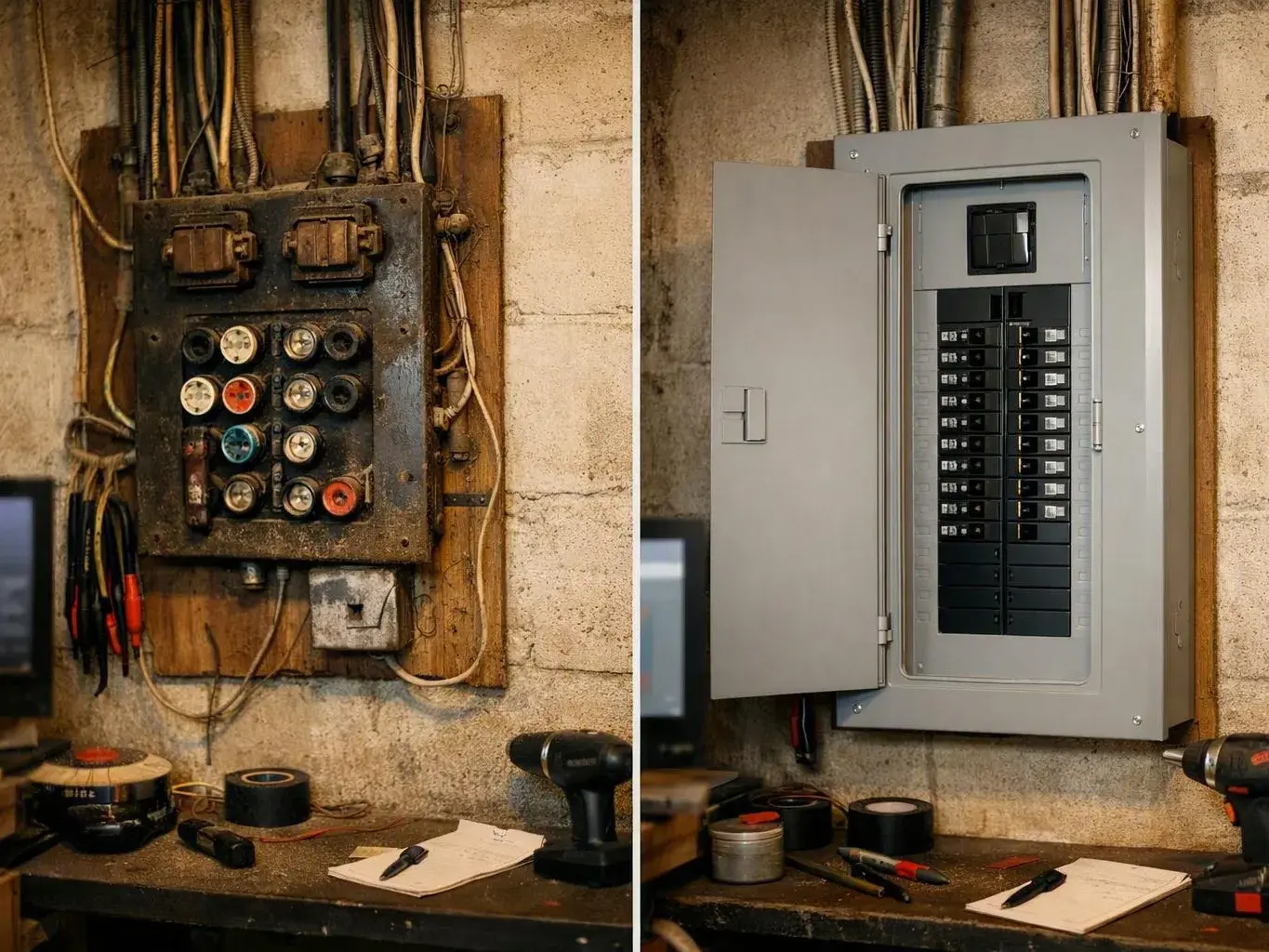
An electrical panel upgrade may help when the panel lacks space or power. It may also help when the panel is old, hot, or damaged. Some panels can't support a matching surge protective device. Surge protection won't replace a bad panel. An electrician should check the service, breakers, wires, and grounding first.
Panel size matters when you add major equipment. This includes HVAC systems, electric vehicle chargers, solar equipment, and generators. The electrician may check the service entrance and main disconnect, too. These parts must support the planned electrical load. Breakers must match the panel and wiring. The grounding system must provide a safe path for extra energy.
Panel compatibility depends on several details. These include the brand, voltage, bus design, and breaker space. The device instructions also matter. Electrical Panel Upgrades may come first when the panel is unsafe. An upgrade isn't always needed just to add protection. The inspection should guide that choice.
What to Do if You Suspect Your Home Needs Protection?
Write down damaged devices and electrical symptoms. Don't open the panel. Schedule an inspection with a qualified electrician. The electrician can check surge sources, grounding, and panel condition. They can also check if the device fits your system. You'll then know if you need protection, panel work, or another repair.
Getting started with 24 Hour Electrician can help during sudden safety concerns. Planned inspections work well for long-term appliance protection. We can explain the findings in plain language. We'll help separate surge concerns from wiring or equipment faults.
Questions About 24 Hour Electrician
How Do I Know if My House Needs Whole-House Surge Protection?
Signs include flickering lights, appliance resets, and damaged electronics. Storm failures, an old panel, and costly equipment also matter. These signs don't confirm a power surge.
Is Whole-House Surge Protection Worth It?
It may help homes with costly HVAC systems and smart devices. Home offices, entertainment systems, and medical electronics may also benefit. Solar equipment and frequent storms can raise the value. The choice depends on the equipment at risk. Your electrical system must also support the device safely.
What Are the Signs of a Power Surge in a House?
Possible signs include reset clocks, changing lights, and tripped breakers. Burned electronics and damaged chargers may also appear. Several devices may fail at once. Lightning, utility problems, or switching equipment may cause these signs. Loose connections and overloaded circuits can look similar.
Can a Whole-House Surge Protector Prevent Appliance Damage?
It can help reduce damage from extra voltage. The device directs energy away from circuits and connected equipment. It can't stop every surge or guarantee appliance safety. Proper installation, grounding, bonding, and service equipment all matter.
Does Whole-House Surge Protection Replace a Surge Strip?
No. A panel protector and plug-in strip have different jobs. The panel device protects more of the home's electrical system. A quality strip adds another layer for computers and TVs. Use both devices as their instructions direct.
Our team can check your symptoms, panel, grounding, bonding, and connected equipment. We'll then suggest a repair or protection plan. Contact us through our electrical service contact page to discuss the next safe step.
Related Resources
Electrician for a Circuit Breaker That Keeps Tripping
electrician for breaker that keeps tripping
What It SolvesElectrician for Flickering or Dimming Lights
electrician for flickering lights
What It SolvesElectrical Shock From an Outlet: Emergency Repair Guide
electrician for electrical shock from outlet
Who It's For24-Hour Electrician for Home Buyers and Inspections
24 hour electrician for home inspection repairs