What to Do When an Outlet Smells Like It's Burning or Sparks
A burning smell from an outlet or visible sparks means you should stop using the outlet. Don't touch the outlet or try to remove a plug.
- Stop using the outlet and keep away from it.
- Turn off the circuit breaker only if you can reach it safely.
- If there's smoke or fire, leave the building and call the fire department from outside.
- Contact us for repair. Don't use the outlet again until we've checked it and completed any needed repairs.
When Smoke or Fire Makes an Outlet an Emergency
Smoke or flames from an outlet are an emergency. Leave the building and call the fire department from outside. Don't use water on an electrical fire.
After the fire department says it's safe to return, contact us about Emergency Electrical Repair. We'll check the affected outlet and wiring before recommending repairs.
Warning Signs of an Unsafe Outlet
An unsafe electrical outlet may show signs you can see, hear, or smell. Don't touch the wall socket to check its temperature; stop using it if you notice a warning sign.
- A burning smell or burning odor near the outlet
- Visible sparks from the outlet
- Smoke coming from the outlet
- Scorch marks or discoloration on the outlet face
- An outlet that feels hot if you've already touched it
- Buzzing or crackling sounds
Can Outlet Repair Make a Scorched Outlet Safe to Use?
Outlet repair can address a scorched outlet, but don't use it until we've checked and repaired the damage. Scorch marks may point to damage hidden behind the outlet face.
We'll inspect the receptacle and accessible wiring to determine what needs repair. We'll check the repaired outlet before returning it to use.
Common Causes of Outlet Burning Smells and Sparks
A sparking outlet or burning smell can have several causes. We'll check the outlet and related parts to identify the source.
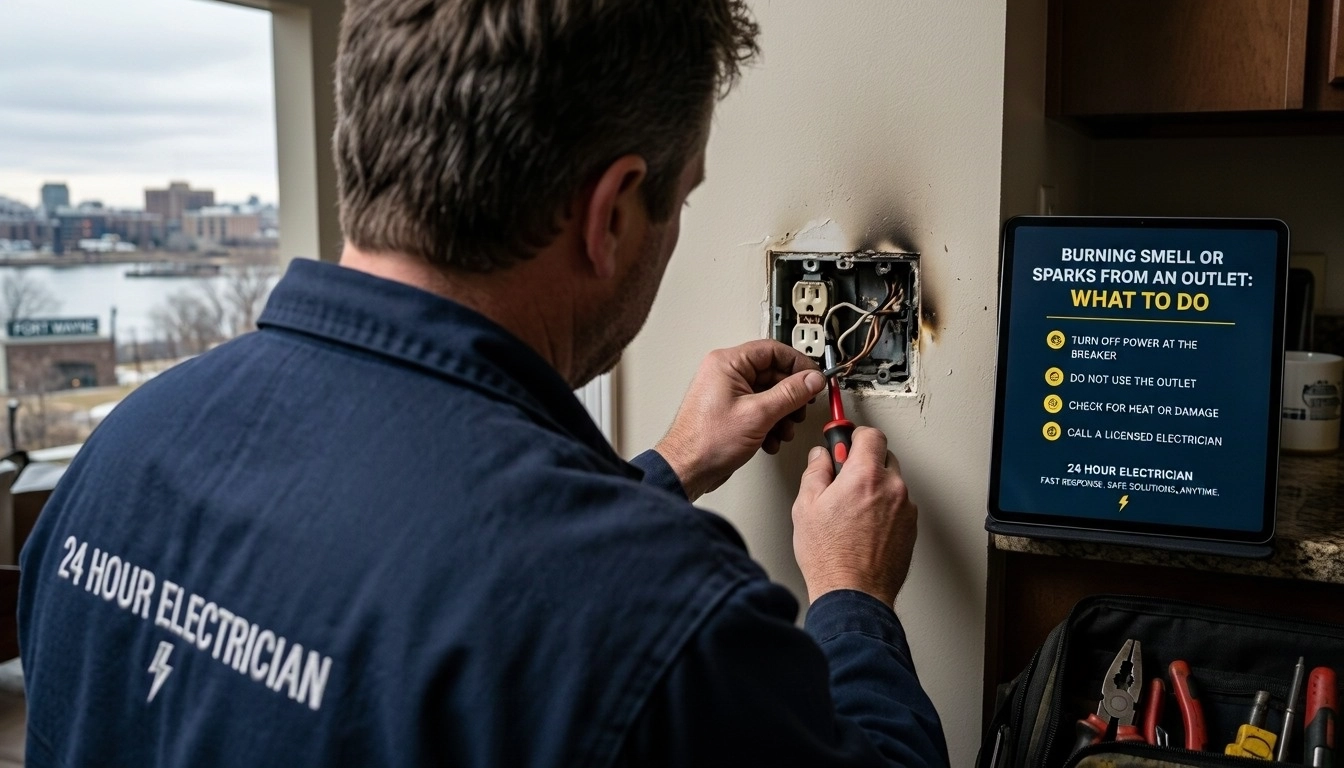
- A loose connection or damaged wiring connections
- A worn or damaged receptacle, including its contacts
- An overloaded circuit
- A damaged plug or appliance
What Does Outlet Repair Involve for a Sparking Receptacle?
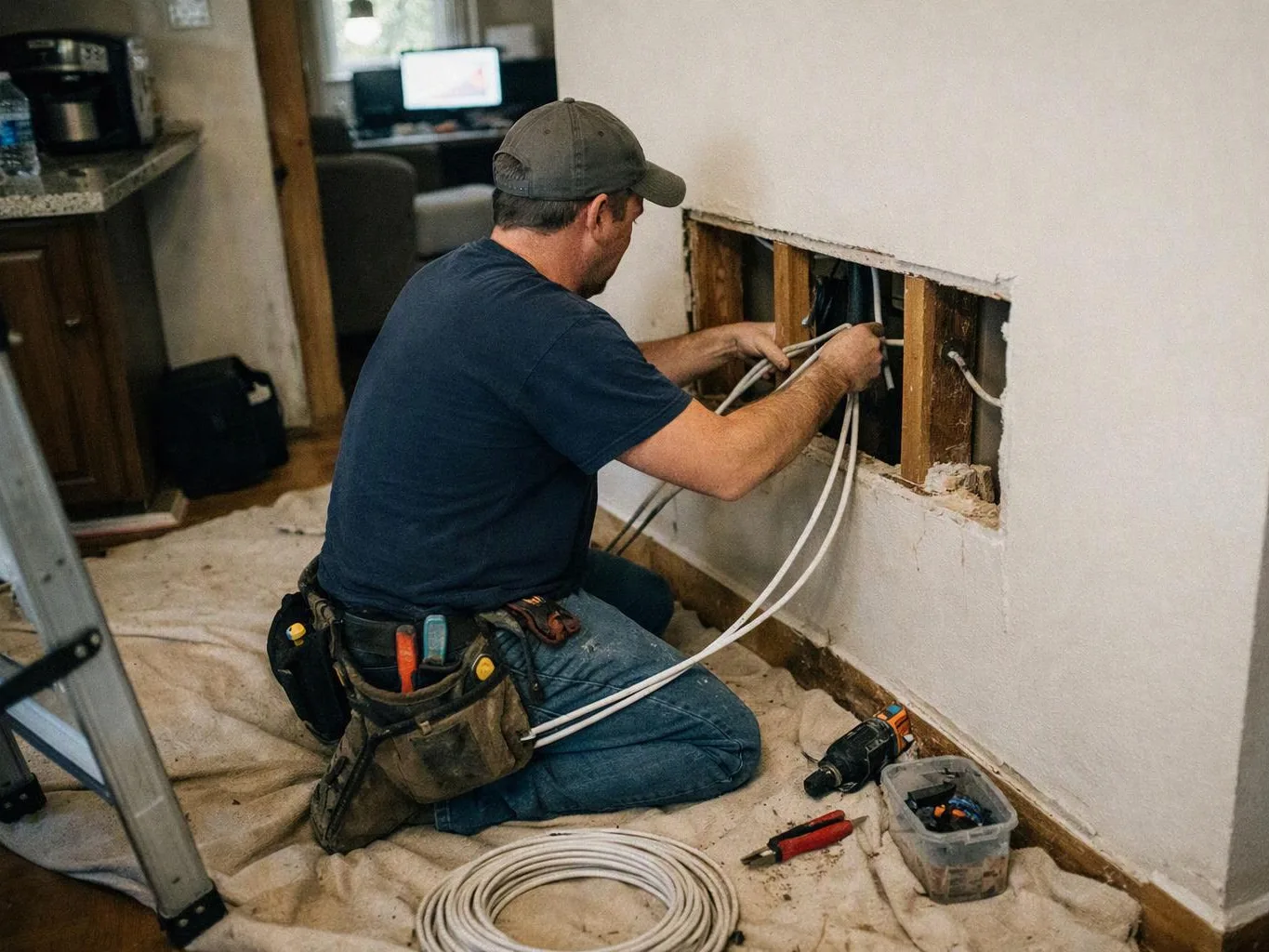
Outlet repair starts with checking the sparking receptacle and its connections for damage. We also check accessible outlet wiring and identify the source of the sparking.
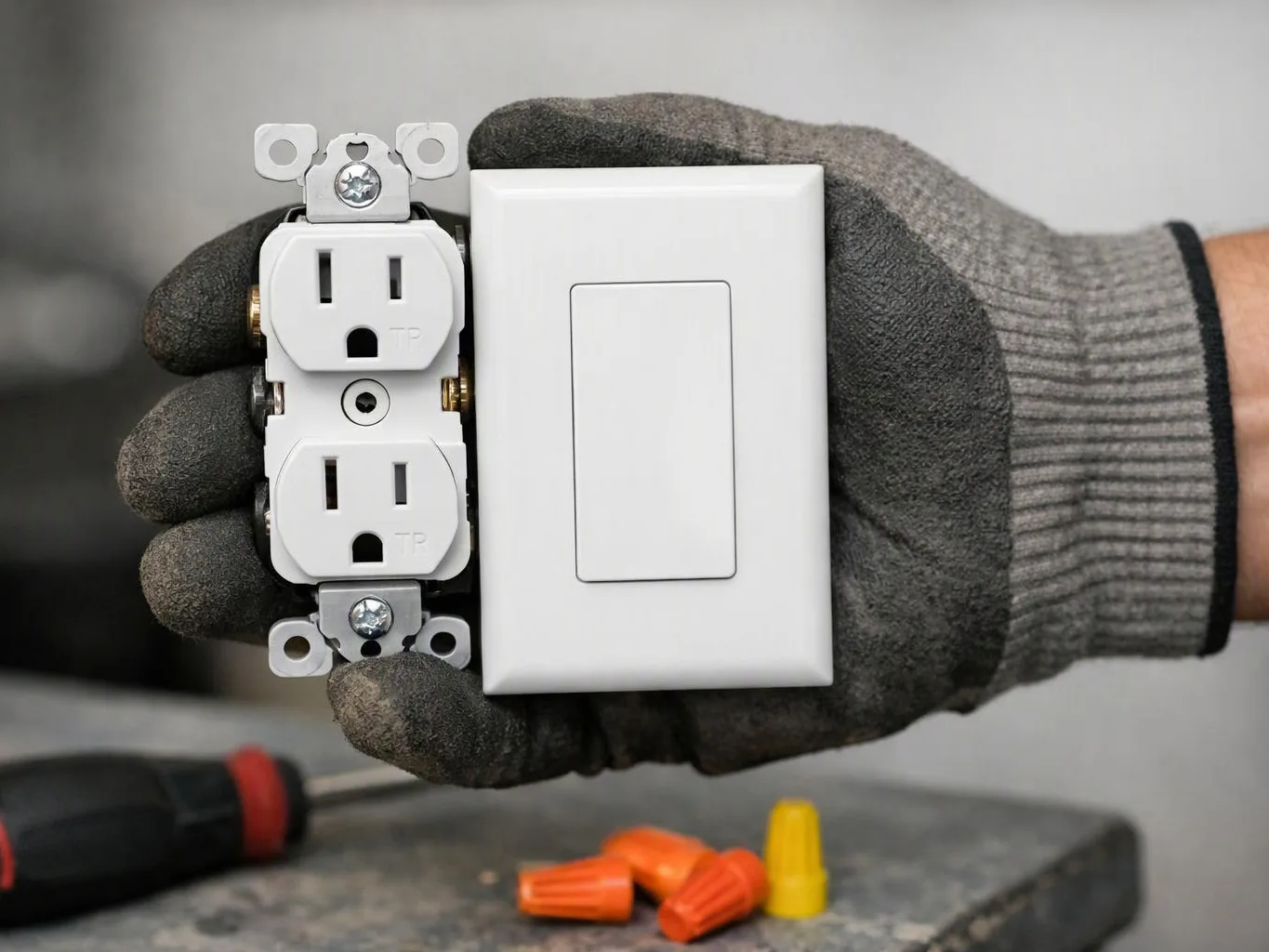
We recommend the repair the damage calls for and check the repaired outlet before returning it to use. Our Outlet Repair service addresses damaged receptacles and related wiring.
Preventing Outlet Problems
Careful use can help prevent outlet problems. If you notice a warning sign, stop using the outlet and ask us to check it.
- Avoid overloading outlets and circuits.
- Don't use damaged plugs or cords.
- Keep outlets dry.
- Stop using outlets that show warning signs.
Outlet Safety Questions
Are all outlet sparks dangerous?
Outlet sparks can signal danger, especially with a burning smell, smoke, or scorch marks. Stop using the outlet and ask Chris Miller Electric to check it.
Can a bad appliance cause an outlet to smell burnt?
Yes, a damaged appliance or plug can cause a burning smell at an outlet. The outlet or circuit may also be damaged. Don't use the appliance or outlet until we've checked the problem.
What changes the price of repairing a burnt outlet?
A burnt outlet repair's price depends on the damage and the work needed. Access to affected wiring can also change the scope. Free estimates are available. Ask us what the estimate covers.
Contact Chris Miller Electric to have an unsafe outlet checked and discuss the needed repair. Don't use the outlet while you wait for our inspection.
Get a Free EstimateWhat Are the Key Specifications to Know?
- Topic Focus
- Burning Smell or Sparks from an Outlet: What to Do
- Related Core Service
- Outlet Repair
- Evaluation Method
- On-Site Inspection & Written Scope
- Compliance Standard
- Local Building Code & Manufacturer Specs
How Does the Evaluation & Execution Process Compare?
| Evaluation Stage | Technical & Quality Criteria | Timeline Checkpoint |
|---|---|---|
| Initial Diagnostic & Assessment | Identify root cause, site constraints & code requirements | Before any work begins |
| Written Scope & Option Comparison | Compare repair vs. replacement tiers & material grades | Prior to project approval |
| Code-Compliant Execution | Follow manufacturer specs & local permitting standards | During active service |
| Final Verification & Walkthrough | Verify installation alignment, performance & clean site handoff | Upon project completion |