
Describe the switch symptom
We start with what you noticed, such as flicker, buzzing, heat, or a light that will not turn.
A loose, warm, or unresponsive switch can point to a worn part or a wiring fault. We inspect the switch, wiring, and connections so your lighting works safely.
A repaired switch restores control over the connected light or fixture.
Diagnosis can reveal heat, loose terminals, or wiring damage before the problem spreads.
The repair helps separate a failed switch from a wider lighting or circuit fault.

Light switch repair covers the control point between a wall switch and the light or circuit it operates. We inspect the switch body, terminal screws, wire connections, and visible signs of heat or damage. A switch can fail on its own, but the symptom may also come from loose wiring or a problem farther along the circuit. Our electricians diagnose the cause before recommending a repair, so the work addresses the fault instead of only changing the cover or handle. Repair may involve securing a connection, replacing a damaged switch, or correcting a wiring issue connected to the control. If the switch is part of a larger lighting problem, we explain the next service decision clearly.
Light switch repair is an electrical service that restores a faulty switch and checks its connected wiring.
A few details can help us focus the inspection when we arrive.
We start with what you noticed, such as flicker, buzzing, heat, or a light that will not turn.
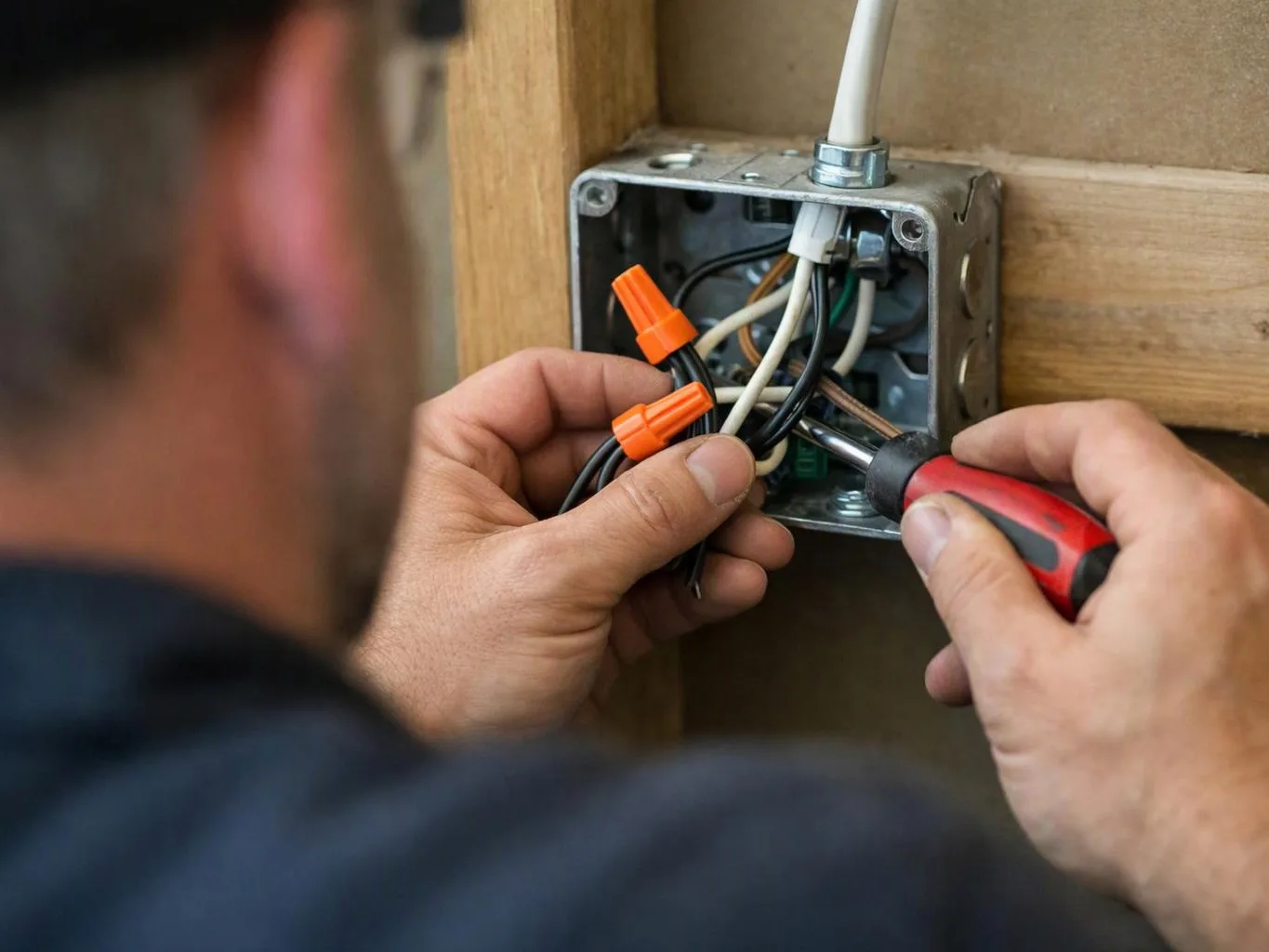
We identify the relevant circuit and make the switch safe to inspect before opening the device box.
We check the switch body, terminal screws, wire condition, box fit, and signs of heat or arcing.
We correct the identified fault and replace a damaged switch when repair alone will not restore safe operation.
We operate the switch and verify the connected light or fixture after the repair.
We diagnose the switch, terminals, and connected wiring before recommending repair or replacement.
We trace switch symptoms through the lighting circuit and repair wiring connections when testing identifies a fault.
We isolate urgent switch hazards, inspect heat or arcing signs, and explain the safest repair path.
Is your switch warm, buzzing, flickering, or unresponsive? Request a quote for the repair, and urgent requests get priority scheduling.
A warm plate can point to a loose terminal, worn switch, or excess load at the control point. The switch should stay off if it smells burned, sparks, or shows discoloration. We’ll isolate the circuit, inspect the box and connections, and explain whether the repair belongs at the switch or farther along the wiring.
A light that flickers when the switch moves may have worn contacts or a loose wire. The symptom matters because changing the bulb won’t correct a faulty control connection. We’ll trace the switch circuit, check the terminals, and test the light after repairing the actual source.
A dead switch can result from a failed device, an open connection, or a related circuit fault. Note whether other lights or outlets also stopped working, then avoid repeated switching if the device buzzes or feels hot. We’ll inspect the control, wiring, and circuit relationship before recommending the next repair.