
What is a Busbar?
Busbar is a rigid metal conductor that distributes electrical power to several circuits within equipment such as a panelboard, switchboard, or switchgear. Copper or aluminum busbars carry current through a shared path, while insulation, spacing, and protective barriers help prevent accidental contact, overheating, and short circuits.
Quick Facts About Busbar
Category
Electrical distribution component
Used for
Sharing power among circuits
Measured by
Ampacity, voltage, size, and material
Common confusion
A busbar is not the same as a circuit breaker
Also called
Bus bar, Distribution bus
Often discussed with
Electrical Panel Upgrades, Electrical Service Upgrades
Key Takeaways About Busbar
- Busbars send power between incoming supplies, circuit breakers, and outgoing circuits.
- Copper and aluminum are the most common busbar materials.
- Ampacity depends on material, size, heat, enclosure, and installation conditions.
- Insulation and clearance help stop contact, arcing, and short circuits.
- A damaged busbar can cause heat, equipment failure, or fire risk.
Understanding Busbar
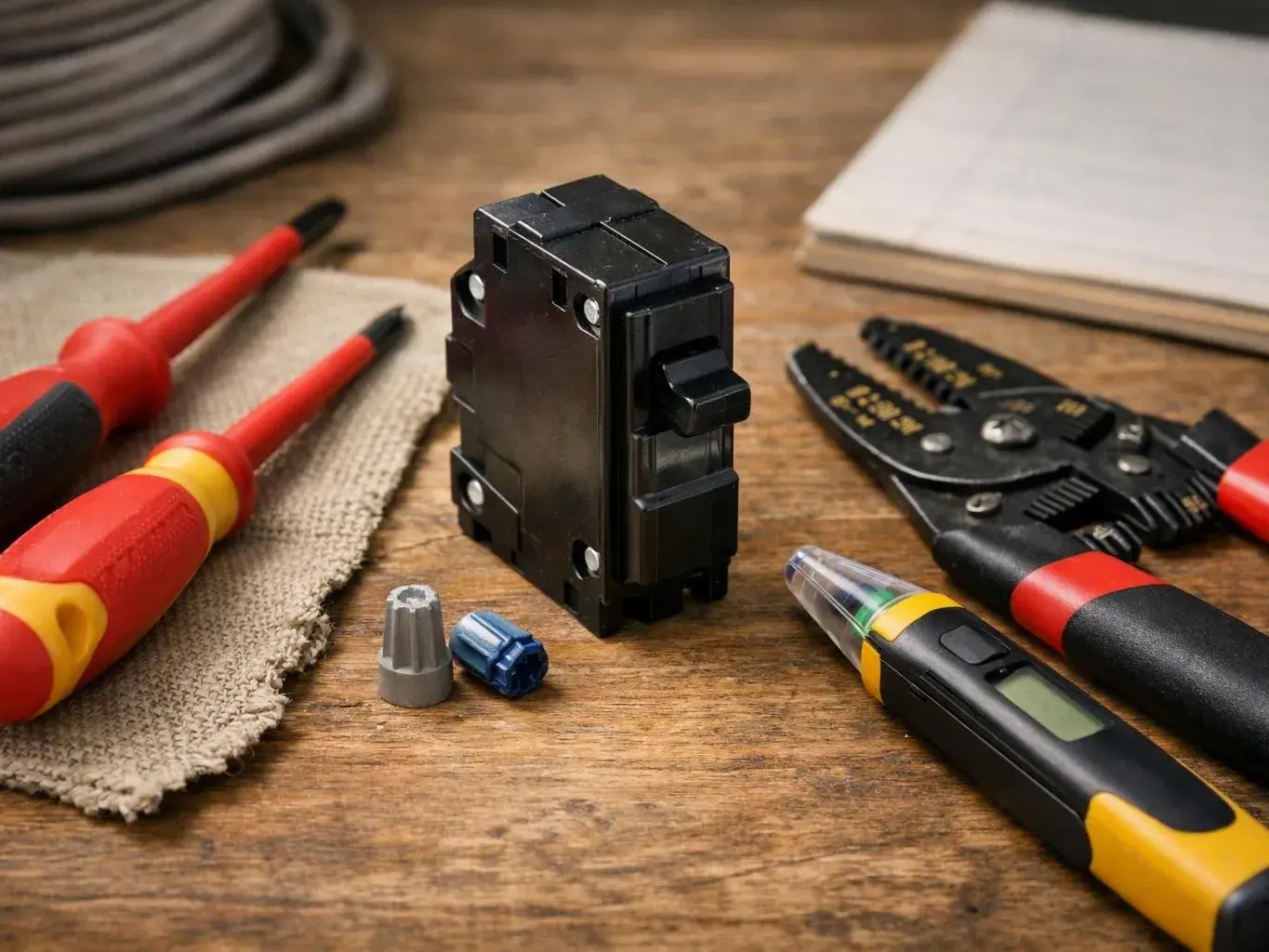
Busbaris a solid or hollow metal conductor. It carries electrical current through equipment.copper conductor or aluminum conductor busbar usually has a rigid shape. It may be a flat strip, bar, or formed section. This design gives equipment a compact path for moving power. It moves power between terminals and circuits.
Related glossary terms: Ampacity, Amperage, Circuit Breaker.
Busbars appear inside panelboards, switchboards, switchgear, motor control centers, and some distribution equipment. A panel may contain separate busbars for ungrounded circuit conductors, the neutral, and equipment grounding. Insulating covers, barriers, and spacing keep energized metal away from people. They also keep it away from other conductive parts.
How Busbar Works, Is Measured, or Is Used?
Power enters distribution equipment through a main breaker or service connection. It then reaches the busbar. Branch circuit breakers clip onto or connect to the busbar. They send power through individual circuits. The busbar provides a common electrical path. Each breaker controls and protects its connected circuit.
Engineers select a busbar by checking ampacityvoltage rating, material, and cross-sectional area. They also check temperature rise and short-circuit withstand capability. Ampacity is the current a conductor can carry under stated conditions. It must not exceed its permitted temperature. An enclosure, ventilation, nearby conductors, and connection pressure can affect the result. Ambient temperature can also affect the result.
Busbar systems may be bare, insulated, plated, or enclosed. A neutral busbar carries return current in many systems. A grounding busbar connects equipment grounding conductors to the grounding system. Their functions depend on the equipment design and wiring method. Don't treat a neutral connection as a grounding connection without checking installation needs.
Why Busbar Matters?
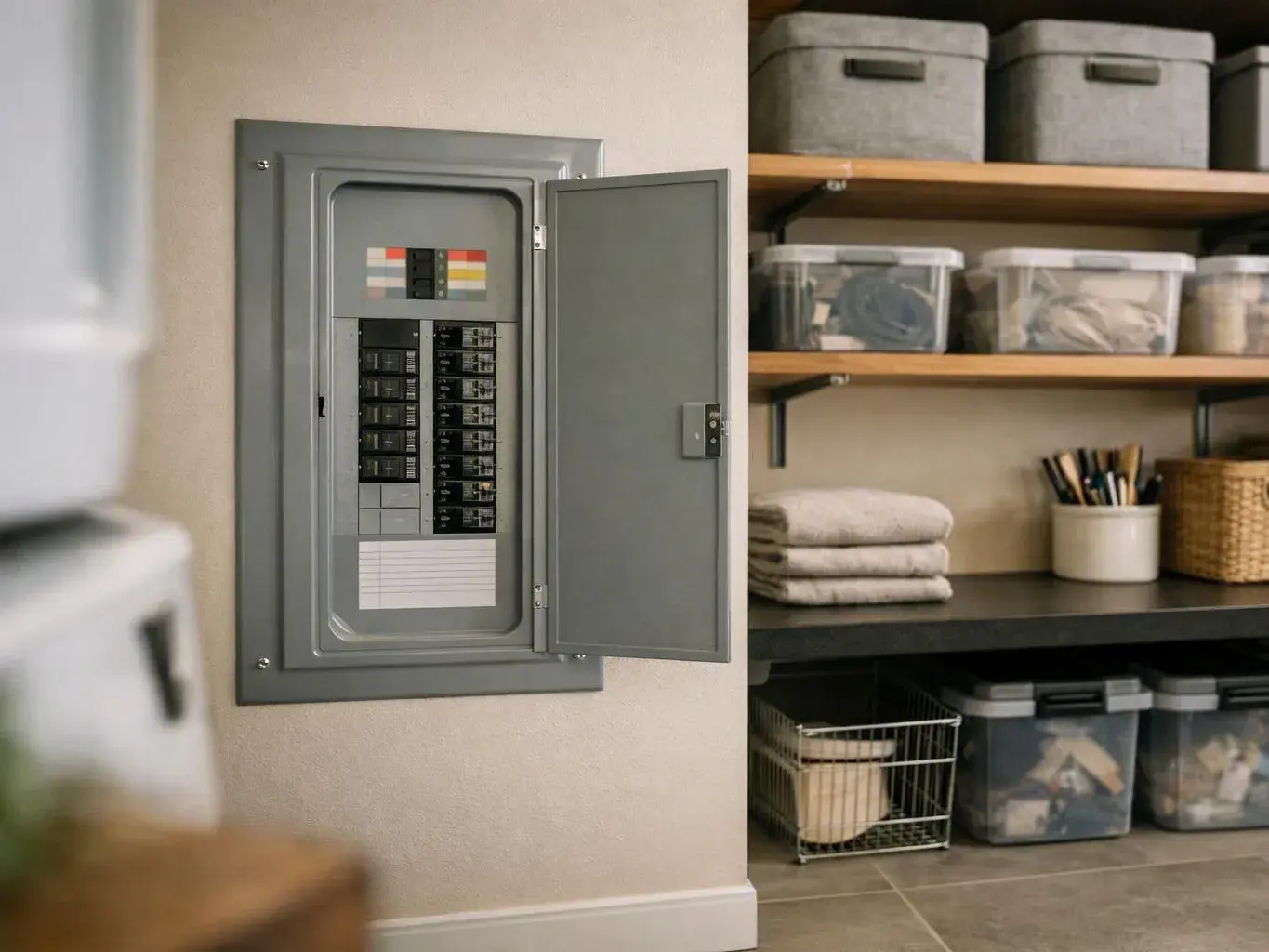
A properly selected busbar reduces connection points. It also keeps distribution equipment organized. Its rigid structure can support high current in a smaller space. This takes less space than many separate conductors. It helps makers fit breakers and terminals inside a rated enclosure. Correct connections also limit hot spots from loose hardware or poor contact.
Busbar damage can have serious effects. Energized metal may carry the full available fault current. Discoloration, melted insulation, carbon marks, or corrosion can show overheating. Loose connections or a burning smell can also show arcing.National Electrical Code and equipment listing rules address conductor protection. They also address working space, clearances, and approved components.
When Busbar Matters Most?
Busbar condition deserves close attention during a panel replacement or service upgrade. It also matters during a breaker change or repeated tripping check. A new breaker must fit the specific panel and busbar system. It must not merely match the amperage. Incompatible parts can create poor contact, excess heat, or listing violations.
Evaluation also matters after water intrusion, a fault, or lightning damage. It matters after a history of overheating, too. A qualified electrician can de-energize the equipment. They can inspect accessible connections and verify rating information. They can also test for signs of damage. Replacement may be needed when the busbar has severe pitting or heat damage. It may also be needed for corrosion or an insecure connection.
How to Evaluate Busbar?
- Check the equipment label for the busbar voltage, ampere rating, and approved breaker types.
- Look for discoloration, melted insulation, pitting, corrosion, carbon marks, or loose connection hardware.
- Confirm that the busbar ampacity matches the feeder and the connected circuit demand.
- Verify required separation, barriers, grounding, and working clearance around energized parts.
- Ask whether replacement parts are listed for the specific panel or switchgear model.
Related Concepts Compared
Busbar vs. Panelboard
A panelboard is the complete enclosure and distribution assembly. The busbar is one internal component that distributes power within that assembly.
Busbar vs. Circuit Breaker
A circuit breaker opens a circuit during an overcurrent or fault. A busbar provides the shared power path to which breakers connect.
Busbar vs. Neutral Wire
A neutral wire carries circuit return current in many systems. A neutral busbar is the rigid terminal assembly that connects multiple neutral conductors.
Busbar vs. Electrical Grounding
Electrical grounding connects equipment or system points to ground for fault-current control and stabilization. A grounding busbar is one point used to connect grounding conductors.
Expert Note
Busbar failures often begin at a connection rather than in the metal itself. A loose lug, incorrect breaker, oxidation, or damaged plating can create a hot spot. Inspection should include the connection hardware and the equipment listing, not only the visible bar.
Common Mistakes or Myths About Busbar
- Assuming every breaker fits every busbar or panel.
- Treating the neutral busbar and grounding busbar as interchangeable.
- Ignoring discoloration or a burning smell near the panel.
- Installing a larger breaker without checking busbar and conductor ratings.
- Touching or tightening busbar connections while equipment remains energized.
Busbar in Practice: A Real-World Example
A 200-amp panel uses a factory-rated busbar to feed many branch circuit breakers. If one breaker connection gets loose, heat may discolor the busbar and harm the breaker mounting area. Replacing only the breaker may not fix the busbar damage.
Sources & Further Reading on Busbar
Related Terms
Ampacity
Ampacity is the maximum current, measured in amperes, that a conductor can carry continuously under specified…
Amperage
Amperage is the amount of electric current flowing through a circuit, measured in amperes, also called…
Circuit Breaker
Circuit Breaker is an automatic electrical safety device that opens a circuit when current exceeds a…
Panelboard
Panelboard is an enclosed electrical distribution assembly that receives power and sends it through branch circuits…
Chris Miller Electric
Have Questions About Busbar?
Contact Chris Miller Electric for practical guidance on Busbar and related 24 hour electrician work in Fort Wayne.