
What Is Current?
Current is the movement of electric charge through a conductor, such as a wire or circuit path. The amount of current depends on the electrical pressure and the resistance in that path. Electricians check current to identify overloads, faulty components, loose connections, and other conditions that affect circuit operation.
Quick Facts About Current
Category
Electrical measurement
Used for
Circuit testing and fault diagnosis
Common confusion
Current is not the same as voltage
Also called
Electrical Current, Amperage
Often discussed with
Electrical Troubleshooting
Key Takeaways About Current
- Current describes charge movement, not electrical pressure.
- A circuit can have excessive current when resistance falls.
- Current and voltage measure different electrical properties.
How Current Works
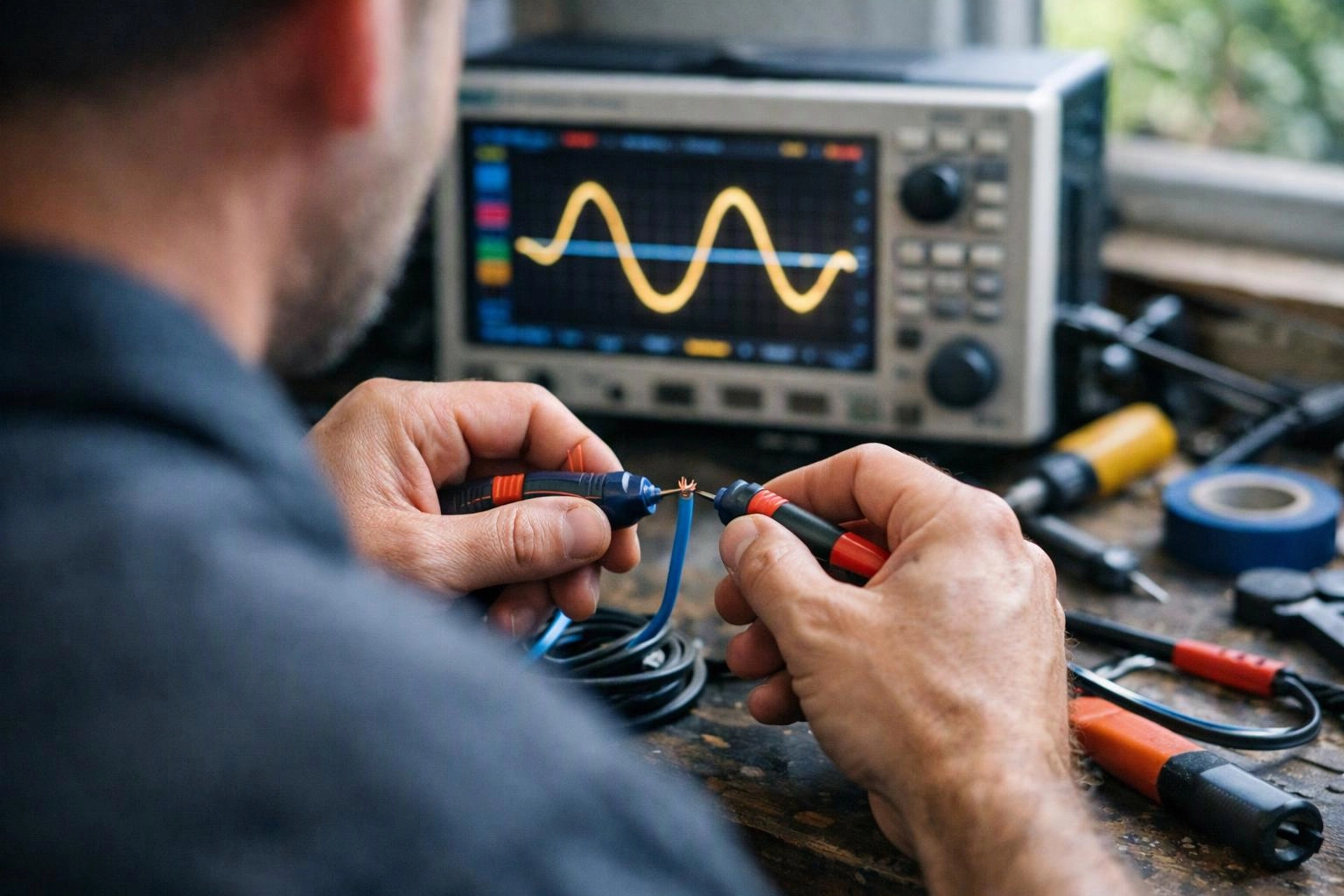
Current moves through a complete electrical path when electrical pressure pushes charge through conductive material. The path may include a wire, switch, load, and return connection. Resistance limits that movement, while a damaged component or short path can allow more current than the circuit should carry.
Related glossary terms: Electrical Meter, Electrical Load, Overload.
An electrical meter can check current directly when connected in the correct way. A clamp meter can sense current around a conductor without opening the circuit. During troubleshooting, current readings help an electrician compare circuit behavior with the equipment connected to it. A changing reading may point to a loose connection, failing load, or intermittent fault.
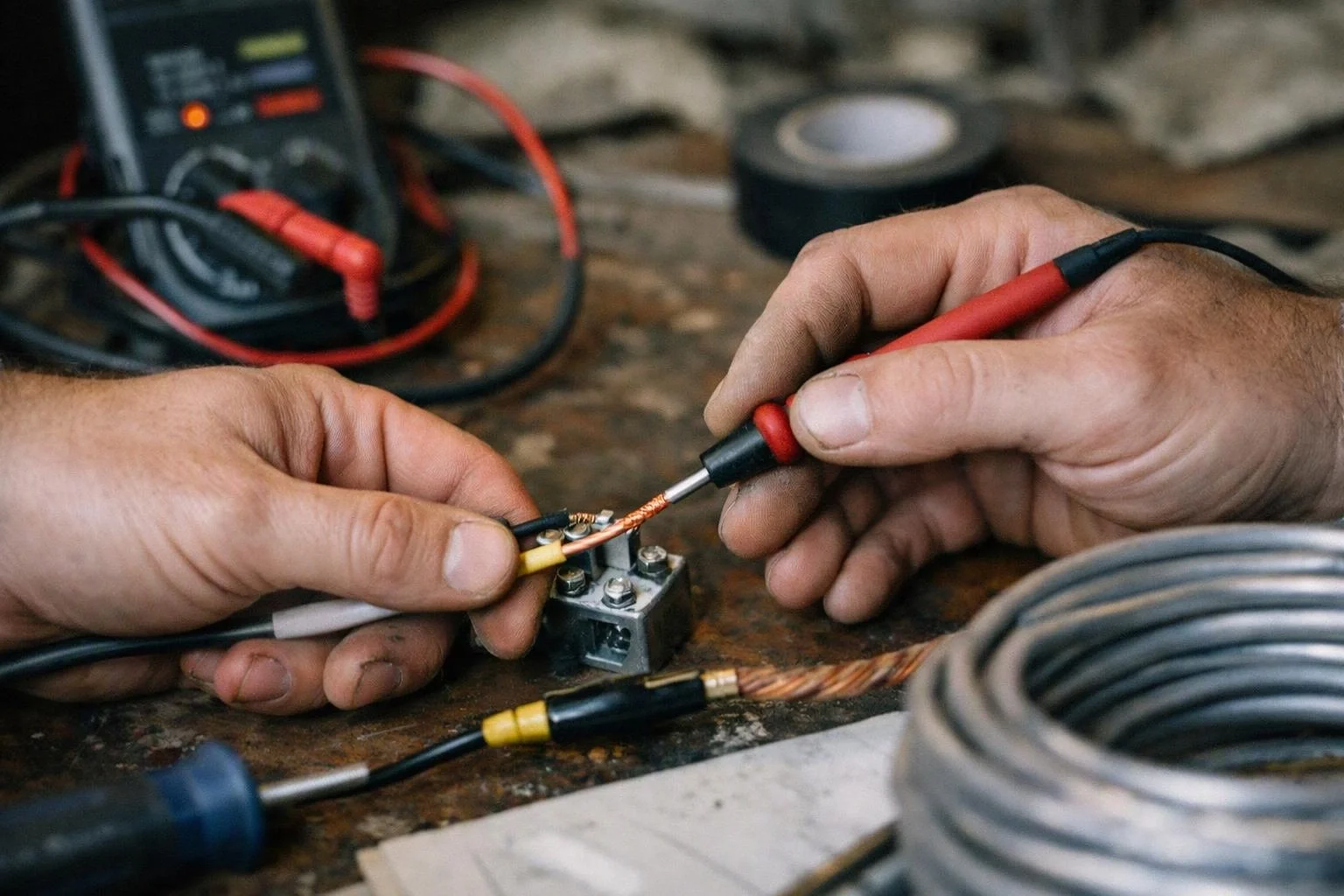
From the Chris Miller Electric team
When we troubleshoot a circuit, we check current alongside voltage and the condition of the connected load. We look for readings that change under operation because an intermittent fault may not appear during a visual inspection. We also consider conductor condition and connection tightness before identifying the source of a problem.
Current in Practice: A Real-World Example
A kitchen circuit may show excessive current when a damaged appliance develops an internal fault. During electrical troubleshooting, we test the circuit under the reported condition and inspect connections to determine whether the appliance or wiring is responsible.
Related Services
Related Terms
Electrical Meter
An electrical meter is a testing instrument that measures electrical values in a circuit, such as…
Electrical Load
Electrical load is the amount of power that connected equipment draws from an electrical system at…
Overload
Overload is a condition in which an electrical circuit carries more current than its wiring or…
Short Circuit
A short circuit is an unintended low-resistance path between electrical conductors, allowing current to move outside…
Chris Miller Electric
Have Questions About Current?
Contact Chris Miller Electric for practical guidance on Current and related 24 hour electrician work in Fort Wayne.