What causes sudden electrical failures in a home?
Overloaded circuits cause sudden failures when demand exceeds the circuit’s safe capacity. Short circuits, loose connections, damaged cables, and faulty breakers can also interrupt power. We inspect the panel and affected circuit to identify the cause. Repeated trips or heat near an outlet need an electrical assessment before you keep using that circuit.
What should be checked before emergency electrical repair is scheduled?
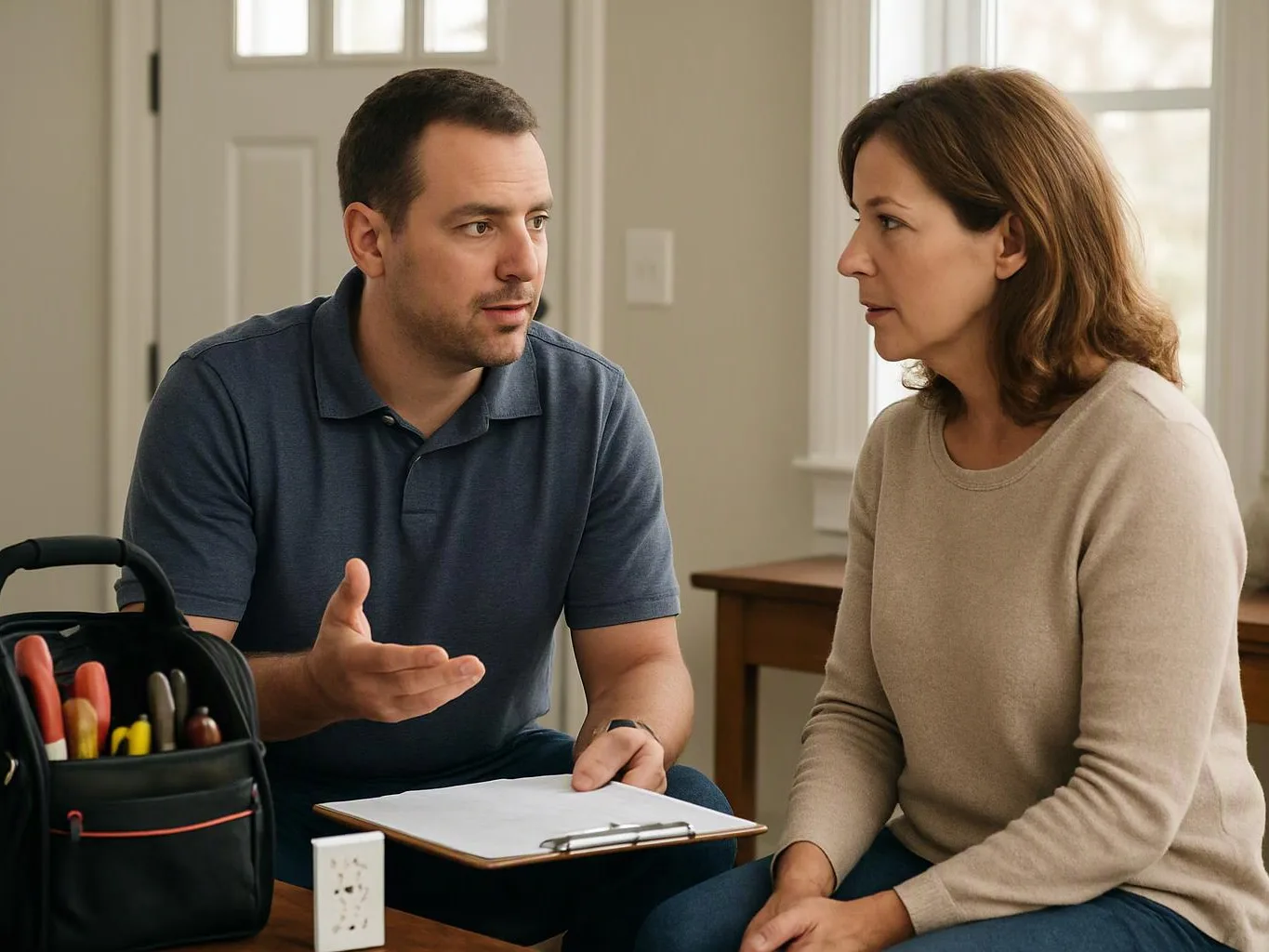
The affected area, panel condition, and visible warning signs should be checked before scheduling. Note which outlets, lights, or appliances lost power, and record any sparks, heat, buzzing, or burning smell. Do not remove covers or handle exposed wires. Share those details so we can plan the inspection and discuss the likely repair scope.
Who is a good fit for emergency electrical repair, and who needs a different service?
Emergency electrical repair fits a property with a sudden power fault, damaged wiring, a sparking outlet, or repeated breaker trips. Planned renovations, new lighting, and future capacity changes fit scheduled electrical work. We assess the immediate problem first, then explain whether the property needs repair, replacement, or a separate upgrade.
What happens at each stage of emergency electrical repair?
The repair moves from symptom review to circuit isolation, fault tracing, part repair or replacement, and testing. We begin by identifying the affected area and panel circuit.
- We isolate the unsafe circuit.
- We inspect wiring, connections, breakers, and devices.
- We repair the failed part.
- We test the circuit and explain follow-up work.
Which part of a sudden failure changes the repair cost?
The failed part, wiring access, panel condition, and circuit load change the repair cost. A faulty breaker may need a focused replacement, while damaged cable or limited panel capacity may require broader work. We inspect the fault and explain the scope before preparing a quote. No amount is stated until the job is assessed.
When should a tripped breaker receive professional attention?
A tripped breaker needs professional attention when it trips again, feels warm, buzzes, or connects to a burning smell. Repeated trips can point to a short circuit, overloaded circuit, damaged cable, or faulty breaker. We inspect the circuit and panel instead of treating each trip as an isolated event.
Why do lights flicker when other equipment starts?
Flickering lights can indicate a loose connection, overloaded circuit, weak breaker, or voltage problem. We check the panel, circuit connections, and equipment that starts when the lights flicker. Stop using equipment that causes heat, sparks, or a burning smell, and request an assessment before the condition worsens.