
What is Electrical Permit?
Electrical Permit is an official approval from a government building department that allows specified electrical work to proceed. The permit identifies the project, location, responsible parties, and required inspections. It helps confirm that wiring, equipment, grounding, and protective devices meet adopted electrical codes before the system is covered or placed into service.
Quick Facts About Electrical Permit
Category
Construction regulation
Used for
Electrical installation, alteration, or service work
Common confusion
A permit is not an electrician license
Also called
Electrical construction permit, Electrical permit approval
Often discussed with
Electrical Panel Upgrades, Electrical Code Corrections
Key Takeaways About Electrical Permit
- A permit links one electrical project to code review and required inspections.
- Permit rules vary by location, project scope, property type, and local rules.
- The permit holder may need inspections before wiring is covered or energized.
- A permit differs from an electrician license or an electrical inspection.
- Unpermitted work can hinder insurance claims, property sales, and future repairs.
Understanding Electrical Permit
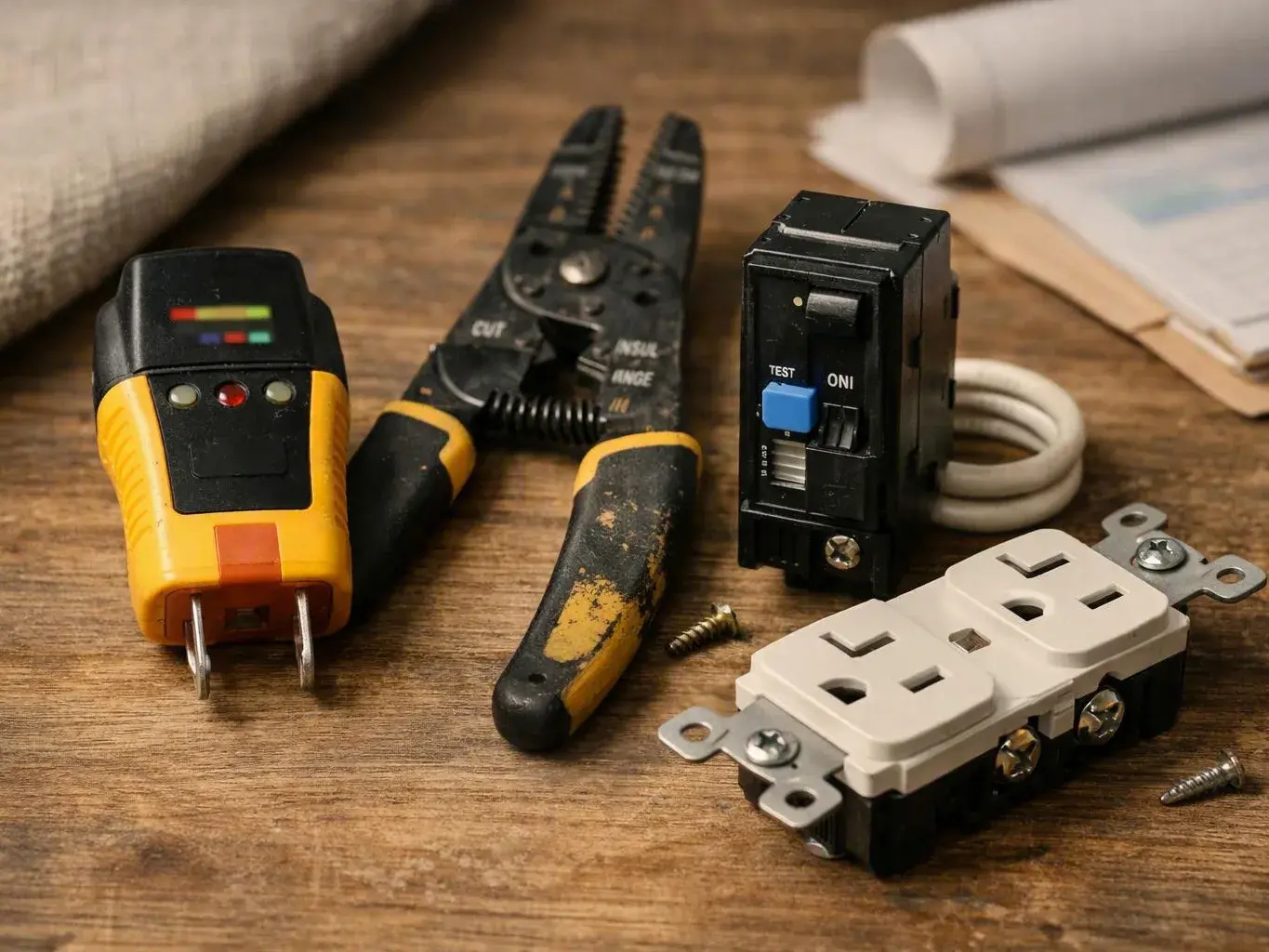
Electrical Permit is formal approval from a local building department. It comes before certain electrical work begins. It usually identifies the property, project scope, and applicant. It also identifies the responsible contractor or owner. The approval lets inspectors review work against the adopted electrical code. This code often includes rules from the National Electrical Code.
Related glossary terms: National Electrical Code, Load Calculation, Panelboard.
A permit doesn't certify every part of an electrical system before construction starts. It creates a record and sets an inspection process. Local rules may cover a new circuit, service change, or panelboard replacement. They may also cover a generator or electric vehicle charger. Extensive rewiring may also need a permit. Minor repairs may be exempt. The authority having jurisdiction decides this. It's often called the AHJ.
How Electrical Permit Works, Is Measured, or Is Used?
The workflow normally begins with an application describing the proposed work. The building department may review plans and load calculations. It may also review equipment information and the applicant's license details. After approval and payment of the permit fee, work can proceed. The work must follow the permit's listed conditions.
Inspections provide the main check on permitted work. A rough inspection may happen after workers install cables, boxes, and conduit. Workers also install grounding parts before this inspection. The inspection happens before workers close the walls. A final inspection checks completed devices, labels, clearances, covers, and operation. The inspector records approval, corrections, or a failed inspection. The authority may issue a final sign-off or certificate. This happens when all requirements are met.
- Check local permit rules before removing equipment or starting new wiring.
- Keep the permit number, approved plans, and inspection results with project records.
- Ask which inspection must happen before insulation, drywall, or equipment covers hide the work.
Why Electrical Permit Matters?

A permit creates accountability for work that can affect fire safety. It can also affect shock protection and property damage. Reviewers may find an undersized conductor or missing bonding connection. They may find inadequate working clearance or wrong overcurrent protection. These checks matter because an electrical fault can damage equipment. An electrical fault can also start a fire.
Permit records help future owners, inspectors, insurers, and electricians understand changes. A documented service upgrade or new circuit's easier to verify. Concealed work with no record can be harder to verify. Permit status can matter during a sale or insurance review. It can also matter during a warranty dispute or code correction.
When Electrical Permit Matters Most?
Permit questions become especially important during major electrical changes. Examples include electrical panel upgradesand service increases. They also include generator installations and new detached structures. High-demand equipment may need new circuits. A project that changes service capacity may need.load calculation. It may also need utility coordination before the inspection can pass.
Local rules control the exact threshold for a permit. A past permit on a similar project doesn't prove exemption. Before work begins, verify the AHJ and the approved scope. Verify the licensed contractor rules and the inspection sequence. If existing wiring has unsafe conditions. An inspector may require related electrical code corrections. These corrections may be needed before approving the new work.
How to Evaluate Electrical Permit?
- Confirm that the permit names the correct property, project scope, applicant, and responsible contractor.
- Check whether the local authority requires a permit for the specific equipment or wiring change.
- Verify that rough and final inspections are listed when concealed wiring or new circuits are involved.
- Compare the approved plans with installed equipment, conductor sizes, breakers, grounding, and clearances.
- Obtain written correction details and final approval records if an inspection does not pass.
Related Concepts Compared
Electrical Permit vs. Electrical Inspection
An electrical inspection is the review of installed work. An electrical permit authorizes the project and creates the record that supports required inspections.
Electrical Permit vs. Electrician License
An electrician license shows that a person or business meets expert requirements. A permit applies to a specific property and scope of work.
Electrical Permit vs. Building Permit
A building permit covers broader construction work. Such as structural or architectural changes. An electrical permit focuses on wiring, equipment, power systems, and electrical safety.
Electrical Permit vs. Certificate of Occupancy
A certificate of occupancy confirms that a building or space may be occupied under applicable approvals. It is not the same document as an electrical permit.
Expert Note
Permit scope matters more than the permit label. A permit for a panel replacement may not cover a new feeder, generator interconnection, or added branch circuits. Compare the approved description with the actual work before scheduling a final inspection.
Common Mistakes or Myths About Electrical Permit
- Assuming an electrician license replaces the need for a project permit.
- Starting work before confirming the local authority's permit requirements.
- Closing walls before the required rough inspection occurs.
- Treating a permit as proof that every installation detail has already passed inspection.
- Failing to obtain final approval after receiving a permit.
Electrical Permit in Practice: A Real-World Example
A homeowner replaces a 100-amp panel and adds a circuit for an electric vehicle charger. The local authority may require an electrical permit, a load review, and rough or final inspection. The permit record should show both jobs when local rules require both.
Sources & Further Reading on Electrical Permit
Related Terms
National Electrical Code
National Electrical Code is a widely adopted safety standard for designing, installing, and inspecting electrical systems…
Load Calculation
Load Calculation is a method for estimating the electrical demand a building or circuIt'll place on…
Panelboard
Panelboard is an enclosed electrical distribution assembly that receives power and sends it through branch circuits…
Grounding Electrode
Grounding Electrode is a conductive object that connects an electrical system to the earth. Common examples…
Chris Miller Electric
Have Questions About Electrical Permit?
Contact Chris Miller Electric for practical guidance on Electrical Permit and related 24 hour electrician work in Fort Wayne.