
What is a Panelboard?
Panelboard is an enclosed electrical distribution assembly that receives power and sends it through branch circuits to lights, receptacles, appliances, and other loads. It usually contains circuit breakers, busbars, neutral connections, and grounding connections. A panelboard helps protect wiring from excessive current and provides a controlled point for circuit shutoff and maintenance.
Quick Facts About Panelboard
Category
Electrical distribution equipment
Used for
Branch-circuit control and protection
Common confusion
Panelboard is not the same as a service entrance
Relevant standard
National Electrical Code requirements
Also called
Electrical panel, Breaker panel
Often discussed with
Electrical Panel Upgrades, Circuit Breaker Replacement
Key Takeaways About Panelboard
- A panelboard divides incoming electrical power among separate branch circuits.
- Circuit breakers protect conductors from overloads and short circuits.
- Busbars carry power inside the enclosure and connect to individual breakers.
- Panelboard ratings must match voltage, current, fault current, and site conditions.
- Clear labels and safe work space help prevent errors during electrical work.
Understanding Panelboard
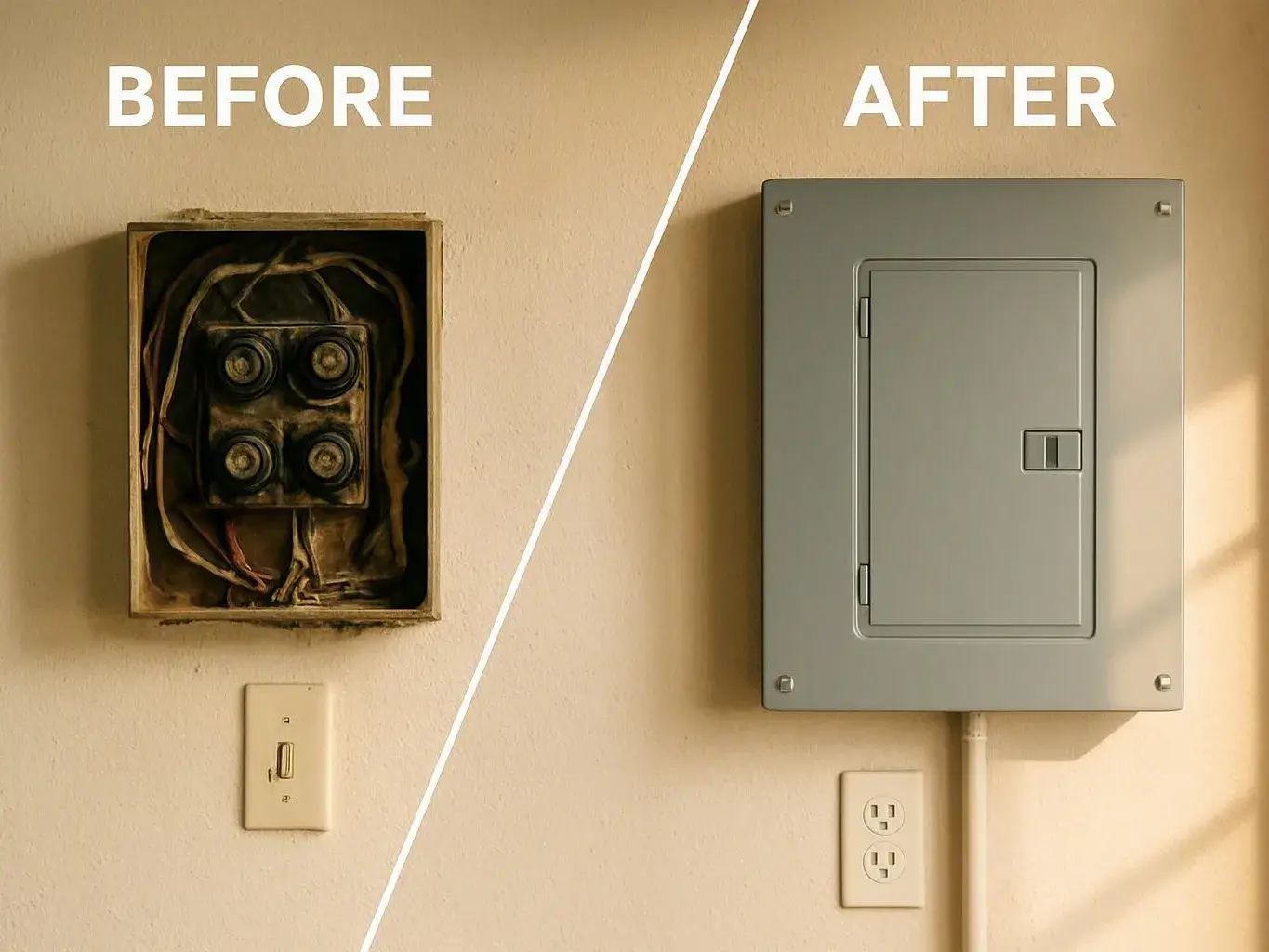
Panelboard is a factory-built enclosure. It receives power and divides it among branch circuits. Inside, circuit breakers connect to energized busbars. Neutral and grounding terminals connect circuit wires. The enclosure covers energized parts. It gives an electrician a safe place to inspect, test, and disconnect circuits.
Related glossary terms: Busbar, Circuit Breaker, Load Calculation.
A panelboard may serve a home, apartment, office, shop, or industrial area. A main breaker may disconnect power to the panelboard. The equipment may also receive power from an upstream disconnect. The panelboard rating shows the maximum current and voltage it can handle. The enclosure type, fault current, wire size, and breaker fit affect installation.
How Panelboard Works, Is Measured, or Is Used?
Panelboard operation begins when power enters through service wires or a feeder. The wires connect to a main disconnect, main breaker, or lugs. The equipment design determines the connection type. Power then reaches the busbars. Each branch-circuit breaker sends power through a circuit wire to a set load.
Electricians assess a panelboard by more than its size. Key values include voltage, ampere rating, and the number of spaces. They also include short-circuit current rating and compatible breaker ratings. A load calculation estimates expected demand. Conductor ampacity confirms that wiring can safely carry the assigned load. Breakers must match the panelboard listing and protected wires.
During normal operation, a breaker stays closed and lets current flow. An overload or short circuit can open the breaker. This action stops current in the circuit. Some systems also need arc-fault or ground-fault protection. The need depends on the circuit location and use. Labels should show the areas or equipment served by each breaker.
Why Panelboard Matters?
Panelboard condition affects safety, reliability, and future electrical capacity. Loose connections can create heat. Damaged busbar connections can cause arcing. Overloaded circuits can trip again and again. Rust, water entry, scorch marks, odd smells, buzzing, or hot breakers need prompt attention. Visible damage may show a deeper fault.
A well-chosen panelboard also supports maintenance and troubleshooting. Clear circuit labels lower the risk of shutting off the wrong equipment. Enough working clearance gives an electrician room to work safely. A panelboard with too few spaces can cause poor changes or crowded wires. It can also cause an unsafe tandem breaker installation. Capacity planning before adding an appliance can prevent these problems.
When Panelboard Matters Most?
Panelboard selection matters during a service upgrade or remodel. It also matters for an electric vehicle charger or major appliance. The installer must compare the existing service rating with the calculated load. The installer must confirm that the panelboard accepts the planned breakers. A larger enclosure doesn't automatically create more available power. The service and feeder still limit capacity.
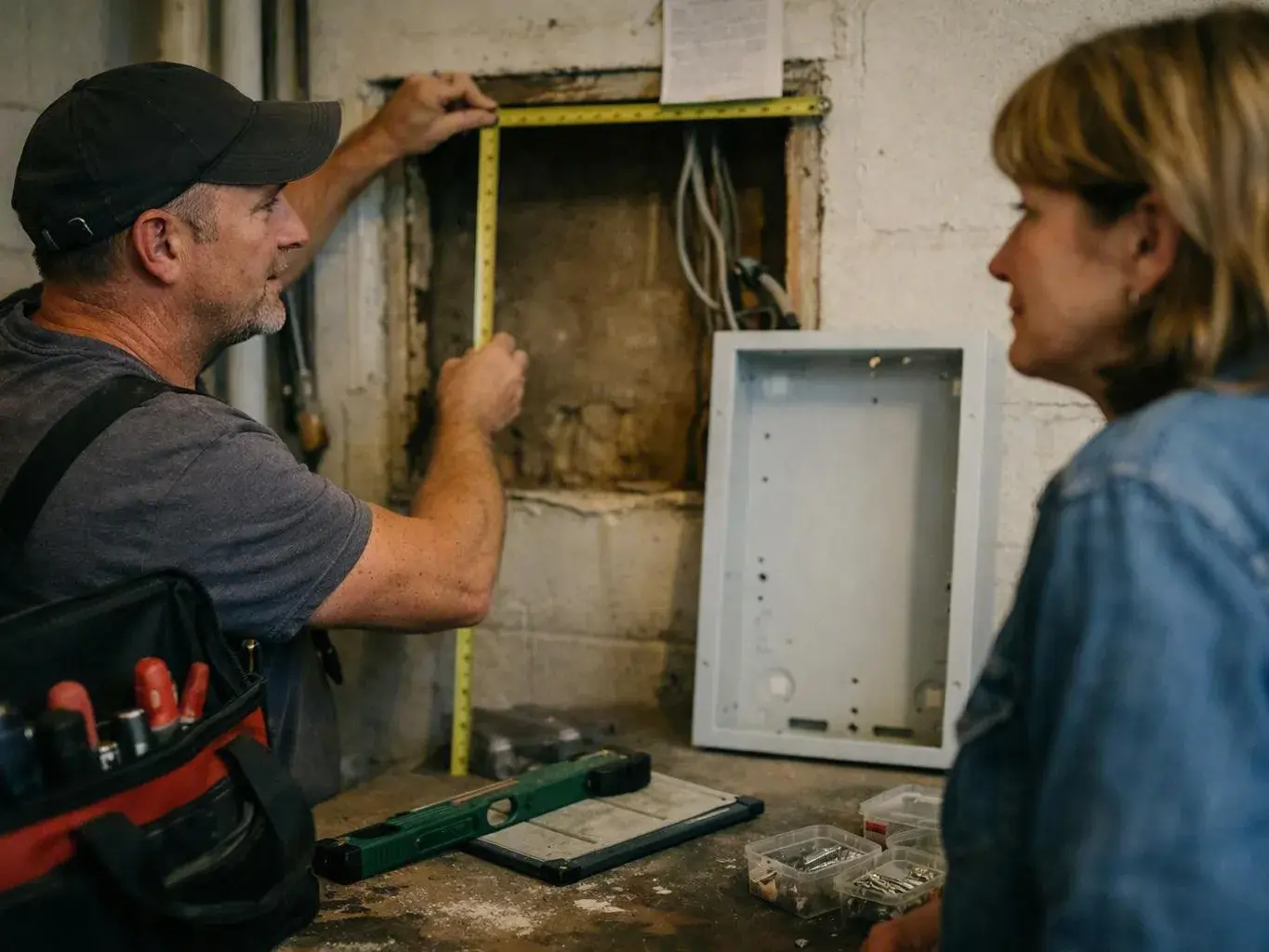
Replacement decisions also require attention to interrupting rating, working clearance, and local inspection rules. A replacement panelboard should be listed for its breakers. It should use correct bonding and grounding methods. In older systems, the work may reveal damaged wires or old equipment. It may also show a need for an electrical permit. Fort Wayne properties may need to follow Indiana electrical rules. They may also need to follow the local code during permitted work.
How to Evaluate Panelboard?
- Check the panelboard nameplate for voltage, ampere rating, phase, spaces, and short-circuit current rating.
- Confirm every installed breaker is listed or identified as compatible with the specific panelboard.
- Look for heat damage, rust, moisture, loose connections, missing covers, or repeated breaker trips.
- Compare the calculated electrical load with the service, feeder, and panelboard ratings.
- Verify clear circuit labels, accessible working space, and required permits for changes.
Related Concepts Compared
Panelboard vs. Load Center
A load center is a common type of panelboard used in homes and light commercial buildings. The terms often overlap, although panelboard can describe a wider range of equipment.
Panelboard vs. Main Service Panel
A main service panel is connected to the utility service and usually contains the service disconnect. A panelboard can also be a downstream distribution panel supplied by a feeder.
Panelboard vs. Circuit Breaker
A circuit breaker is an individual protective switching device. A panelboard is the enclosure and distribution assembly that holds breakers and connects them to the electrical system.
Panelboard vs. Fuse Box
A fuse box uses fuses that open when their elements melt. A modern panelboard commonly uses resettable circuit breakers, although some older panelboards contain fuses.
Expert Note
A panelboard can appear serviceable while hiding a loose termination or incompatible breaker. Nameplate data, breaker listing, conductor size, and available fault current must be checked together before adding or replacing circuits.
Common Mistakes or Myths About Panelboard
- Assuming a panelboard with open spaces has enough service capacity for another large load.
- Installing a breaker that is not listed or identified as compatible with the panelboard.
- Replacing a breaker with a higher ampere rating to stop nuisance trips.
- Leaving circuit labels inaccurate after remodeling or electrical changes.
- Treating buzzing, heat, rust, or scorch marks as normal panelboard behavior.
Panelboard in Practice: A Real-World Example
A homeowner plans to add a 50-ampere range to a panelboard with several older breakers. An electrician checks the service load, open spaces, conductor path, breaker fit, and grounding setup.
Related Terms
Busbar
Busbar is a rigid metal conductor that distributes electrical power to several circuits within equipment such…
Circuit Breaker
Circuit Breaker is an automatic electrical safety device that opens a circuit when current exceeds a…
Load Calculation
Load Calculation is a method for estimating the electrical demand a building or circuIt'll place on…
National Electrical Code
National Electrical Code is a widely adopted safety standard for designing, installing, and inspecting electrical systems…
Chris Miller Electric
Have Questions About Panelboard?
Contact Chris Miller Electric for practical guidance on Panelboard and related 24 hour electrician work in Fort Wayne.