
What is an Ohm?
Ohm is the SI unit of electrical resistance, which describes how strongly a material or component opposes electric current. One ohm allows one ampere of current to flow when one volt is applied. Electricians use ohms to test wires, heating elements, motors, switches, and other electrical parts.
Quick Facts About Ohm
Category
SI unit of electrical resistance
Formula
R = V ÷ I
Measured by
Digital multimeter or ohmmeter
Used for
Testing circuits, conductors, and electrical components
Common confusion
An ohm measures resistance, not voltage or current
Also called
Ω, unit of resistance
Key Takeaways About Ohm
- Resistance is measured in ohms and shows how strongly a circuit opposes current.
- Ohm’s law connects voltage, current, and resistance with the formula V = I × R.
- A multimeter measures resistance when power is turned off and the circuit is isolated.
- Higher resistance usually means less current for the same applied voltage.
- Unexpected resistance readings can reveal broken wires, damaged parts, or poor connections.
Understanding Ohm
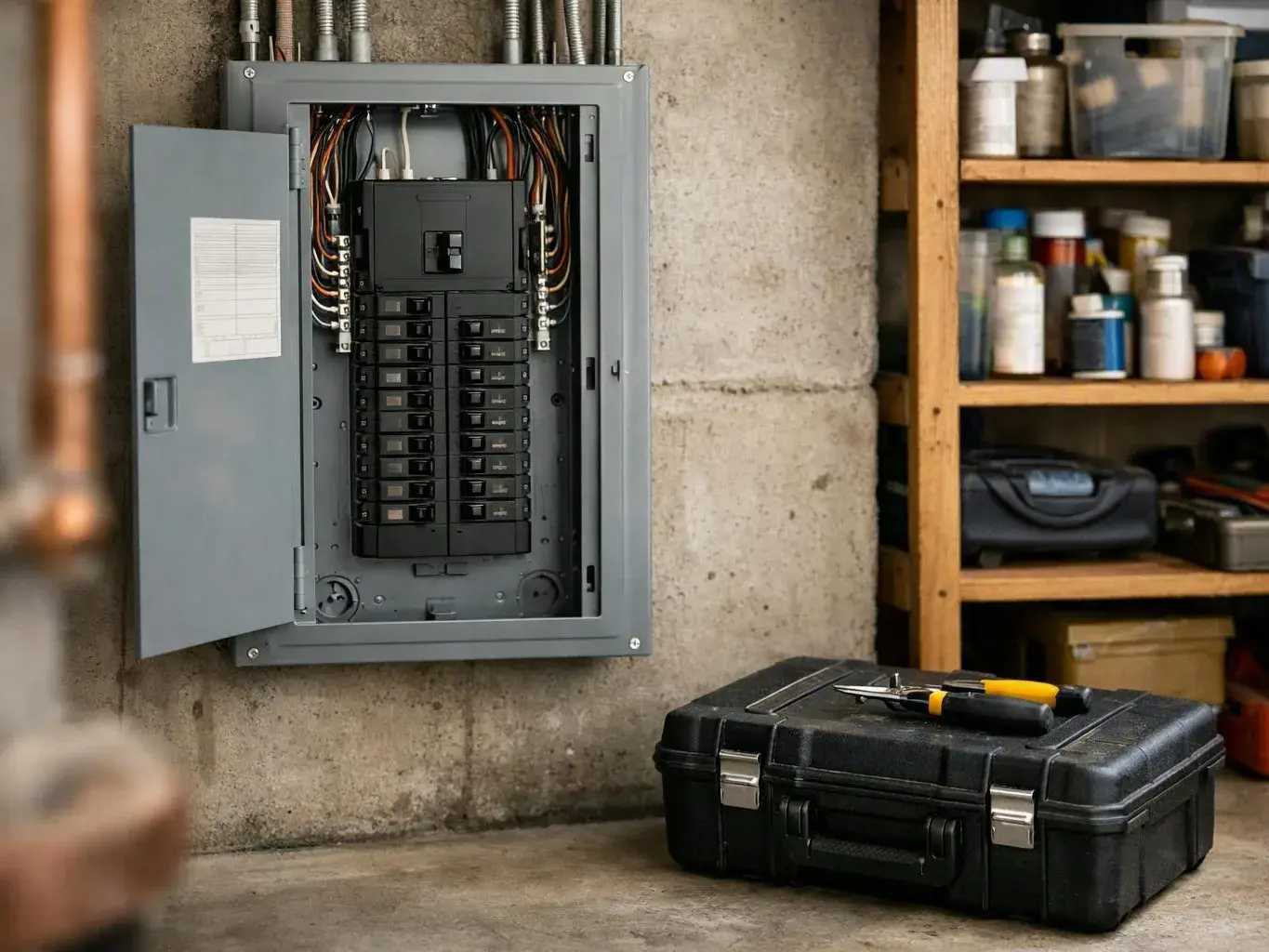
Ohm is the named unit for electrical resistance in the International System of Units. Resistance describes how much a material or component opposes the movement of electric charge. The unit's symbol is the Greek letter omega, Ω. A larger resistance value means a circuit restricts current more strongly. This happens when voltage stays the same.
Related glossary terms: Amperage, Voltage Drop, American Wire Gauge.
The unit honors Georg Simon Ohmwhose work linked voltage, current, and resistance. A conductor with one ohm of resistance has a one-volt drop. This happens when one ampere flows through it. Real circuits contain resistance.copper wire, heating elements, motors, lamps, switches, and electronic parts. Even connections and damaged insulation can affect a resistance reading.
How Ohm Works, Is Measured, or Is Used?
Ohm’s law gives the basic relationship between voltage, current, and resistance: V = I × R. You can rearrange the formula to find resistance with R = V ÷ I. For example, a 12-volt circuit carrying 2 amperes has 6 ohms of resistance. The formula describes many ordinary circuits. Some devices don't keep constant resistance as temperature or conditions change.
A digital multimeter measures resistance by sending a small test current through the circuit. It measures the voltage that results. Turn off the circuit before making an ohms test. Disconnect at least one side of the component when other paths could affect results. A continuous tone or near-zero reading may show a low-resistance path. OL or a very high value may show an open circuit. The meter's range affects the reading's meaning. The component's expected value also affects its meaning.
Why Ohm Matters?
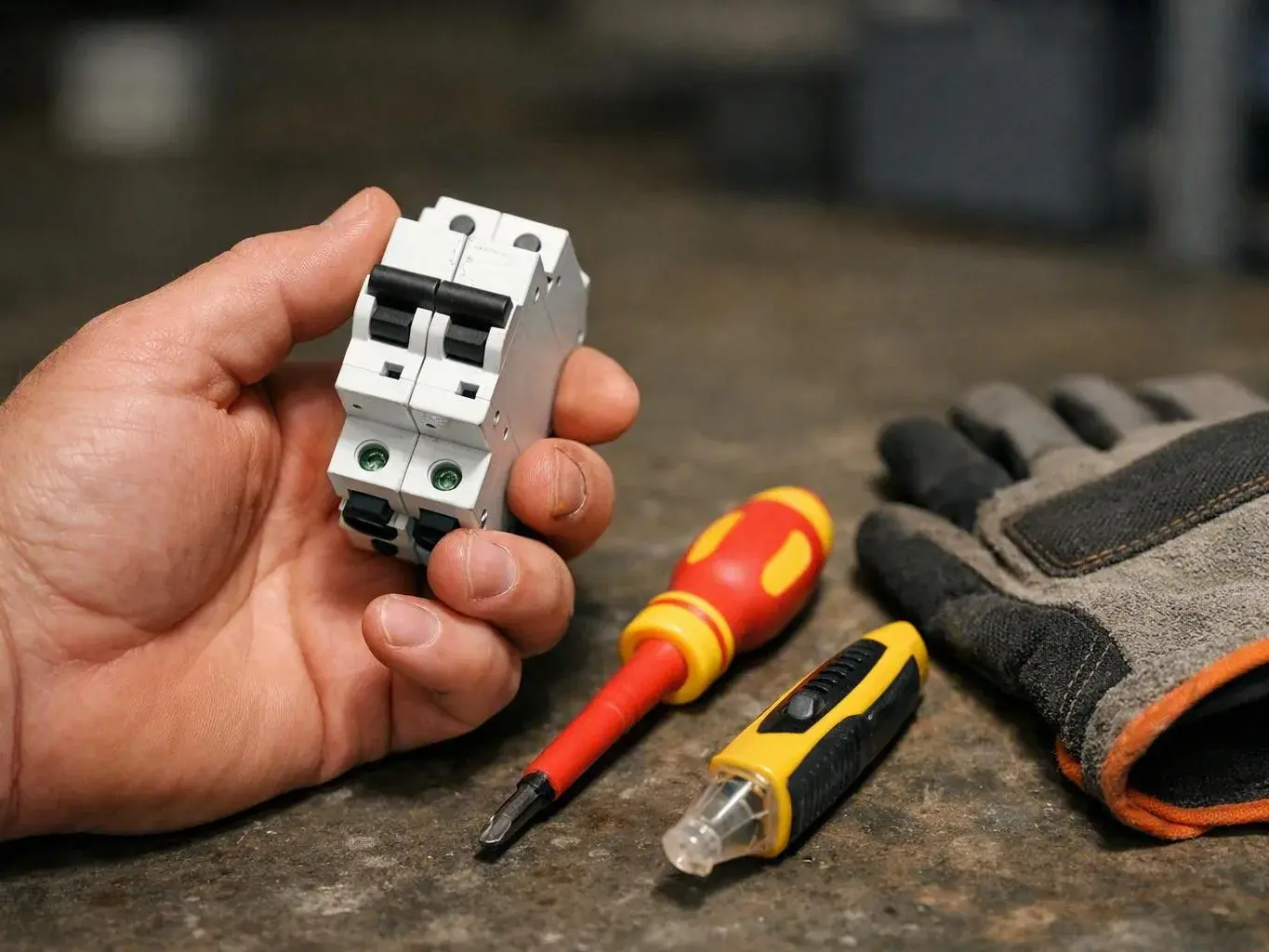
Resistance affects current flow, heat, voltage drop, and device performance. A heating element creates resistance by design. It changes electrical energy into heat. A loose terminal can create unwanted resistance at one small point. This may produce heat under load. The rest of the conductor may still appear sound.
Resistance testing helps separate a sound component from a wiring problem. A reading far from the manufacturer's rating can show a failed motor winding. It can also show a broken heater, damaged cable, or poor connection. Resistance alone doesn't prove that a circuit is safe. A meter test can't replace a voltage test. It also can't replace a grounding and insulation check.
When Ohm Matters Most?
Continuity testing matters when checking a circuit, cable, fuse, or switch. The test checks for an unbroken path. A fuse should normally show very low resistance when removed and intact. A failed fuse usually shows an open circuit. A correct reading doesn't prove the fuse has the right current rating. It also doesn't prove the main fault is fixed.
Ohms also matter during motor testing, heating equipment repair, outlet troubleshooting, and ground path checks. Compare readings between similar windings or terminals when instructions provide expected values. Stop and check readings that change sharply when a wire moves. This pattern can show a loose connection or conductor damage.
How to Evaluate Ohm?
- Confirm that the circuit is de-energized before measuring resistance.
- Compare the reading with the component manufacturer’s listed resistance.
- Check whether the meter displays OL, near zero, or a stable numerical value.
- Inspect test leads and probes by touching them together for a near-zero reference reading.
- Repeat the test with one component lead disconnected when parallel paths may distort results.
Related Concepts Compared
Ohm vs. Resistance
Resistance is the electrical property that opposes current. An ohm is the unit used to quantify that property.
Ohm vs. Voltage
Voltage is electrical pressure or potential difference. Ohms measure resistance, while volts measure voltage.
Ohm vs. Amperage
Amperage measures the amount of current flowing through a circuit. Resistance affects current, but the two terms describe different measurements.
Ohm vs. Impedance
Impedance is the total opposition to alternating current, including resistance and reactance. Resistance alone does not describe all AC behavior.
Expert Note
A resistance reading is meaningful only in the right test conditions. Disconnect power, isolate the part when needed, and account for parallel paths, temperature, and the meter’s lead resistance before judging a component.
Common Mistakes or Myths About Ohm
- Measuring resistance on an energized circuit can damage the meter and create a shock hazard.
- A continuity beep does not prove that a conductor can safely carry its rated load.
- Near-zero resistance does not always mean a good circuit, because a short circuit can also read near zero.
- Leaving a component connected can produce a misleading reading through parallel circuit paths.
Ohm in Practice: A Real-World Example
A technician tests a 120-volt heating element that draws 10 amperes during operation. Ohm’s law predicts about 12 ohms of resistance. A reading of OL suggests a broken element, while a reading far below 12 ohms may indicate a shorted section.
Sources & Further Reading on Ohm
- National Institute of Standards and Technology, SI Units
- BIPM, The International System of Units, SI Brochure
Related Terms
Amperage
Amperage is the amount of electric current flowing through a circuit, measured in amperes, also called…
Voltage Drop
Voltage Drop is the reduction in electrical voltage that occurs as current travels through a wire…
American Wire Gauge
American Wire Gauge is a standardized system that identifies electrical wire diameter with numbered sizes. Smaller…
Short Circuit
Short Circuit is an unintended low-resistance path that lets electrical current bypass part of a circuit…
Chris Miller Electric
Have Questions About Ohm?
Contact Chris Miller Electric for practical guidance on Ohm and related 24 hour electrician work in Fort Wayne.