Signs You Need an Electrical Panel Upgrade in Fort Wayne, IN
An electrical panel may need an upgrade when it gets hot, trips often, buzzes, or smells burnt. Rust, damage, old fuses, and limited space can also signal trouble. These signs may point to overloaded circuits, worn parts, unsafe wiring, or code issues. Fort Wayne homeowners should stop using a damaged panel. A qualified electrician should check it soon. Chris Miller Electric can inspect the panel and find needed electrical code corrections. We can explain repair, replacement, and service capacity options.
Get a Free EstimateWhen Does an Electrical Panel Need an Upgrade?
Electrical panel upgrades are needed when a panel cannot safely handle the home’s power needs. They may also be needed for heat, damage, old protection, or code problems. An electrician can tell if one breaker needs repair or if larger work is needed.
The breaker box should match the home’s service size and power use. Modern homes need power for heating, cooling, appliances, computers, and other equipment. They may also need power for electric vehicle charging or a heat pump. A panel may need more than one new part when breakers reach their limits.
Older panels may have few open spaces or old parts. They may also have poor labels, damaged wires, or grounding issues. These signs don’t always mean the whole system is unsafe. They do mean an electrician should test the system. The check should cover the service entrance, panel, wires, grounding, and bonding. It should also cover the Indiana electrical code.
A home panel check often takes about 1–2 hours. A replacement may take most of a workday. It may take longer when permits, service wires, or hidden wires need work. The time depends on the home and needed repairs.
9 Warning Signs You May Need an Electrical Panel Upgrade
Electrical panel warning signs include trips, flickering lights, buzzing, heat, burning smells, rust, and damage. Old fuses and limited circuit space are warning signs too. These problems may come from overloads, loose parts, moisture, or unsafe wires. Don’t keep resetting breakers. Arrange an electrician’s inspection instead.
One sign may have several causes. Repeated breaker resets can hide the issue. They can also add heat to the wires. An electrician can test the circuit and panel connections. The results can show if you need a repair, breaker panel upgrade, or larger service.
What Each Warning Sign Can Mean?
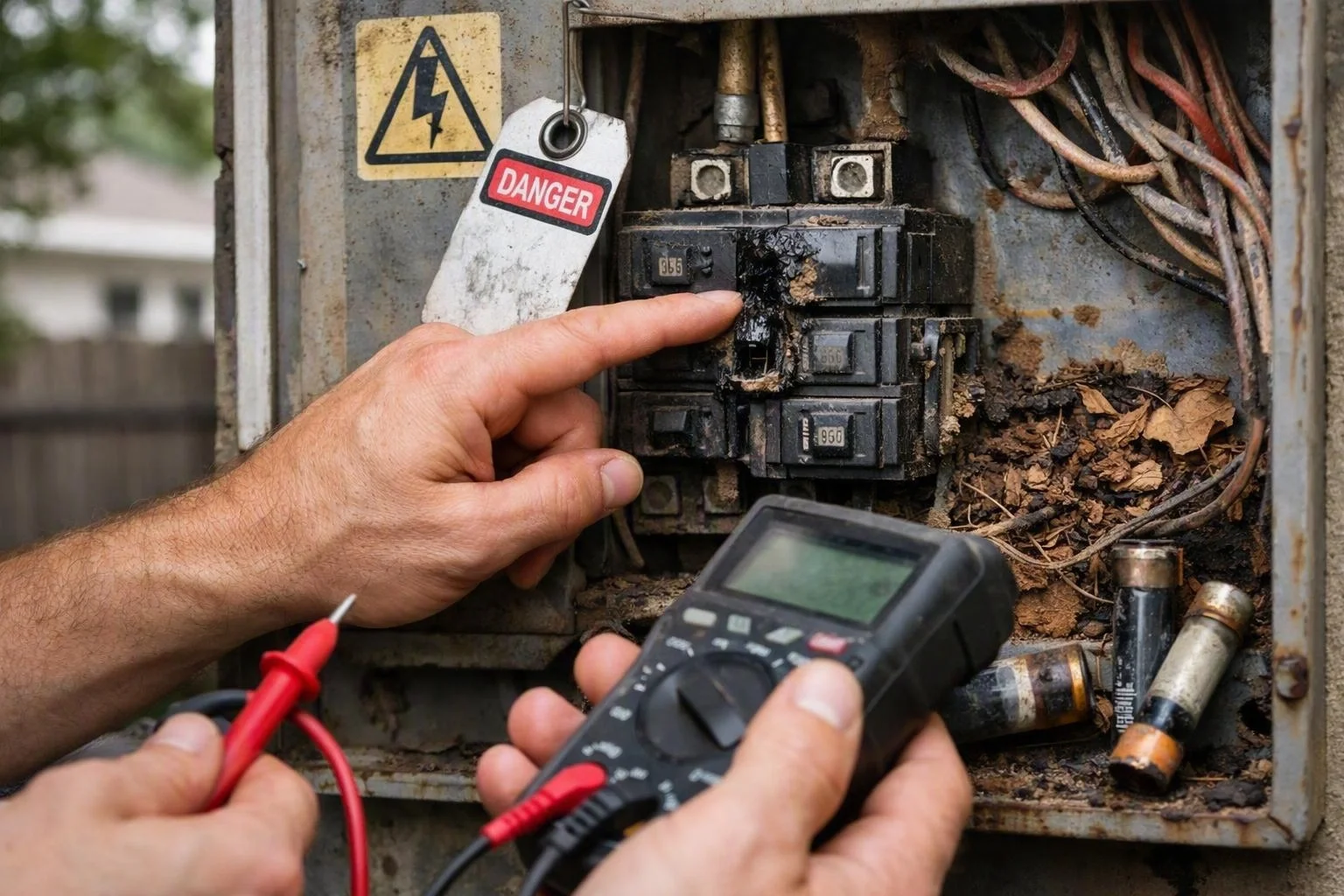
An overloaded circuit may trip when it carries too much power. A loose connection can create heat without tripping the breaker. An arc fault can cause crackling, burning, or lost power. Melted insulation or dark metal means the equipment needs inspection.
Flickering may come from a light fixture or appliance. Rust may come from moisture, not age alone. The timing and place of each sign can help find the cause. Our team uses visual checks and electrical testing.
Why Fort Wayne Homes Develop Electrical Panel Problems?
Fort Wayne homes can develop panel problems as old systems handle more power. HVAC equipment, appliances, additions, and remodels can raise the demand. Age, weak connections, and code gaps may also require an upgrade.
Older homes in Fort Wayne may have aging fuse boxes. They may also have small service sizes and old wiring. These systems were built for lower power use. A new appliance, room, workshop, or electric vehicle charger can expose that limit.
Fort Wayne’s cold winters can raise power use. Heating systems may run for long periods. Weak connections and overloaded circuits may become easier to notice. Seasonal stress doesn’t prove that the panel needs replacement. It does support a careful check.
Renovations and additions can change the service entrance and circuits. They can also affect grounding, bonding, and panel layout. Work done at different times may leave mixed equipment. It may also leave unfinished repairs. Indiana electrical code rules may affect panel work in Fort Wayne. Local permits and inspections may apply too.
Electrical Panel Upgrade Options and Code Corrections
Electrical code corrections may include a breaker change or a new panel. They may also include more service power, better grounding, or circuit repairs. The right choice depends on the panel, wiring, power use, and Indiana electrical code.
A breaker replacement may fix one failed part. This works when the panel, wires, and load are suitable. A panel replacement may fit when the box is damaged or outdated. It may also fit when space is limited or many parts are worn. Replacing a fuse box can improve circuit control and protection.
A service upgrade may be needed when the home needs more power. This work can include the main breaker and service wires. It may also include the meter, service entrance, and grounding system. Utility work may be part of the job. A service upgrade isn’t just a larger breaker.
Other corrections may include grounding and bonding work. They may include circuit labels and protected outlet circuits. Wire repairs and unsafe changes may also need attention. During Electrical Panel Upgrades in Fort Wayne, our team explains each needed step. We also explain optional work and permit needs.
Electrical Code Corrections should follow the conditions found at the home. They should also follow the rules for the project. A written panel upgrade estimate should list the equipment and needed work. It should list service capacity and possible hidden wire work.
DIY Versus Professional Electrical Panel Work
Homeowners can record signs and note which appliances lose power. Panel repairs and upgrades need trained electrical skills. They also need safe steps around live equipment. A qualified electrician can test circuits and service size. They can fix code issues and handle permits for Fort Wayne work.
| Factor | DIY | Professional |
|---|---|---|
| Homeowner safety | Record sounds, smells, heat, and lost power. Don’t remove the cover. | Uses safe tests and shutoff steps around live service equipment. |
| Electrical panel inspection | Visual checks only may miss hidden faults. | Checks breakers, connections, wires, load, grounding, and panel condition. |
| Repairs and upgrades | Changing breakers or wires without testing can cause shocks or fires. | Chooses proper equipment and completes required repairs. |
| Permit and inspection process | May not know which permits or approvals apply. | Can manage the permit and inspection process for the project. |
Turning off one breaker doesn’t make the whole panel safe. Service wires may still carry power. A mistake can damage equipment or cause serious harm. Keep homeowner work to safe observation and appliance notes. Keep people away from damaged equipment.
What to Do When Your Electrical Panel Shows These Signs?
An electrical emergency may exist when a panel smells burnt, feels hot, sparks, or smokes. Ongoing loud noise can also signal danger. Stop using the equipment and keep people away. Get urgent electrical help. Don’t remove the cover or reset a tripping breaker again.
Leave the home if there is active smoke or fire. Call emergency services from a safe place. A 24 Hour Electrician may help with urgent hazards. Planned work can often wait until the system is safe. Chris Miller Electric can inspect the panel and explain your options.
For an evaluation or next-step discussion, contact our team.
Questions About 24 Hour Electrician
How Do I Know if My Electrical Panel Needs to Be Replaced?
Replacement may be needed when the panel is hot, damaged, rusty, old, or too small. Repeated breaker trips can also signal a problem. An electrician should check the panel, wires, service entrance, grounding, and available power first.
What Are the Warning Signs of a Bad Electrical Panel?
Warning signs include repeated trips, flickering lights, burning smells, heat, buzzing, and crackling. Rust, scorch marks, melted parts, exposed wires, and old fuses also signal trouble. Stop using damaged equipment and arrange an inspection.
How Much Does It Cost to Upgrade an Electrical Panel in Fort Wayne?
Cost depends on the panel, service size, wiring, grounding, and utility work. Permit needs and code corrections also affect the price. A small repair costs less than a full replacement or service upgrade. An on-site check is needed for a useful estimate.
Can a Tripping Breaker Mean I Need a New Electrical Panel?
It can, but not always. A tripping breaker may come from an overload, bad appliance, loose connection, damaged wire, or failed breaker. Testing can show if you need a breaker, circuit repair, load change, or larger panel.
Is It Safe to Use an Old Fuse Box in My House?
An old fuse box may still work, but an electrician should check its condition and capacity. Never install a larger fuse to stop trips. A professional can find out if you need repairs, a replacement, more circuits, or electrical code corrections.
Related Resources
Emergency Electrical Power Outage Troubleshooting and Repair
emergency electrician for power outage
What It SolvesElectrician for a Circuit Breaker That Keeps Tripping
electrician for breaker that keeps tripping
What It SolvesElectrician for Flickering or Dimming Lights
electrician for flickering lights
What It SolvesDead Outlet Troubleshooting and Electrical Repair
electrician to fix an outlet that stopped working