
What is Working Clearance?
Working Clearance is the unobstructed space around electrical equipment that lets qualified people install, operate, inspect, test, and repair it safely. The required space depends on equipment type, voltage, exposed parts, and surrounding conditions. Electrical codes set minimum dimensions for access, width, depth, and headroom near panels, switchboards, disconnects, and similar equipment.
Quick Facts About Working Clearance
Category
Electrical safety and code compliance
Used for
Access around panels, disconnects, and switchgear
Common confusion
It is not the same as equipment installation space
Also called
Electrical Working Space, Electrical Clearance
Often discussed with
Electrical Panel Upgrades, Electrical Code Corrections
Key Takeaways About Working Clearance
- Clearance must stay open so workers can reach equipment, see hazards, and move away during an emergency.
- Required dimensions vary with voltage, equipment design, exposed parts, and nearby walls or grounded surfaces.
- Stored items, shelving, doors, and building materials must not block the electrical working space.
- Working clearance differs from the smaller space needed for equipment installation or cable routing.
- A code inspection checks access, width, depth, headroom, lighting, and equipment door operation.
Understanding Working Clearance

Working Clearance means the open area around electrical equipment. It allows safe access for inspection, operation, maintenance, and repair. The space must remain free of stored goods, fixed barriers, and other obstructions. It applies to equipment such.panelboards, switchboards, motor controllers, and disconnecting means.
Related glossary terms: National Electrical Code, Panelboard, Electrical Permit.
Required clearance isn't one universal measurement. The needed distance depends on the equipment voltage. It also depends on exposed live parts and nearby surfaces. A metal enclosure, grounded surface, or insulated surface creates different conditions. The National Electrical Code, or NEC, also covers access width and headroom. It covers doors and safe equipment opening, too.
How Working Clearance Works, Is Measured, or Is Used?
An electrician measures the space in front of the equipment. The measurement runs from the working surface to the nearest obstruction. It normally includes the area's depth, width, and vertical height. The clear width must let a person face the equipment. The person must work without twisting around a barrier. Equipment doors and hinged covers must open far enough for safe access.
Many installations follow NEC 110.26 requirements. The working space is at least 30 inches wide. It can also equal the equipment's width, if greater. Depth commonly starts at 3 feet. The needed depth can change with voltage and nearby surfaces. Headroom is commonly 6 feet 6 inches. It can also equal the equipment's height, if greater. Check the exact requirement against the adopted code edition. Also check the installation conditions.
- Measure from the equipment face to the nearest obstruction.
- Check the full width and height, not only the floor area.
- Keep doors, covers, and disconnect handles operable.
- Remove storage, piping, shelving, and temporary materials from the space.
Why Working Clearance Matters?
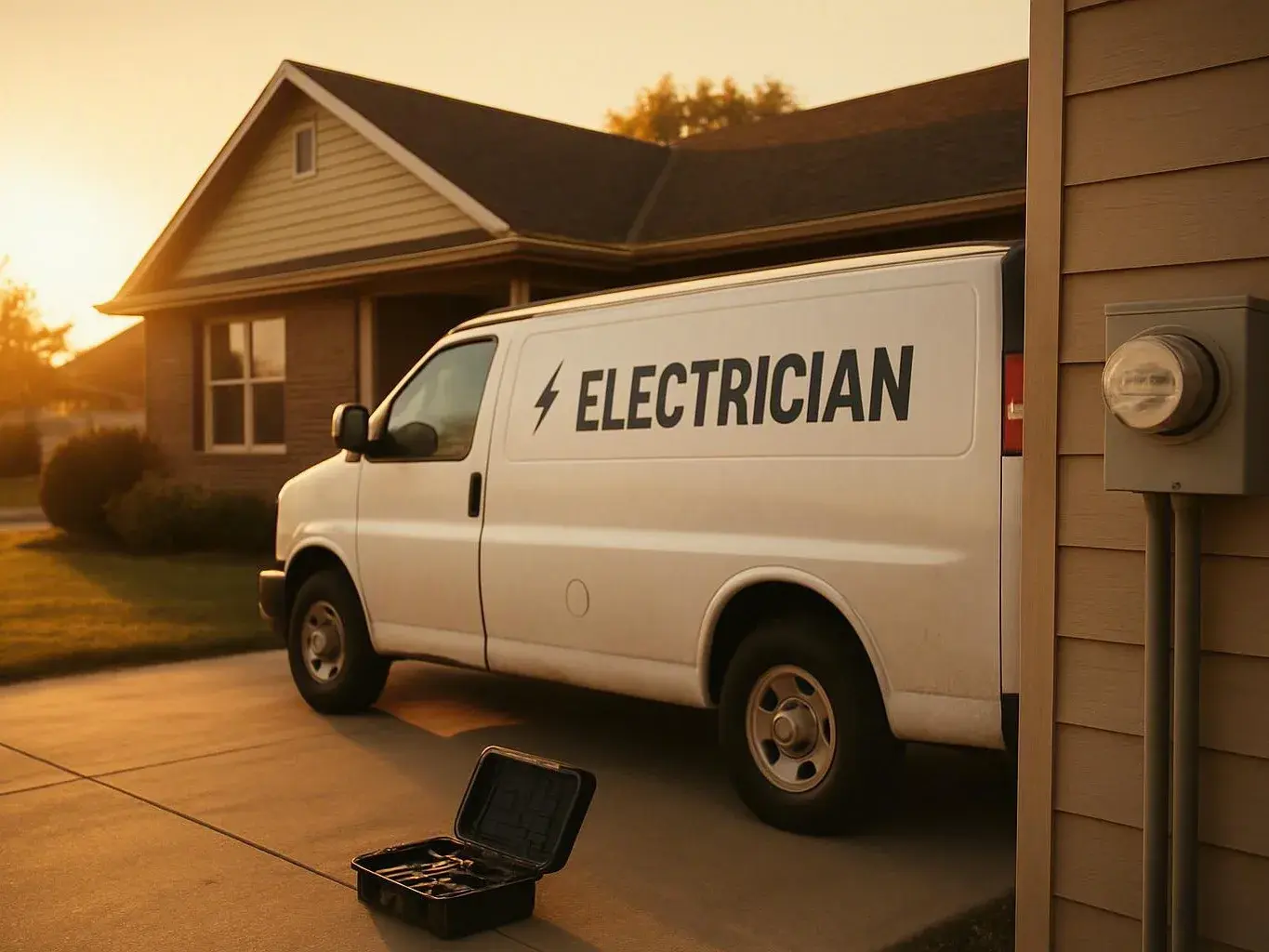
Proper clearance gives workers room for tools and labels. It lets them operate a disconnect and maintain balance. It also creates a path for stepping back during an arc flash. It helps during a short circuit or other electrical event. A blocked panel can delay power shutoff. It can also increase contact risks with energized parts.
Clearance supports reliable maintenance and code compliance. A technician may need to remove a dead front. They may need to test voltage or tighten a connection. They may also replace a breaker while standing before the equipment. Shelves or stored materials can block that area. Routine work can then become slower, less controlled, and more hazardous.
When Working Clearance Matters Most?
Working clearance needs special attention during panel upgrades and service changes. It also matters during equipment replacement and remodeling. A new wall, cabinet, water line, or storage rack can reduce space. The space may have met code before. Contractors should check the layout before placing permanent materials near electrical equipment.
The issue also matters after an electrical emergency. Responders or electricians may need quick access to a disconnect or panel. In homes, garages, shops, and commercial rooms, owners should keep areas open. They should keep them free from boxes or appliances. A clearance check should cover the equipment label and access path. It should also cover lighting, door swing, and the adopted electrical code.
How to Evaluate Working Clearance?
- Measure the clear depth from the equipment face to the nearest obstruction.
- Confirm the open width is at least 30 inches or the equipment width, whichever is greater, where NEC 110.26 applies.
- Check that headroom, lighting, door swing, and panel covers support safe work.
- Look for stored items, shelving, piping, or doors that intrude into the working space.
- Verify the local authority has adopted the code edition used for the installation.
Related Concepts Compared
Working Clearance vs. Dedicated Electrical Space
Dedicated space protects the area above and around electrical equipment from unrelated systems, such as plumbing or ducts. Working clearance focuses on the open access area where a person stands and works.
Working Clearance vs. Equipment Space
Equipment space is the area needed to install, operate, and service a particular device. Working clearance is the code-based access area in front of or around the device.
Working Clearance vs. Arc Flash Boundary
An arc flash boundary is a hazard distance tied to possible thermal energy from an arc flash. Working clearance is a physical access requirement and does not replace arc flash risk assessment.
Expert Note
Do not measure only the floor in front of a panel. Check the full height, width, door swing, lighting, and nearby grounded surfaces. A later-installed shelf or pipe can create a clearance violation even when the original electrical installation was compliant.
Common Mistakes or Myths About Working Clearance
- Treating the area in front of a panel as storage space.
- Measuring only floor depth while ignoring headroom and door swing.
- Assuming a closed panel makes blocked access acceptable.
- Confusing working clearance with the separate dedicated electrical space above equipment.
- Installing shelving, piping, or appliances before checking the final electrical layout.
Working Clearance in Practice: A Real-World Example
A basement panel has 36 inches of open space in front of its enclosure. A homeowner later installs a freezer that leaves only 14 inches. The panel may still operate, but the reduced access can prevent safe inspection and violate required working clearance.
Sources & Further Reading on Working Clearance
Related Terms
National Electrical Code
National Electrical Code is a widely adopted safety standard for designing, installing, and inspecting electrical systems…
Panelboard
Panelboard is an enclosed electrical distribution assembly that receives power and sends it through branch circuits…
Electrical Permit
Electrical Permit is an official approval from a government building department that allows specified electrical work…
Circuit Breaker
Circuit Breaker is an automatic electrical safety device that opens a circuit when current exceeds a…
Chris Miller Electric
Have Questions About Working Clearance?
Contact Chris Miller Electric for practical guidance on Working Clearance and related 24 hour electrician work in Fort Wayne.